News & Announcements

This Saturday, April 1, 2012, will see a world-first event, bringing a corporate CEO face to face with the victims of their crimes against the Earth through restorative justice. The two fictional CEOs, Robin Bannerman and John Tench, who were found guilty of committing ecocide last year in the UK Supreme Court will be sentenced, in a process involving top experts, including Lawrence Kershen QC, chair of the Restorative Justice Council.
This is a trial run for a new offense of ecocide (much like genocide, but against the Earth and its resources) ahead of trying to get the UN to adopt the offense internationally. You can watch this event free online, Saturday April 1 at 10:30 a.m. U.K. time. More information here.
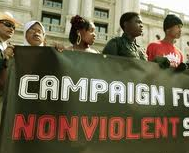
The Philadelphia Student Union produces On Blast, an audio podcast, and this week they posted some clips from an event sponsored by the Campaign for Nonviolent Schools on Martin Luther King Day (which I mentioned here back in January). IIRP's Steve Korr was a panelist and can be heard near the beginning of this clip talking about restorative practices as a leadership model. Listen to the entire recording, which is just a few minutes and contains some powerful voices about what students in schools need to transform the school environment.
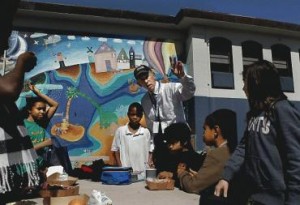
Here's a lovely article by Jill Tucker at SFGate.com (home of the San Francisco Chronicle). San Francisco seems to be having a serious discussion in the print media about alternative discipline approaches in schools, in particular restorative practices.
For two decades, Principal Paul Jacobsen was known as a no-nonsense, cut-to-the-chase, hard-nosed school administrator who didn't hesitate to dole out strict punishment when students broke the rules.
Then the San Francisco principal learned about something called the restorative justice approach.
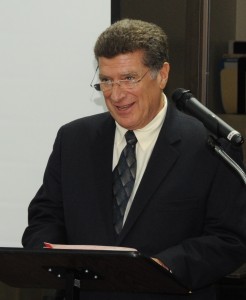
The Raven Foundation's online call-in radio program, Playing for Keeps on Talkshoe.com, has invited IIRP President Ted Wachtel to be a guest on its March 30 call-in radio/web program. The hosts are Adam Ericksen and award winning Peace Journalist Bob Koehler, who has written recently about restorative practices in the Chicago Tribune and Huffington Post. Below are all the details for listening from Playing for Keeps:

The article notes:
For the first time, the new facility will house the entire public safety and justice services in a facility specifically designed by the tribe, for the tribe. A one-stop center for all justice services, the facility is designed to conform to cultural tenets of shared peace, restorative justice, harmony and service and will also contribute to the economy of the reservation — from the earliest stages through final move in. [emphasis added]
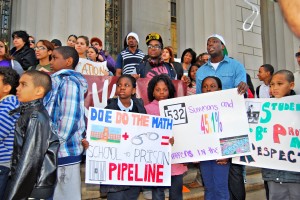
Here are two articles about on the ground responses by student groups calling for new approaches to school discipline that will not disproportionately harm minority students.
Youth United for Change in Philadelphia, Pennsylvania held a press conference March 12, to discuss their response to the Office of Civil Rights national data that "show huge racial disparities in suspension, expulsion, and school-based arrest rates at public schools." (see yesterday's blog post). From the YUC press release:
Here's a response a week ago to a report issued by the Department of Education stating that:
Minority students across America face harsher discipline, have less access to rigorous high school curricula, and are more often taught by lower-paid and less experienced teachers, according to the U.S. Department of Education's Office for Civil Rights (OCR).
The LA Times (Mar 10) noted that "the difference is especially stark for African American students, who make up 18% of the student population but 35% of first-time suspensions. "
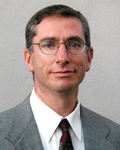
Miguel Tello, director of IIRP Central America, appeared on a radio podcast - This Is Wisdom - based, I believe in Canada. Miguel is very articulate and talks about his own restorative journey, hitting on many key players who influenced his work and thinking. To hear the 30-minute program, click here.

The IIRP eForum provides short, hopeful emails that include brief summaries and links to significant articles, research reports and other information about the growing field of restorative practices. On February 24 the eForum posted this book review, "Commitments to Reconciliation: A Review of Reconciliation and Architectures of Commitment: Sequencing Peace in Bougainville" by IIRP professor and founding faculty member Frida Rundell. Rundell reviews book 2 of 3 published to date by the Peacebuilding Compared Project (http://peacebuilding.anu.edu.au) of the Centre for International Governance & Justice (CICJ) of the Australian National University (ANU), Canberra.
The researchers are: project leader John Braithwaite, ANU professor, Australian Research Council Federation (ARC) fellow and founder of the Regulatory Institutions Network (RegNet) at the ANU; Hilary Charlesworth, Chief Investigator and Legal Frameworks director, ANU professor and ARC laureate fellow; Valerie Braithwaite, ANU professor and RegNet director; Kate Macfarlane, project officer and Kylie McKenna, researcher.
Restorative practices, well known in schools and the criminal justice field, is gaining ground in fields involving the family, higher education and the workplace. Shalem Mental Health Network, which provides counseling services and a variety of community service programs across Ontario, Canada, has launched a program that focuses on transforming conflict and building healthy community in religious congregations.
FaithCARE—Faith Communities Affirming Restorative Experiences — (see www.shalemnetwork.org/?page_id=567) — grew from a two-day retreat in 2007 that explored the possibilities for employing restorative practices in a faith-community context. Following the retreat, the group, including restorative justice pioneers Mark Yantzi and the late Rev. Stu Schroeder, as well as others still involved in the project, formed a steering committee to develop operational concepts for resolving conflict in churches and find ways to use restorative processes for decision making and relationship building in faith communities.
Restorative Works Year in Review 2025 (PDF)
All our donors are acknowledged annually in Restorative Works.