News & Announcements
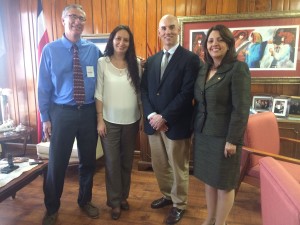
Magistrate Doris Arias Madrigal, a justice of the Costa Rica Supreme Court in San José, is spearheading the Restorative Justice Program. She believes that restorative justice can ultimately lead to a more peaceful and secure society. This is especially important in Central America, where conflict and violence are rampant, she maintains.
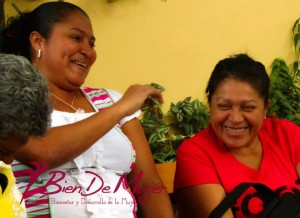
Acompañe a Fundación Strachan y a la Fundación para las Prácticas Restaurativas, en sus esfuerzos de cooperación para construir comunidad a través de Centroamérica. La Fundación está a poyando a líderes innovadores para fortalecer las relaciones entre mujeres en uno de los barrios bajos de Costa Rica y entre la juventud Salvadoreña, así como con estrategias para abordar conflictos, de modo que una comunidad pueda trabajar unida y construir clínicas de Salud en zonas rurales de Nicaragua.
Junto con otros beneficiarios de Fundación Strachan, estos líderes han descubierto que las conversaciones restaurativas tienen el poder para transformar el conflicto, reparar y construir relaciones y mejorar la sociedad. Y gracias al apoyo de Fundación Strachan y de la Fundación para las Prácticas Restaurativas, tendrán la posibilidad de compartir su labor pionera en la primera Conferencia Internacional de IIRP Latinoamérica.
Watch a video of Peter Block’s presentation, “Change the Conversation, Change the Culture,” at the IIRP 19th World Conference, October 26, 2015, in Bethlehem, Pennsylvania, USA.
With irreverent humor and unmistakable love for humanity, Peter provides the basis and protocols for the Small Group methodology of community engagement, along with inspiration for the restorative movement.
“Get over this notion that there’s something wrong with me, or that those people need to change. How are we going to create an alternative to the world that we’ve inherited? To me, that’s restorative.” —Peter Block, Citizen of Cincinnati, Ohio, USA
The Restorative Practices Foundation raised more than $11,000 to match the $10,000 donated by the Strachan Foundation in support of the IIRP Latinoamérica Conference, which hosted 261 participants from 23 countries.
Join the Strachan Foundation and the Restorative Practices Foundation in helping build community across Central America. The foundations are supporting innovative leaders in enhancing relationships among women in one of Costa Rica's slums and between urban youth in El Salvador, and in addressing conflict so a community can work together to build a health clinic in rural Nicaragua.
Along with other Strachan Foundation grantees, these leaders have discovered that restorative conversations have the power to transform conflict, repair and build relationships and improve society. And thanks to the support of the Strachan Foundation and the Restorative Practices Foundation, they will be able to share their pioneering work at the first IIRP Latinoamérica Conference.
We hear about tragic incidents daily and wonder what we can do. IIRP Associate Professor Dr. Frida Rundell talks about how restorative practices can facilitate healing for people impacted by trauma and suffering.
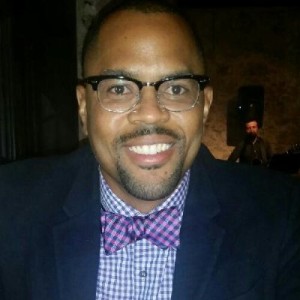
“They used to call me ‘Send ’Em Home Jones,’” admits Texas principal Marcus Jones, Ed.D.
Last year, one boy was suspended four or five times. “He always had an issue and never took responsibility for what he did,” Jones explains.
Student misbehavior interfered with learning, and staff dreaded coming to work, at Manor Independent School District’s DAEP (Disciplinary Alternative Education Program) public school, near Austin, Texas, USA.
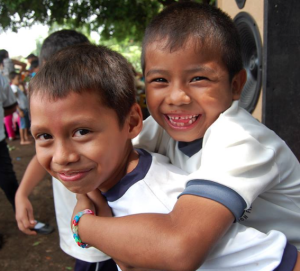
Children are transforming conflict with circle processes in nonprofit Glasswing International's after-school clubs. Trained by IIRP Latinoamérica, Glasswing is also averting suspensions and involving wider communities in El Salvador's schools. Teaching ways to build relationships and community, they hope to prevent the kind of violence and conflict that has plagued Central America for generations.
Glasswing will present their work at the IIRP Latinoamérica Conference this June. They’re receiving support for their presentation through a scholarship from Strachan Foundation in Costa Rica and the IIRP’s Restorative Practices Foundation.
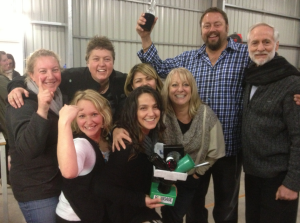
Re-Engage Youth Services, a social services agency based in Adelaide, South Australia, placed 13th on Australia’s Business Review Weekly Best Places to Work List, thanks to its restorative approach with staff. Through professional development work with the IIRP, Re-Engage is employing a restorative framework, both to engage at-risk youth and to inform workplace culture.
“We believe in order to have a positive impact in the community we must first have a positive and supportive workplace culture,” explains Re-Engage Youth Services Manager Kerrie Sellen. “To have this put to the test by an independent, rigorous study and be recognized as one of the best places to work out of hundreds of organizations is extremely encouraging.”
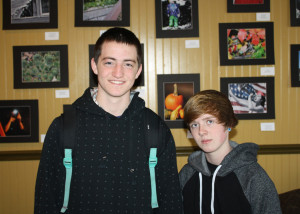
As the digital arts teacher of CSF Buxmont Academy in Sellersville, I am constantly amazed at my students’ abilities. Among other qualities, they are creative, talented, observant, intelligent and insightful. Sometimes my students fail to see their talents, as they can get caught up in the struggles that have brought them to our program. CSF Buxmont Academy, a restorative practices school, affords our students a place to grow, change, and connect with others. As a restorative practitioner, I see the importance of involving our students in community projects – in my mind, a reminder that their input in society is just as important as others’ contributions.
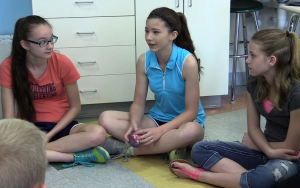
With funding from the National Institute of Child Health and Development, researchers from RAND Corporation are conducting a randomized controlled trial of restorative practices in 14 schools in Maine. With this five-year project, which began in school year 2014-15, seven schools are implementing the practices, and seven comparable schools are not.
Restorative Works Year in Review 2025 (PDF)
All our donors are acknowledged annually in Restorative Works.