Support the IIRP
  • Bookstore (opens in new window)
  • Library
  • Students (opens in new window)
  • Faculty (opens in new window)
International Institute for Restorative Practices (logo)
  • Restorative Practices
    • Restorative Practices: Explained
    • Presidential Paper Series
    • Restorative Works Magazine
    • Restorative Works! Podcast
    • Resources
      • Schools K-12
      • Research and Evaluations
      • Guides for Implementation
      • Publications
      • Integrating Related Evidence-Based Strategies
      • Case Studies
      • Higher Education
      • Community Health & Restorative Practices
    • News & Announcements

  • Graduate Education
    • Graduate Programs
      • Master of Science
      • Education Specialization
      • Community Engagement Specialization
      • Master of Science with Thesis Option
      • Graduate Certificate in Restorative Practices
      • Graduate Certificate in Relational Facilitation for Healing Trauma
      • Graduate Certificate in Change Implementation in Organizations and Social Systems
    • Course Offerings
    • Registration & Admission
      • Program Application
      • Course Registration
      • Transcript Requests
      • Graduate Course Schedule
      • Frequently Asked Questions
      • Academic Catalog & Student Handbook
        • Introduction
        • Institutional Statements
        • Academic Calendar
        • Academic Catalog
          • Courses
          • Admissions
          • Educational Programs
          • Institutional Learning & Program Goals
        • Student Handbook
          • Health & Safety
          • Technology
          • Student Support
          • Tuition & Fees
          • Financial Aid & Scholarships
          • Campus Location
          • Academic Policies & Procedures
          • Accreditation
          • Institutional Policies
        • Index
    • Transparent Tuition
      • Tuition & Fees
      • Payment Plan
      • Cost of Attendance
    • Scholarships
    • Recruit Our Students
    • Philosophy & Academic Goals
  • Continuing Education
    • View All Offerings
    • Professional Development
      • Restorative Practices for Educators
      • Navigating Conflict: Restorative Practices in the Workplace
      • Restorative Practices at Work: Relational Tools for Culture Change
      • Connection and Content: Integrating Restorative Practices into Classroom Learning
      • Implementing with Intention: Effecting Change Through a Relational Lens
      • Facilitating Listening Circles
      • Restorative Justice Conferencing
      • Putting Theory into Practice for School Staff and Administrators
      • Reimagining Campus Community with Restorative Practices
    • Bring Our Events to Your Team
    • Restorative Practices Training of Trainers
    • Conferences & Symposia
    • Free Webinars
  • Collaborative Application
    • Consultative & Implementation Services
    • Whole-School Change
      • Program Overview
      • School Resources
      • Frequently Asked Questions
    • Restorative Practices in Higher Education
      • Get Involved
  • About
    • The IIRP Graduate School
    • Message from the President
    • Who We Are
      • Faculty
      • Instructors
      • Leadership
      • Trustees
      • Alumni
      • Factbook
    • Support the IIRP
    • Employment at the IIRP
    • Accreditation Information
    • Research Agenda
    • Lenape Nation Acknowledgment
    • Consumer Information (Higher Education Opportunity Act)
  • Contact Us

News & Announcements

Subscribe to IIRP News, the IIRP’s monthly newsletter.

Subscribe to IIRP News

Sign up for our monthly e-newsletter, IIRP News, to receive information on the latest trends in the restorative practices field, encouraging stories from our students and alum, and the latest IIRP offerings. 

Please let us know your name.

Please write a subject for your message.

Please let us know your email address.

Invalid Input

Invalid Input

Invalid Input

Bethlehem, PA, student wins "Yes I Can" Award with help from restorative practices

Published: March 17, 2014
Yes I Can Award

Emmanuel Zayas received a 2014 "Yes I Can" Award from the Council for Exceptional Children. Emmanuel Zayas – Manny – a senior at Freedom High School, recently received a Council for Exceptional Children's 2014 Yes I Can Award for his success transitioning from school to work.

Manny's emotional support case manager, Deanna Webb, has worked with him since he was in seventh grade and attests to the great progress he has made. She said, "Manny's emotional intelligence has really increased. He sees how his behaviors have affected others. He's now a leader with his peers."
Tom Albright, who offers career counseling and job placement and coordinates a school-to-work transition program at Freedom, has worked extensively with Manny, his family and his employer over the past year. Albright said that when Manny first joined his class, he was reluctant to get involved in the restorative circles that Albright employs to engage is students in helping each other deal with issues they're facing in school, at home and at work. (In the video, Manny refers to the "fishbowl," a special type of circle that can be useful for problem-solving.)

Read more

National research funds 15 urban schools to implement restorative practices

Published: March 17, 2014

restorative circlePhoto by Tup Wanders at Flickr Creative Commons.The International Institute for Restorative Practices (IIRP) is pleased to announce a partnership with the Center for Social Organization of Schools at the Johns Hopkins University School of Education to conduct a three-year randomized field trial evaluation of the IIRP’s SaferSanerSchools Whole-School Change Program. The study will establish the impact of school-wide restorative practices on reducing disparities in discipline and overall rates of suspensions, arrests and expulsions in high poverty-area middle and high schools that also have significant proportions of students of color.

This study, supported by a million-dollar grant from The Atlantic Philanthropies, aims to build the evidence base of restorative practices as an effective alternative to zero tolerance. During the three-year study period, 15 middle and high schools in Chicago, Illinois; Los Angeles, California; Philadelphia, Pennsylvania; Boston, Massachusetts; Washington, D.C.; Brooklyn, New York; San Antonio, Texas; and Baton Rouge, Louisiana, will receive school-wide restorative practices training and consultation. Uniquely, the study will evaluate the combined and value-added impacts of instituting restorative practices in schools along with Diplomas Now, an ongoing whole-school reform effort that strengthens learning environments and enhances student supports, guided by an early warning system.

Read more

Eliminating disparities in school discipline: Evidence and recommendations presented to Congress support restorative practices

Published: March 13, 2014
racial disparities and discipline

Disparities in out-of-school suspension and expulsion by race, gender and sexual orientation are a critical issue in our schools.

The Discipline Disparities Research to Practice Collaborative, a panel of 26 national experts — researchers, educators, advocates and policy analysts — presented to Congress on March 13 the most comprehensive compilation and analysis of research on exclusionary discipline ever attempted. Read the papers.

Read more

"Best school in the universe" says key is restorative practices

Published: March 10, 2014

Health Sciences High and Middle College, a public charter school based in San Diego, California, USA, is located in the City Heights neighborhood, one of the most diverse neighborhoods in the city. The high school was founded seven years ago and now has about 550 students; the middle school is in its first year with 130 students. About 60 percent of students are Hispanic, with high diversity among the remaining 40 percent. Students come from wealthy to very poor families and everything in between. One of the unique features of the school is that high school students conduct weekly internships, mostly at hospitals. Beginning about 3 1/2 years ago all staff have been systematically trained in restorative practices through the International Institute for Restorative Practices (IIRP) and have implemented restorative practices school-wide.

In this article, Jeff Bonine, principal of the middle school, and Dominique Smith, school social worker for the middle and high schools, with IIRP writer Joshua Wachtel, describe how restorative practices form an integral part of the structure that Health Sciences has established for its middle school program. The article includes concrete examples of the ways teachers and staff are using restorative practices and how it works.

Administrators and staff at Health Science High and Middle College are so excited about restorative practices that they are hosting an IIRP Basic Restorative Practices professional development event April 22-25, 2014, to spread the word about the practices to the public.
Read more

Peel School District in Ontario, Canada

Published: February 24, 2014
Peel School District in Ontario, Canada

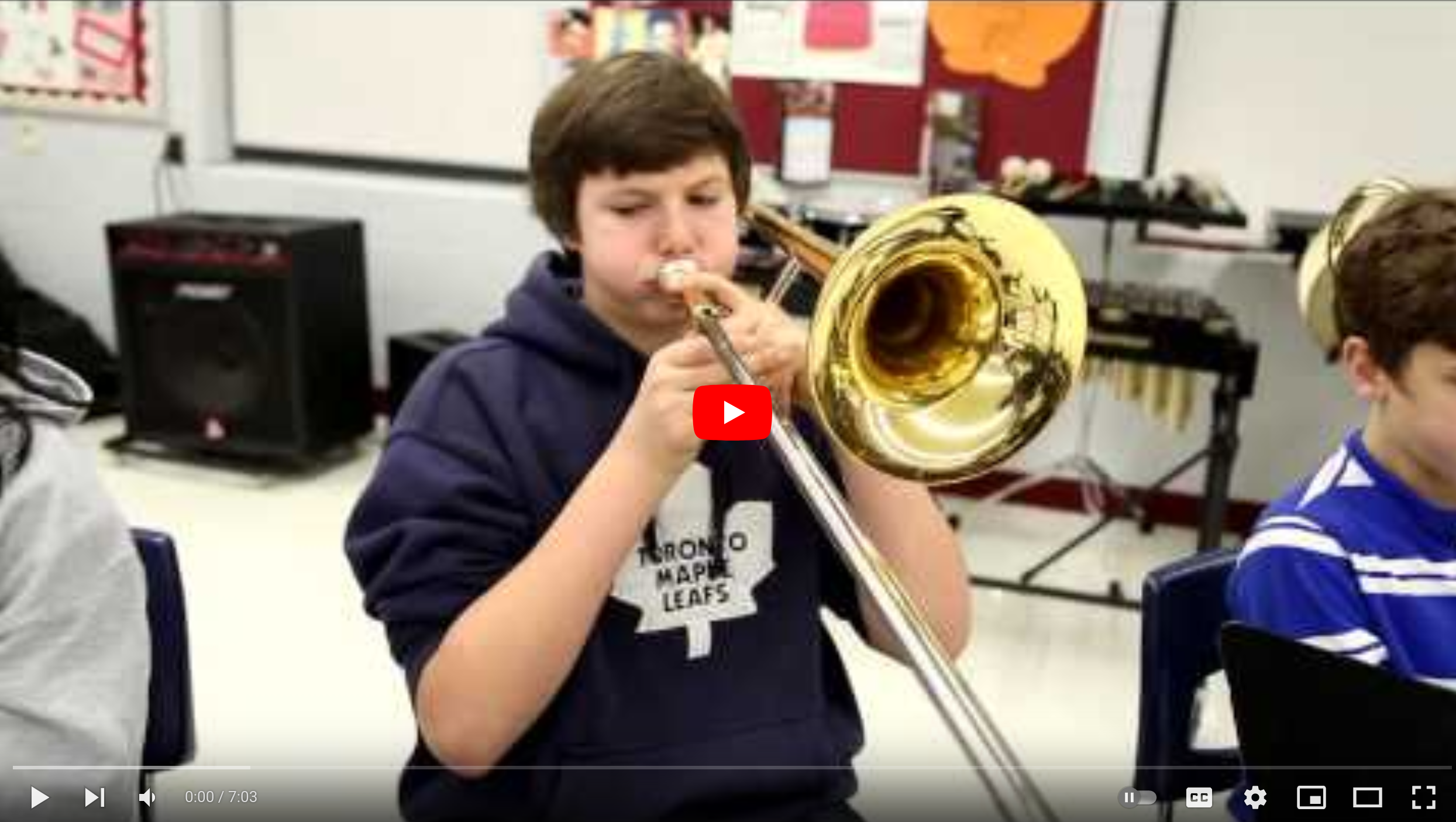
Peel School District in Ontario, Canada, demonstrates how restorative practices can be used as an integral part of teaching and learning.

Read more

Restorative practices: Building a connected community of learners

Published: February 18, 2014

The following post is by Suzanne Bartel, a grade 4/5 teacher at Cheam Elementary School in Chilliwack, British Columbia, Canada. She has been doing restorative practices in her classroom for four years and says that this year three of six classes in her school are using RP with the other three classes showing great interest. To enhance her already experienced practice, Suzanne recently attended four days of Basic Restorative Practices professional development offered by IIRP Canada and wrote this post afterwards.


“Because of our class circles, students accepted more responsibility for their roles in both creating and solving the problems. It became much easier to encourage students to solve their problems themselves; in part because I gained more confidence that students had the skills to do so, but also in part because of how the project shifted the way I communicate with my students.”

–Fourth Grade Teacher

Read more

Schools across Ontario join forces, build restorative practices movement

Published: February 18, 2014

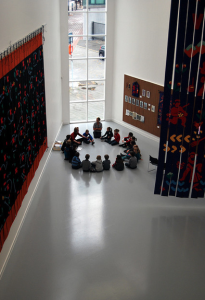
The following article discusses two 2013 symposia, one held in the town of Cobourg in southern Ontario, Canada, another in Thunder Bay in the northern part of the province, both funded by the Ontario Ministry of Education to develop restorative practices in schools and the community. Bruce Schenk, director of IIRP Canada said, “Restorative practices is not just being done by a school board [district] here and there, but is a potentially recognized and supported approach right across the province.” RP is not confined to Ontario. In a companion piece, an elementary school teacher in British Columbia on the west coast of Canada, who recently attended an IIRP Canada professional development event near Vancouver, describes the specific ways she uses restorative practices in her classroom.

Read more

IIRP graduate Beth Alosi applies restorative practices at Ford Motor Company

Published: February 10, 2014

IIRP graduate Beth AlosiIIRP Graduate Beth Alosi, '11, applies restorative practices in her coaching work with Ford and Lincoln car dealerships.Beth Alosi was working as a teacher and taking courses towards a master’s degree in restorative practices in education from the International Institute for Restorative Practices (IIRP), but unbeknownst to her, the future pointed to a job with Ford Motor Company. Her father, Ed Alosi, had always worked in auto service, training and consulting, and Beth, while growing up, spent time with him at dealerships and even held a job for four years detailing cars. Beth often talked to her father about the restorative practices she was learning, and they both saw something in common between Beth’s work teaching and engaging adults in literacy and workforce development programs and Ed’s consulting work where he had to engage auto dealers to make positive changes in their businesses. When Ed returned from an event outlining Ford’s new Consumer Experience Movement (CEM), a program for revamping customer service, it all came together. In the words of a Ford VP, “The Consumer Experience Movement is about helping dealers focus on the people aspect of the business — not just what we do but how we do it. It all comes down to how you treat people.”* Ed said to Beth, “It’s restorative practices!”

Read more

Restoring community and trust

Published: February 4, 2014
Restoring community and trust

The following article by IIRP Assistant Director for Communications Laura Mirsky and IIRP Trainer and Consultant Steve Korr appeared in Principal Leadership, Vol. 14, February 2014. The publication coincides with a presentation by Korr at the National Association of School Principals' 2014 Ignite Conference.


How can schools teach high-level academic content effectively and also promote students’ social and emotional development and help them become better members of society? Those goals are not mutually exclusive; they feed each other. Restorative practices provide an overarching philosophy and specific strategies that develop relationships, communication, empathy, and accountability and support school climates that enable learning to flourish.

The philosophy and processes of restorative practices were developed by the International Institute for Restorative Practices (IIRP) Graduate School in Bethlehem, PA, and its demonstration programs in the Community Service Foundation (CSF) alternative schools and programs for delinquent and at-risk youth. The fundamental hypothesis is that human beings are happier, more cooperative and productive, and more likely to make positive changes in their behavior when those in positions of authority do things with them, rather than to or for them.

This with hypothesis informs the continuum of restorative practices—from the informal to the formal—and includes reactive strategies that engage students in supportive processes that allow students to take responsibility for their behavior as well as proactive processes that build relationships and community. (See figure 1.) Restorative practices can completely change the climate of a school, not only reducing incidents of misbehavior but also fundamentally changing the way people in the school community interact.

The schools included in this article are participating in IIRP’s SaferSanerSchools Whole- School Change Program, which involves every member of a school community, including administrators, teachers, staff members, and students. Many of the schools are in large urban districts, and they all face such issues as disrespect, violence, fighting, bullying, and lack of connection between students and staff members. They also all want to improve relationships and feel more like a family.

Changing the Climate

Warren G. Harding Middle School is a grades 6–9 school in Philadelphia, PA, and is in the second year of implementing restorative practices. Michael Calderone, Harding’s principal for six years, said that restorative practices have “completely changed the way we do the business of school here.” Harding uses both reactive and proactive processes.

REACTIVE PROCESS
When a student was given an out-of-school suspension before restorative practices were introduced, administrators met with the student’s parent or guardian without the student present. The student would return to class after the suspension angry and frustrated, repeat the behavior, and get suspended again, said Calderone.

Fig. 2: Restorative Questions

The following questions are used in informal circles and in formal restorative conferences to address wrongdoing. Note that the questions used to respond to challenging behavior do not include, “Why did you do it?” because that elicits vague and defensive responses and assumes guilt. The question, “What happened?” enables people to open up and tell their story.Questions to respond to challenging behavior include:
  • What happened?
  • What were you thinking about at the time?
  • What have you thought about since the incident?
  • Who do you think has been affected by your actions? In what way?
  • What do you think you need to do to make things right?

Questions to help those harmed by others’ actions include:

  • What did you think when you realized what happened?
  • What effect has this incident had on you and others?
  • What has been the hardest thing for you?
  • What do you think needs to happen to make things right?

Now as an alternative to suspension—if the incident isn’t on the school district’s list of nonnegotiable offenses—the dean of students, the student, the parents, the teacher, and sometimes the student’s entire class meet in a circle and answer the restorative questions to explore what happened, hold the student accountable for the incident, and repair the harm. (See figure 2.) If suspension is mandatory, a circle is held to reintegrate the student into the classroom when he or she returns.

This reactive process enables the student to hear how his or her behavior affected others, make amends, repair harm, and shed the “offender” label. Others who were affected have a chance to be heard and to feel better about what happened, and fellow students have an opportunity to learn from their peer’s experience.

The same benefits apply to circles that are held in response to bullying, which bring together the student who has been bullied and the student who has bullied, with adults participating as well. The circle gives the student who bullied others a chance to see the ripple effects of his or her actions. “To watch [people] cry and see how your actions hurt them so deeply builds empathy,” says Calderone. The circle also gives a student who was bullied an opportunity to help process his or her feelings.

PROACTIVE PROCESS
As one of several Philadelphia schools that admitted students from the more than 20 schools closed by the city, Harding’s student population has increased from 600 to 900. Because returning students model proactive restorative practices for new students, however, Harding is running much more smoothly than it would have otherwise, Calderone said.

Proactive circles are held regularly in every classroom to enable students to get to know one another and build community. Teachers hold check-in circles first thing Monday morning for students to share their weekend activities, which can be “anything from going to the movies to getting arrested,” said Calderone, and to set goals for the week.

As students become comfortable with the circle process and trust it as a way to address problems, they start to ask for the chance to participate in a circle. For example, when a new student at Harding was disrupting classes and annoying his fellow students, the students asked their teacher for a circle. “Instead of shoving him and telling him to shut up, in the circle, the kids told him, ‘We welcome you, but this isn’t how we work here. We have plans. We want to learn. You need to get on board,’” the teacher said. The new student listened to his peers and matters improved.

The most basic and informal proactive restorative practice, the “affective statement,” involves addressing behavior by telling the person how his or her actions make you feel, rather than commanding or yelling—saying, for example, “When you disrupt class, it hurts my feelings,” rather than, “Sit down and be quiet!” “I statements” humanize the person making them and can foster a change in the dynamic between a teacher or an administrator and a student because students often aren’t used to thinking of adults as people with feelings.

“You have to retrain yourself to think that way,” said Calderone, who credits a staff member for helping him be more aware of that. “I yell at kids sometimes. This is a tough school with some tough kids. One of my counselors called me on it. She was crying. I said, ‘Wow, I didn’t realize I was so unrestorative still.’ It really made me reflect.”

POSITIVE CHANGES
The effects of reactive and proactive restorative practices are reflected in the discipline data collected at Harding at the end of the 2012–13 school year: out-of-school suspensions went down by 65 incidents. Calderone believes that academic performance also improved. With less disruption in the classroom, more time can be spent on instruction. When fewer students are removed from the classroom, more are included in the learning process.

The restorative approach represents a big shift. “We’re taught to direct and control things,” Calderone said, “but kids need to need to take ownership for their own learning and behavior, and middle school is a crucial time for this. These kids aren’t babies anymore. We’re preparing them to be more independent.”

Listen and Learn

Louis E. Dieruff High School, a grades 9–12 school in inner-city Allentown, PA, completed one year of restorative practices implementation during 2012–13 and is embarking on a second. Susan Bocian, an Allentown educator for 30 years and the principal at Dieruff for 4, said that restorative practices have enabled everyone in the school to listen and learn from one another, bringing together “the whole Huskie family—staff members, students, families, community, alumni—anybody invested in our purpose, which is student learning. We pause and value each other for our contributions and our perspectives.”

Dieruff is employing reactive processes to respond to wrongdoing and proactive processes to build community. Bocian noted the following changes after implementing restorative practices: an 85% decrease in out-of-school suspension; a 45% reduction in “late-to-school” infractions; an 85% increase in the use of “reflection journaling”; and a 65% increase in goal-setting sessions with deans, teachers, and students.

When implementing restorative practices, it is as important for teachers and staff members to employ them with one another as it is with their students, said Bocian, who is using proactive circles in staff meetings. “I started to realize the power of that little strategy early on, and I modeled it at every department chair and administrative team leadership meeting,” she said. “The process of sharing even little things about ourselves has humanized everyone. Staff meetings are filled with laughter, smiles, and empathy. And because we’re modeling it in our meetings, the teachers are doing the same in their classrooms.”

Bocian also uses go-arounds to elicit opinions from her staff members on important decisions and to build leadership, and said, “The wealth of knowledge I’ve gained from my staff has been really good.”

Increasing Calm

Other schools implementing restorative practices have seen climate change as positive as that at Harding and Dieruff. Freedom High School, in Bethlehem, PA, saw a 60% decrease in suspensions and a 50% decrease in teacher referrals to the office following two years of restorative practices, according to Principal Michael LaPorta. The school feels calm now, he said, crediting proactive circles in the classroom that build community; affective statements that build relationships; restorative questions that “guide problem solving”; and regular meetings for teachers to share restorative practices, including implementation successes and challenges.

William Allen High School, in Allentown, PA, also had big challenges in attendance and discipline, said Shannon Mayfield, a former principal. One year of restorative practices significantly changed the school climate, producing a 41% decrease in fighting, a 63% decrease in cutting classes, and 64% decreases in “late to class” and “late to school” violations. In addition to a restorative approach to discipline, Mayfield attributes those improvements to routine classroom check-in circles and to teachers including students in the planning process for their education by regularly asking them what they need do to improve and engaging with students to discuss sensitive subjects.

The positive school climate change at Allen increased outside community participation in school activities by 80% to 100%. “People saw our kids and teachers really engaged and wanted to take part,” Mayfield said. Mayfield is now the principal of Overbrook High School in Philadelphia. Like Harding Middle School, Overbrook is welcoming students from shuttered schools. About implementing restorative practices at Overbrook, he said, “I can see growth taking in place within the school and the community in a way they can be proud of.”

Improving Safety

Plymouth Educational Center, a public K–12 charter school in Detroit, MI, has implemented restorative practices for two years. Christopher Plum, formerly Plymouth’s chief academic officer and now a leadership team consultant there, said the practices have helped the school “be more proactive in creating a healthy culture” and given it “a framework for asking questions and eliciting responses that are real and provide not just Band-Aids but a way to deal with root issues.”

Plum illustrated how restorative practices have created a culture of communication and safety at Plymouth with a story: An argument between two boys in the school cafeteria exploded, with 10 kids taking sides and joining in. Because some of the boys had past neighborhood gang affiliations, it was serious. As adults tried to separate the boys, a ninth-grader stepped in and offered to run a circle. The students had been “doing circles” for checkins, with academic subjects, and to deal with issues, so they knew what to do.

The ninth-grader ran the circle while the adults left the students alone (watching through a window). The boys took turns having their say around the circle. Soon the two who had started the fight realized that their argument had been based on a misunderstanding, and their hostility faded as quickly as it had flared. In the end, the two were hugging and in tears.

With the fight defused, students pulled out their cell phones and started texting. Outside the school, four cars that had been idling next to the building full of gang members who’d been called to join the fight drove away.

“Somebody could have died that day,” said Plum. But because Plymouth’s students had learned to manage conflict with their peers, it didn’t happen. Plum added, “With restorative practices, we’re empowering kids to take charge of their own lives.”


This article, "Restoring Community and Trust," appeared in Principal Leadership, Vol. 14, February 2014, a publication of the National Association of School Principals.

Read more

Restorative practices shows promise for meeting new national school discipline guidelines

Published: January 15, 2014

The research referenced in this article, "The Promise of Restorative Practices to Transform Teacher-Student Relationships and Achieve Equity in School Discipline," has since been published in the Journal of Educational and Psychological Consultation. Read the abstract and purchase the report.


Department of EducationOn January 8, the U.S. Federal Government issued new guidelines recommending that schools revise their discipline policies to move away from zero tolerance policies, which exclude large numbers of students with suspensions and expulsions, often for minor infractions. Instead the guidelines recommend the use of methods such as restorative practices, which foster positive school climates. A joint effort of the Department of Education and the Department of Justice, these recommendations come in response to numerous studies showing that students of color and students with disabilities are disproportionately impacted by current disciplinary policies, resulting in the creation of what many advocates for change have dubbed a “school-to-prison pipeline.”

Read more

Page 34 of 106

  • 29
  • 30
  • 31
  • 32
  • 33
  • 34
  • 35
  • 36
  • 37
  • 38
  • Restorative Practices: Explained
  • Presidential Paper Series
  • Restorative Works Magazine
  • Restorative Works! Podcast
  • Resources
  • News & Announcements

Restorative Works Cover
Restorative Works Year in Review 2025 (PDF)

All our donors are acknowledged annually in Restorative Works.

Contact IIRP

531 Main Street
Bethlehem, PA 18018

(610) 807-9221

IIRP on Facebook (opens in new window)IIRP on X (formerly Twitter opens in a new window)IIRP on YouTube (opens in a new window)IIRP on Instagram (opens in a new window)IIRP on LinkedIn (opens in new window)

Get to Know Us

About the IIRP

Restorative Practices

News and Announcements

HEOA Consumer Information

Accreditation

Meet the IIRP

Employment

Digital Accessibility Statement

Explore Programs & Resources

Master of Science Degree

Graduate Certificates

Professional Development

Collaborative Application

Resources and Research

Events, Conferences, and Summits

The Collaborative Center for Restorative Practices in Higher Education

Get Started

Start Your Graduate Application

Register for Professional Development

Request Customized Experience

Become a Trainer

Browse the Bookstore

Whole-School Change

  • Restorative Practices
    • Restorative Practices: Explained
    • Presidential Paper Series
    • Restorative Works Magazine
    • Restorative Works! Podcast
    • Resources
    • News & Announcements
  • Graduate Education
    • Graduate Programs
    • Course Offerings
    • Registration & Admission
    • Transparent Tuition
    • Scholarships
    • Recruit Our Students
    • Philosophy & Academic Goals
  • Continuing Education
    • View All Offerings
    • Professional Development
    • Bring Our Events to Your Team
    • Restorative Practices Training of Trainers
    • Conferences & Symposia
    • Free Webinars
  • Collaborative Application
    • Consultative & Implementation Services
    • Whole-School Change
    • Restorative Practices in Higher Education
  • About
    • The IIRP Graduate School
    • Message from the President
    • Who We Are
    • Support the IIRP
    • Employment at the IIRP (opens in new window)
    • Accreditation Information
    • Research Agenda
    • Lenape Nation Acknowledgment
    • Consumer Information (Higher Education Opportunity Act)
  • Contact Us

© 2015 - 2026 International Institute for Restorative Practices | Site Map