News & Announcements

Pierre R. Berastaín, a student at Harvard Divinity School and co-founder of the Massachusetts Restorative Justice Collaborative, writes today on his Huffington Post blog:
While restorative justice programs continue to sprout throughout the state, no law has helped promote or endorse any of them. This legislative session, however, State Sen. Jamie Eldridge (D-Acton) has introduced Senate Bill 52, an act promoting restorative justice practices. If it goes into law, the act would not only give legislative recognition and legitimacy to restorative practices, but it would also establish a committee to assess programs in the state as well as make recommendations for future programming. This committee would bring together a range of representatives, from court-based programs to community members and academics in the field. For us in the Massachusetts Restorative Justice Collaborative, an organization that seeks to sustain the existing momentum and nourish a more cohesive restorative justice movement throughout the Commonwealth, the Act would further establish our efforts to bring restorative and transformative practices to a number of settings including schools, shelters, and prisons.
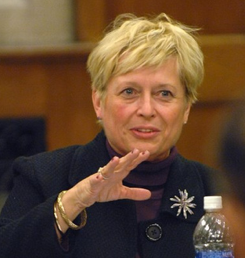
Janine P. Geske, retired Justice of the Wisconsin Supreme Court and Distinguished Professor of Law at Marquette University Law School, recently spent time as a Visiting Professor in Restorative Justice at Catholic University of Leuven, Belgium. She has written two blog posts for Wisconsin Restorative Justice Coalition inspired by her time abroad. In the first piece, she discusses the framework for national implementation of restorative justice (mostly mediation) processes in Belgium. In the second second, she suggests ways American researchers and advocates could learn from their European colleagues. (Thanks to IIRP's Wisconsin affiliate, Patrice Vossekuil, for forwarding the link.)

Stop and frisk policing, according to a new study, "stirs up, rather than deters, youth crime," according to an article in Time magazine. The following, by Nicole Flatow, published by the Center for American Progress, succinctly summarizes that article and the finding of the report:
Students who are stopped by police are more likely to later engage in delinquent activity, according to a new study in the journal Crime & Delinquency.
Researchers at the University of Missouri at St. Louis followed about 2,600 students participating in gang-prevention programs in seven different cities over the course of seven years. They subjected some students to random police stops, even when they hadn’t done anything wrong, some to stops and arrests, while others were not stopped.

When the teachers at Country Day School, an American private school in Costa Rica, were trained in restorative practices several years ago, Veronika Marenco, a third grade teacher at the time, knew she had found something really useful. She started the school year with circles for her students to get to know one another, and followed it up every day with daily circles to check in and check out, play games, review math concepts and also address problems between students. A few weeks in, when parents were invited to "Back to School Night," Veronika even arranged the classroom in a circle of chairs and let parents (and a few children who came along) experience a circle to introduce themselves to one another.
Here's a five-minute "teaser" for a forthcoming documentary from Teachers Unite titled Growing Fairness. The first part of the trailer offers a critique of the so-called school-to-prison pipeline and zero tolerance policies.
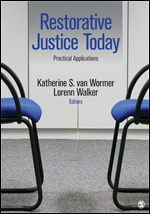
Eric Assur at Restorative Justice Online has just posted a book review on Restorative Justice Today: Practical Applications, edited by Katherine S. van Wormer and Lorenn Walker. As I mentioned last fall, this book includes a chapter co-written by IIRP President Ted Wachtel and another written by IIRP Assistant Director for Communications Laura Mirsky.
Over the past thirty years the number of books or publications on Restorative Justice (R.J.) has increased annually. In 2013 justice practitioners, students and conflict resolution (or conflict prevention) readers may proclaim this publication as their book of the year. The authors, both with interesting backgrounds and academic credentials have provided a ‘practical’ look at the current applications for R.J. in the United States and elsewhere. Unlike most North American or United Kingdom anthologies with limited geographic focus this publication provides an impressive worldwide frame of reference. The words they use are well chosen and the entire collection of twenty five (25) articles by a well chosen collection of twenty nine listed authors is thoughtfully organized.
The following is the beginning of a piece by Rachel Barnard posted July 17 in Urban Omnibus titled "Young New Yorkers: Restorative Justice Through Public Art."

I was sad because it's not like you committed a crime like you robbed someone, or you beat up someone, or you killed someone. It broke my heart that for such a minor offense you had to face the crime. Because it is a crime. Whether you do graffiti, whether you jump the turnstile, they are all crimes.
Isaiah is interviewing his grandmother as part of a homework assignment for Young New Yorkers, a restorative justice arts program for 16- and 17-year-olds with open criminal cases. The assignment asks Isaiah, and his fellow participants, to interview people important to them about the personal impact of their misconduct. Isaiah’s grandmother’s response is typical of a guardian or mentor, a combination of belief and encouragement coupled with utter frustration:
This beautifully animated short film walks through a Family Group Decision Making conference (FGDM, also known as a Family Group Conference) from the point of view of a mother at risk of losing her children.
Norwegian Directorate for Children, Youth and Family Affairs (Bufdir) is the Norwegian governmental office for the welfare and protection of children and families.
This video is also available in Norwegian and Russian.
Watch a similar video about family group conferences from a child's perspective.
Find information about IIRP's Family Power program.

This article is an excerpt from IIRP president and founder Ted Wachtel’s new book, Dreaming of a New Reality: How restorative practices reduce crime and violence, improve relationships and strengthen civil society, published by the International Institute for Restorative Practices, in association with the Piper’s Press. Through stories and statistics, the book demonstrates the promise of restorative practices to heal victims, prevent bullying, curb conflict, reduce school disciplinary problems and boost workplace satisfaction and productivity. It also outlines the history and development of this growing social movement, as well as a vision for its future.
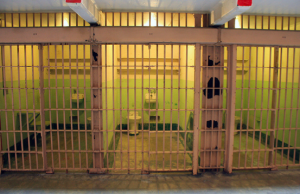
A few months ago I posted a piece about a report issued in the UK by Pat Nolan, director of Justice Fellowship, the criminal justice reform arm of Prison Fellowship International, about a shift in conservative thinking on crime in the US and a possible alliance between the right and the left on including restorative justice as a way to shift the current emphasis on prisons. Since the article was published in the UK and not here in the US, I put a question mark at the end of my post, which I titled "A shift in conservative American thinking on justice?"
But now a piece has appeared in the Wall Street Journal – indeed on the front page of the June 21, 2013 issue – titled "As Prisons Squeeze Budgets, GOP Rethinks Crime Focus" by Neil King, Jr., and it confirms something is afoot.
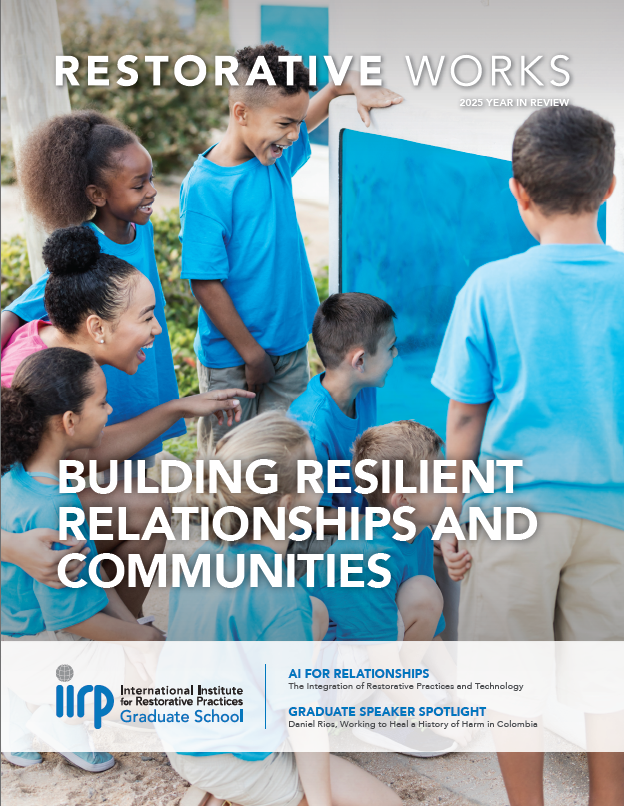
Restorative Works Year in Review 2025 (PDF)
All our donors are acknowledged annually in Restorative Works.