News & Announcements
Lisa Rea, president of Restorative Justice International, recently interviewed IIRP President John W. Bailie, Ph.D., and Michigan Regional Representative Rev. Henry L. McClendon, Jr. The half hour discussion revolves around the IIRP's "Toward a Restorative City" project in Detroit, which serves as a window into understanding the IIRP's history and mission, its work in the areas of justice and schools and the relationship between restorative justice and restorative practices.


In Joseph Campbell’s seminal work, The Hero with a Thousand Faces, he discusses how life’s tragedies remind us of that which is fragile and life’s comedies remind us of that which is invincible within us and around us. It is only by grasping the reality of both aspects of our personal story that we come to know ourselves and to fully understand others. Even in restorative conferences held in the wake of serious offenses such as murder, victims who choose to participate commonly report that they came to see the offender as an imperfect and broken human being, instead of an all-powerful monster. More than any other method, humans use storytelling and voice to make sense of emotionally powerful experiences. A dignified life is one in which we feel that our story is heard, understood and matters to those around us.
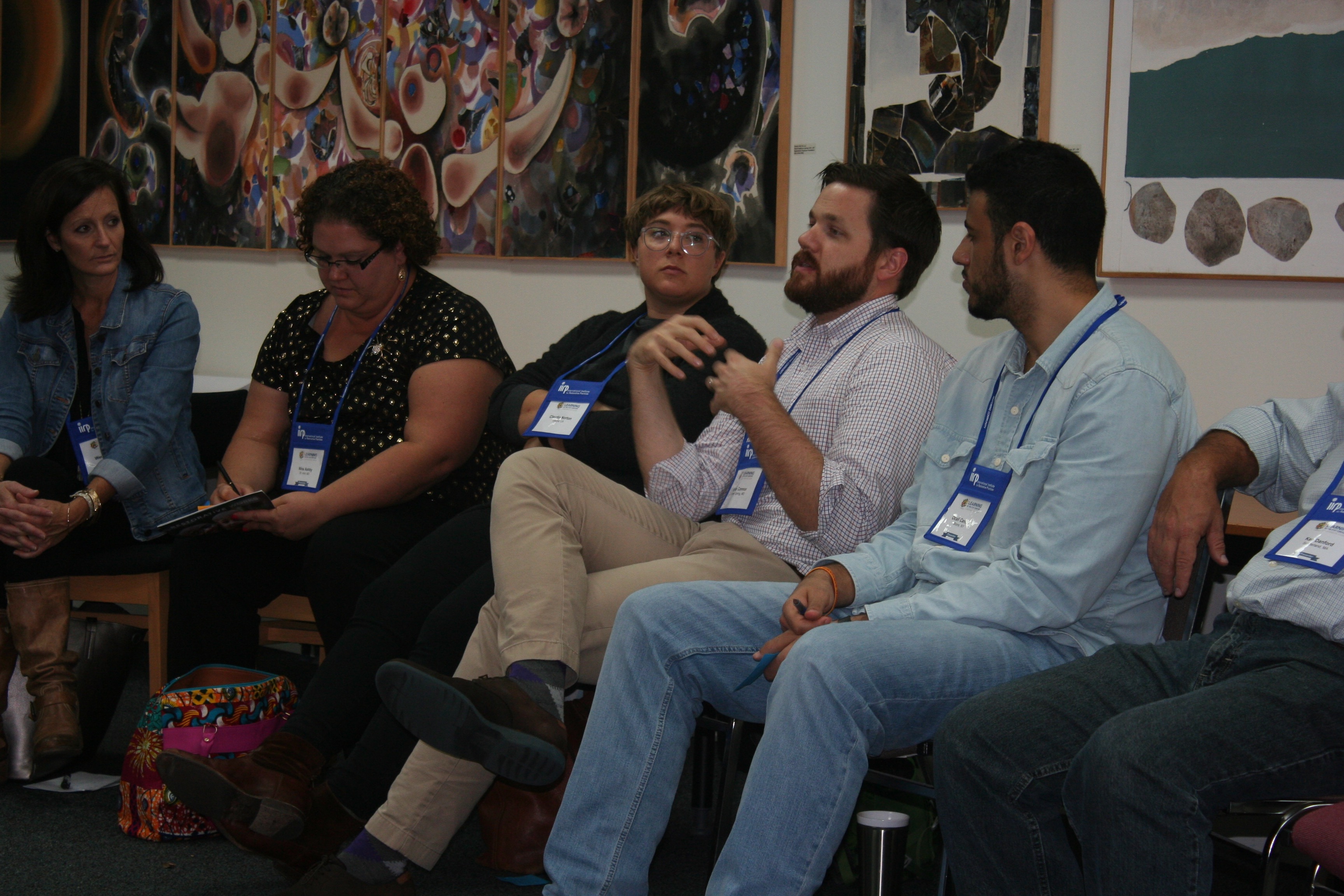
The 2017 IIRP World Conference, Learning in the 21st Century: A Restorative Vision, was held October 23-25 in Bethlehem, Pennsylvania, at the Hotel Bethlehem and IIRP Campus. The conference created a vibrant community of learning and mutual support for more than 370 participants from 34 U.S. states, three Canadian provinces and 11 other countries: Australia, Canada, Costa Rica, Hungary, India, the Netherlands, New Zealand, Peru, Singapore, Trinidad & Tobago, and the United Kingdom.
IIRP President John W. Bailie, Ph.D., welcomed all participants Monday morning at the Central Moravian Church with introductory remarks. "The 21st century presents new needs and challenges, and educational institutions must rapidly adapt. What’s needed is a fundamental re-visioning of what it means to learn and what it means to teach," he offered. "Our goal is to bring new voices into the field of restorative practices that can challenge all of us to develop, grow and think expansively about the future of learning."





IIRP President John W. Bailie, Ph.D., provides a brief overview of how restorative practices could provide a framework for responding to extermism.
A colleague recently recommended a great classic clip by John Cleese on the benefits of extremism. Please have a look…
As Mr. Cleese insightfully points out, the primary benefits of extremism consist of:
- Providing moral justification for otherwise immoral behavior
- The promise of easily obtained self-worth derived from simply adopting the “correct” ideological views
- Projecting blame for all of one’s fears, failures and/or insecurities onto an external threat (usually a group of people)

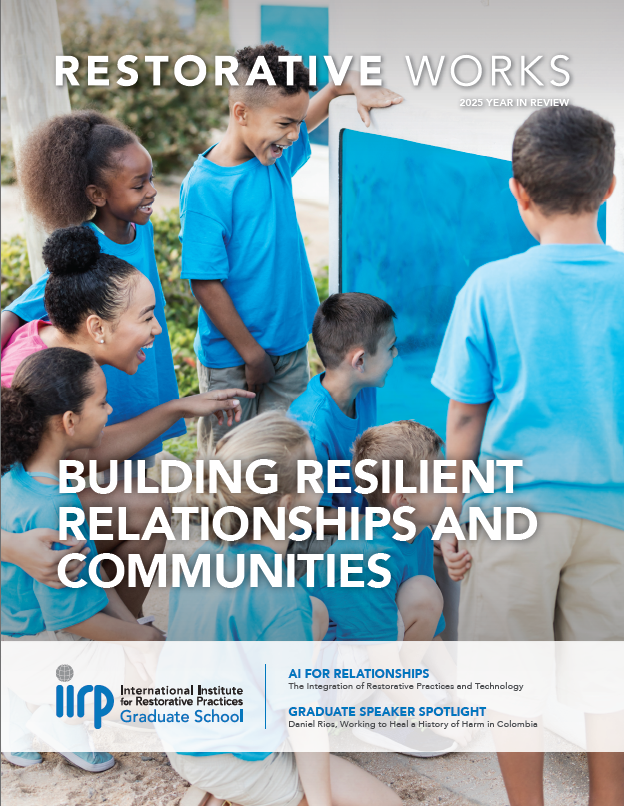
Restorative Works Year in Review 2025 (PDF)
All our donors are acknowledged annually in Restorative Works.