News & Announcements

Radical changes are coming to higher education, explains IIRP President John W. Bailie, Ph.D., as he reflects on his experience at the New York Times Higher Ed Leaders Forum. He says that smaller, nimble institutions - like the IIRP Graduate School - will be best positioned to provide 21st century students the kinds of useful skills and experiences they will want and need.

Most recently, Dr. Abrams has been teaching research methods in the online MSW program at Boston University School of Social Work. She was previously Special Assistant to the Vice Provost for Student Affairs at Lehigh University and Director for Health Promotion and Wellness at Princeton University.
Dr. Abrams's background in public health, social work, educational statistics, and measurement and evaluation will enable her to contribute to the growth of the Graduate School. And her experience in mixed-methods research, program evaluation and online teaching, as well as two decades working in higher education, will provide valuable learning opportunities for our students.
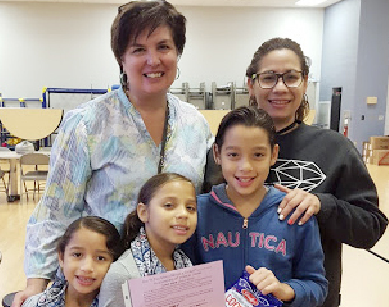
Dawn works at McKinley K-8 school, where 99.5% of students are eligible for free or reduced lunch. As Family Involvement Coordinator, she assists children and families, many of whom are homeless or transient.
“From the moment I walk through the doors, we are ceaselessly working to make students, staff and families feel valued and heard,” explains Dawn. “This is more than just nice words. We really demonstrate that we are doing something different to make sure people know they are important.”
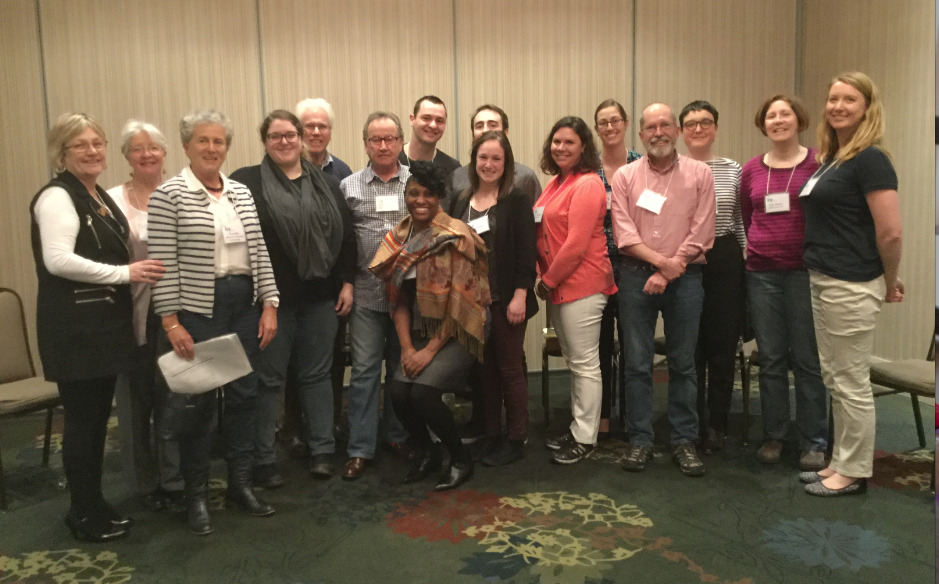
IIRP Canada Director Bruce Schenk says the forum was all he hoped it would be. “It gave people a chance to listen to each other and engage in dialogue about their experience of restorative justice.” At the same time, participants explored “what a new more relationally based justice paradigm might be and what it will take to get there.”
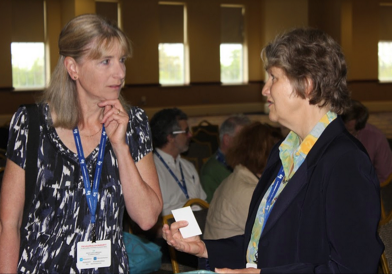
Below the article, please find a list of all sessions and links to presentation materials.

Nursing homes, even very nice ones, tend to regiment life for their residents based on the rhythms established by the institution. But General Manager Debra Wells says the idea is to “deinstitutionalize” the system and “put residents in charge.” Rather than having to live each day by staff routines, residents at Maranatha, in Wellington, New South Wales, a town and rural region of about 10,000 people located 225 miles from Sydney, Australia, are greeted with choices and conversations that allow them to express their needs.
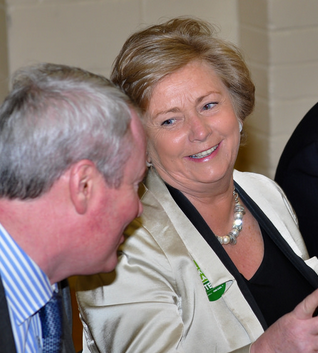
IIRP Europe is thrilled to announce that the Department of Justice & Equality of Ireland will be hosting a reception for attendees on Tuesday, May 9, the evening of the first day of the Dublin conference, Conflict in Europe: Meeting the Challenge.

IIRP President John W. Bailie, Ph.D., argues that restorative practices in the broadest sense can help give regular people a meaningful voice in the progress and direction of human globalization.
The world is much smaller and more interdependent than at any previous time in human history. Global trade, migration and digital technologies are bringing an ever-greater diversity of people into direct contact.

"Two Native American judges reach back to traditional concepts of justice in order to reduce incarceration rates, foster greater safety for their communities and create a more positive future for their youth. By addressing the root causes of crime, they are providing models of restorative justice that are working. Mainstream courts across the country are taking notice."
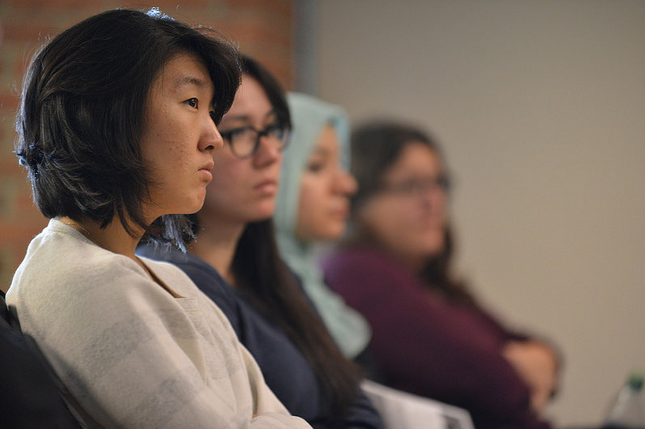
The IIRP presents a special Summer Symposium, which is open to everyone and also provides the in-person experience for a hybrid graduate course, RP 540. This summer, Frida Rundell, Ph.D., is organizing A Restorative Journey: Transforming Relational Harm, July 17-19, 2017 in Bethlehem, Pennsylvania, USA. The Symposium will explore perspectives and tools of Trauma-Informed Care (TIC).
Restorative Works Year in Review 2025 (PDF)
All our donors are acknowledged annually in Restorative Works.