News & Announcements
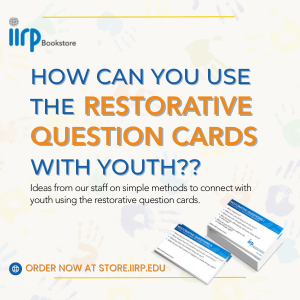
Unlock the power of meaningful conversations with the students and children in your life using the Restorative Questions. Not only are they extremely useful in resolving conflicts, but these questions elevate everyday moments into opportunities for connection and growth. Whether in the classroom, at home, or on the go, restorative practices foster understanding and strengthen relationships. Discover how these simple yet profound questions can enrich your interactions and empower young minds.

Your Guide to Better, Stronger, Faster Workplaces
Conflict is inevitable, but addressing it properly can create an opportunity to strengthen the effectiveness of any team.
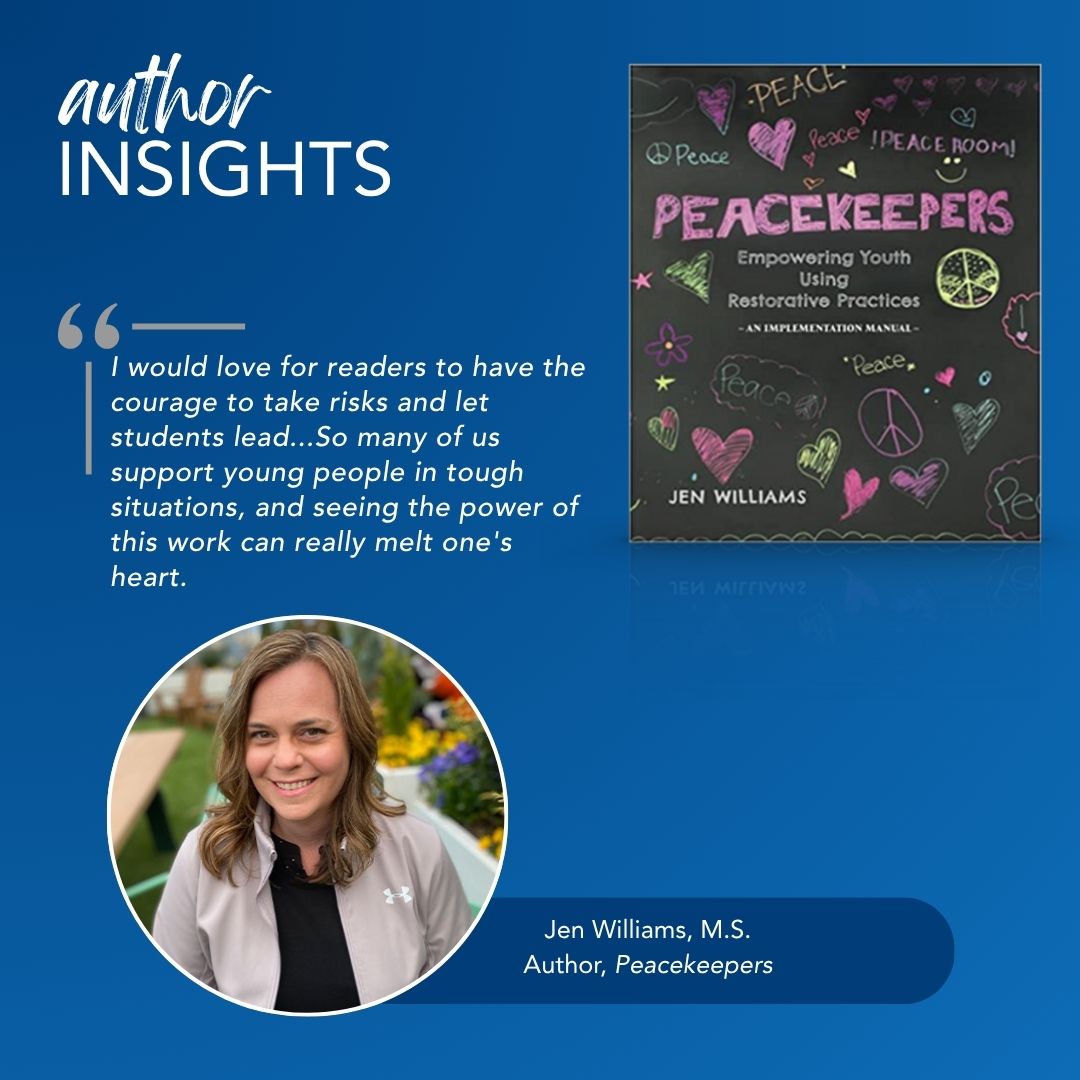
IIRP graduate-to-author, Jen Williams, provides us the keys needed to support youths in building their skills in conflict management, emotional regulation, and interpersonal accountability with ease and creativity.
Jen Williams has had a seasoned career in education as a counselor, consultant, and professional development instructor supporting educators across the country. With the publishing of Peacekeepers, she adds author to her list of accomplishments. Inspired by her time as a middle school counselor, Peacekeepers: An Implementation Manual for Empowering Youth Using Restorative Practices focuses on youths and looks at them as the experts in their own story. This workbook is a grab-and-go for those working with young people, featuring implementation plans and skills that can be applied immediately. The text positions young people as part of the solution, mediators of their own feelings and actions. It provides tools to empower and encourage them to resolve conflict by facilitating restorative justice conferences. Youth are guided into becoming Peacekeepers, those who have skills in navigating peer-to-peer conflict and upholding a culture of accountability and belonging. QR codes provide convenient access to cited articles, assessments, evaluations, and organizational tools. The approaches discussed in the workbook can be used in any education setting, faith-based organization, or youth-centered initiative. Jen joins us to answer some questions about the creation, use, and future of Peacekeepers.

Classroom management approaches that support school connectedness have numerous positive outcomes for students. Recent studies show that youth who feel connected to their schools are more likely to have higher test scores, attendance records, and graduation rates, and make healthier decisions. They are less likely to experience poor mental health and engage in violence.
IIRP Lecturer Kiyaana Cox Jones, M.S., provides a few easy steps you can use to quickly and effectively boost the feeling of connectedness for your students:

From congregations to classrooms, working toward integrating restorative practices across the community.
Pam Duncan is a current IIRP student pursuing her Master of Science in Restorative Practices. She has been working to bring restorative practices to her community through a local congregation network. Through collaboration between a faith-based organization and her local school district, Pam is supporting the integration of restorative practices across the school district to combat the disproportionality of discipline among black and brown student populations.
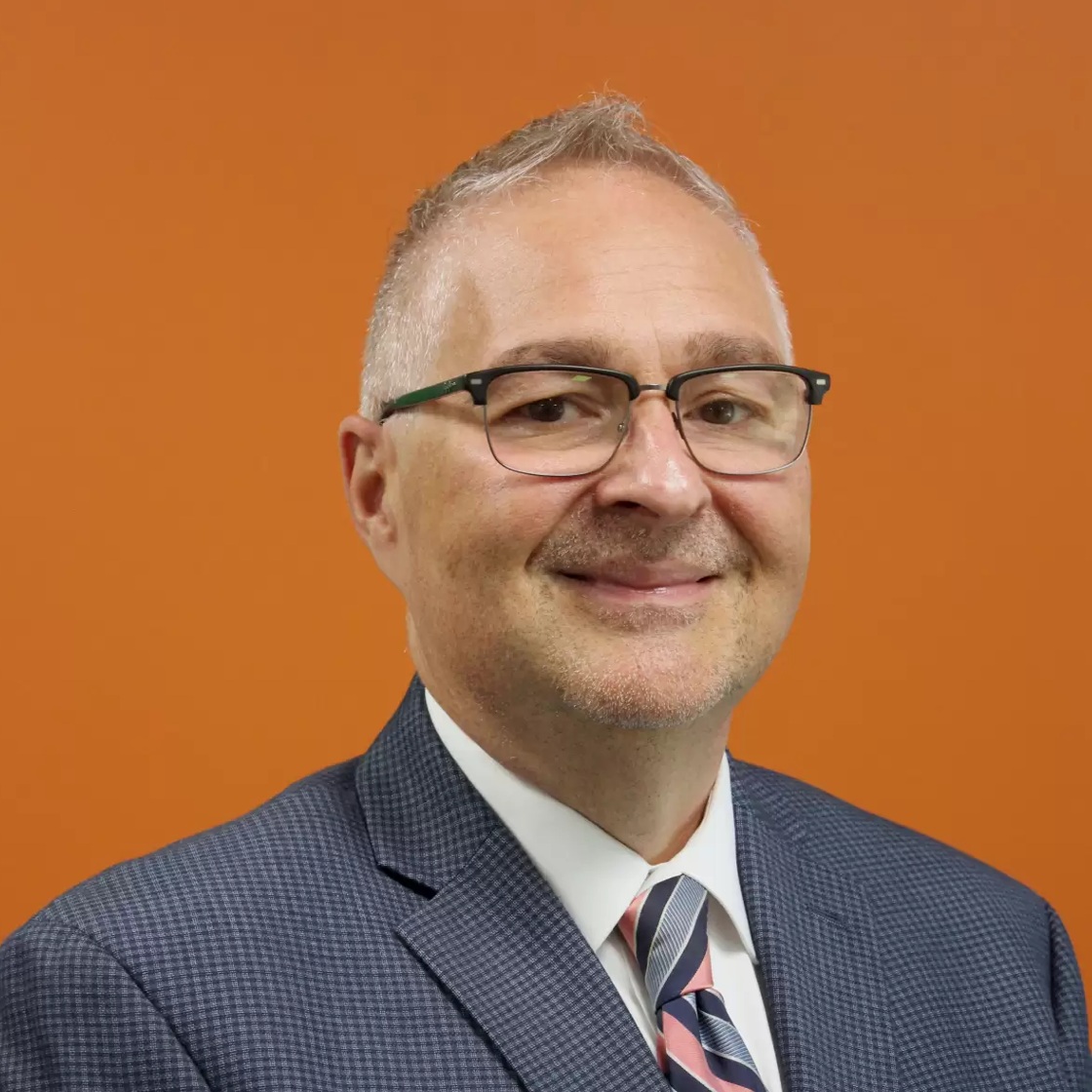
From schools to family court, combating chronic absenteeism with restorative practices
William Brown is a current IIRP student pursuing the Graduate Certificate in Restorative Practices. William serves as superintendent of Allegan Area Educational Service Agency in Allegan, Michigan, a county-wide school system within the state. The school system supports eight local school districts serving more than 13,500 students and 800 staff. It operates a Career in Technical Education (CTE) Center, an Early College program, and a special education center-based program. William joined us at the 2023 IIRP World Conference in Detroit and began his graduate education soon after. He is bringing back his insights to his local school system and expanding the use of restorative practices among the staff and students.
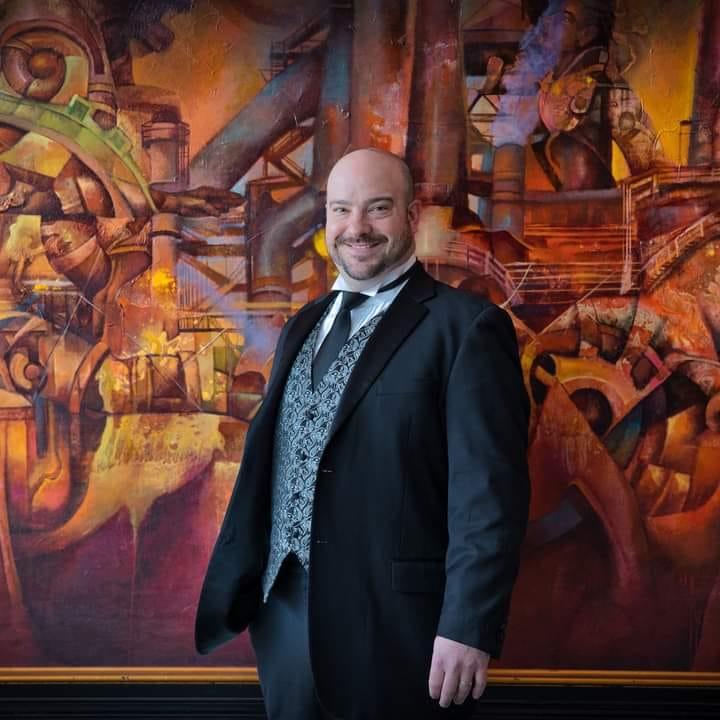
Introducing fair process and restorative practices to the next generation through music education and experiential learning.
Andrew Lynn is a current IIRP student pursuing his Master of Science in Restorative Practices. Andrew is an instrumental music teacher in the Bethlehem Area School District in Bethlehem, PA, teaching at one of the high schools and several elementary schools. At the high school level, he directs the Jazz Band, String Ensemble, and Celtic Ensemble and assists with the larger ensembles. He also serves as a musician in the 28th Division Band of the Pennsylvania Army National Guard as a Sergeant. Andrew utilizes restorative practices in the delivery of music education by facilitating circles using instruments and non-verbal communication. He leads with curiosity and is looking toward the future of restorative practices and experiential learning.
Build Relationships with the 1-2-3 Check-in Method
Proactively building relationships with check-ins and impromptu conversations can quickly and effectively deepen social connections. Utilizing the 1-2-3 Check-in Method does just that. We reached out to three Instructor and Implementation Coaches to understand how the 1-2-3 Check-in Method can be used in various scenarios. Here are their ideas:

Highlighting the intersections of school-based justice, support, and restorative practices.
Thomas Levy is pursuing a degree with the thesis option. As a school-based behavioral consultant supporting students with disabilities, his experience with this often underrepresented population is fueling the direction of his studies and thesis topic.
Leveraging restorative practices to increase student engagement
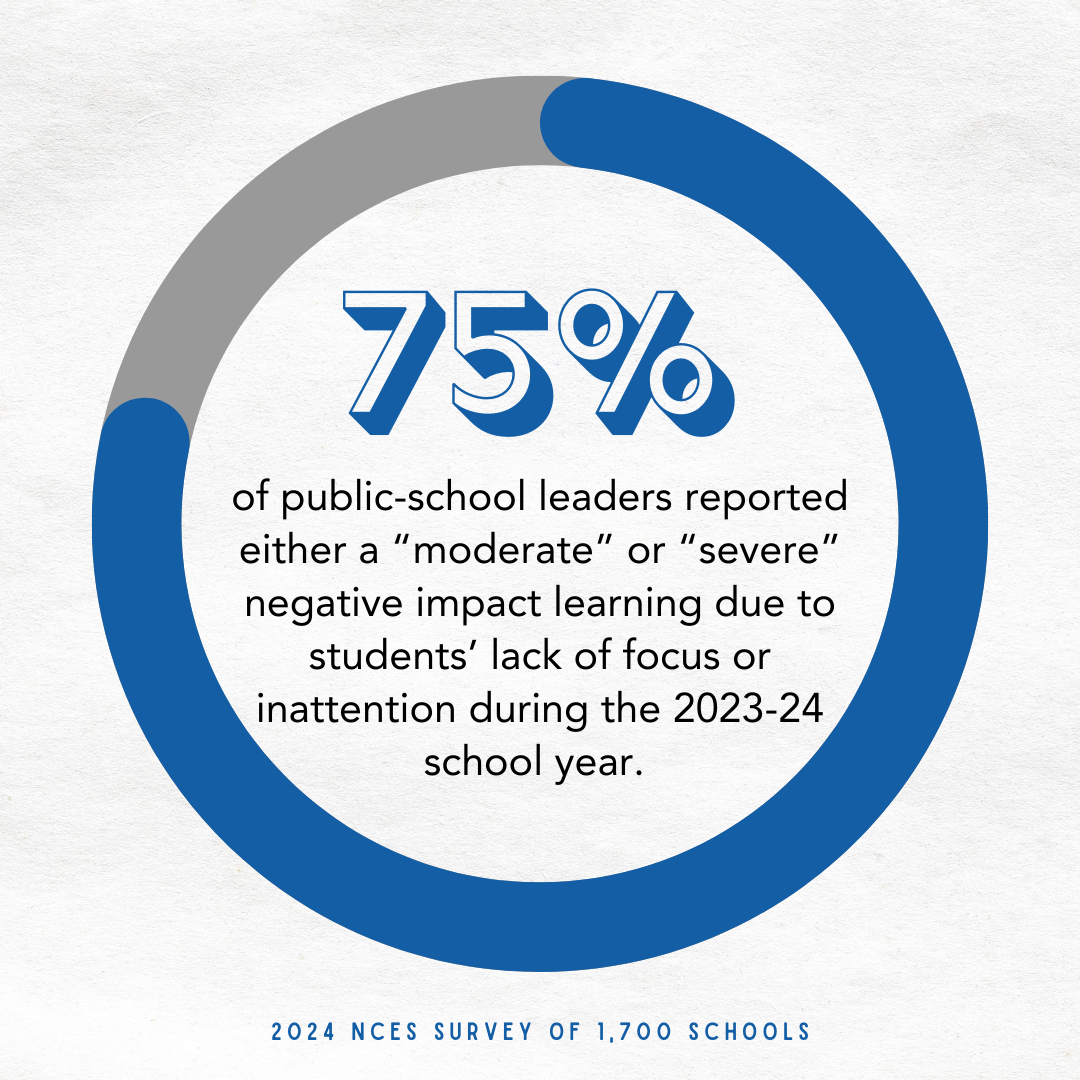
As schools across the United States continue to grapple with the lingering impacts of the COVID-19 pandemic on student outcomes, leaders in education have immense leverage with stakeholders in framing our approach to addressing persistent student and educator needs. This is highlighted in recent (2024) COVID-19-focused research from the National Center for Education Statistics (NCES). Summarizing survey responses from more than 1,700 K-12 schools in all U.S. states, the District of Columbia, and outlying areas, more than 25% of respondents reported that focus and attention issues amongst students had a “severe negative impact on learning” in the 2023-2024 school year. Agreement rose to 75% when including a “moderate or severe negative impact on learning.”
Restorative Works Year in Review 2025 (PDF)
All our donors are acknowledged annually in Restorative Works.