News & Announcements
Following up from the IIRP UK & Ireland 2012 Conference in partnership with City and County of Swansea: “Putting Theory into Practice: The Restorative Way” at Liberty Stadium, on Thursday 29th November, below are links to PDF files of the Plenary and Workshop Presentations submitted by presenters so far.

The National Center on Family Group Decision Making has a new home at the Kempe Center for the Prevention and Treatment of Child Abuse and Neglect in Denver, CO.
The new site explains, "Family Group Decision Making (FGDM) recognizes the importance of involving family groups in decision making about children who need protection or care, and it can be initiated by service providers and/or community organizations whenever a critical decision about a child or youth is required. In FGDM processes, a trained coordinator who is independent of the case brings together the family group and the service providers to create and carry out a plan to safeguard children and other family members. FGDM processes position the family group to lead decision making, and the statutory authorities agree to support family group plans that adequately address agency concerns."
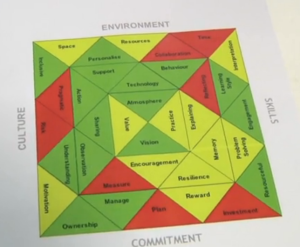
Family Learning Signature (a Restorative Practice approach) at Carr Manor Community School, Nov 2012.
In the caption for this video, Leeds City Learning Centres writes, "The Family Learning Signature is a simple self assessment tool which generates information about how a family ‘learns’ together. As we know, the ability of any individual to embrace learning and manage their own development is greatly influenced by the collective capacity and skills of the family. In identifying strengths, and areas to be developed, a family is assisted in its own learning development including an understanding of inherent resources which drive behaviour and attitude."
In the video Gregor Rae, chair and CEO of BusinessLab, the company based in Aberdeen, Scotland that developed the learning signature, says, "What we see is a kind of increasing interest internationally in the role of the signature as part and parcel of restorative practice. I think it’s mainly because it’s such an effective tool for engaging the families. ... It gives you tremendous insight into the kind of dynamics of the family, particularly the learning dynamics of the family."
The video can also be seen at Vimeo through the following link: Family Learning Signature (a Restorative Practice approach) at Carr Manor Community School, Nov 2012
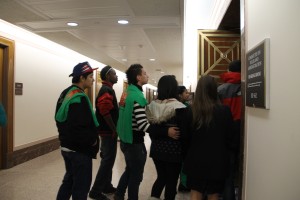
The Washington Post's Donna St. George reported on the Senator Durbin's "School-to-Prison Pipeline" hearing in the US Senate last week. The article begins:
At a congressional hearing billed as the first-ever focused on ending the “school-to-prison pipeline,” Edward Ward emerged as a voice of experience.
Ward, a recent high school graduate from Chicago, recalled classmates suspended for failing to wear ID badges and security officers patrolling hallways. Arrests were so common that a police processing center was created on campus “so they could book students then and there,” he said at the hearing Wednesday.

IIRP Canada and FaithCARE (Communities Affirming Restorative Experiences), a program of Shalem Mental Health Network, announce a three-day event February 5-7, 2013 for congregations interesting in building restorative cultures. The two organizations draw on five years of experience working with congregations as outlined in this article, FaithCARE: Creating Restorative Congregations, which includes stories about how the program has helped congregations, as well as interviews with program leaders.
Event: Learning How to Grow Restorative Churches
When: February 5-7, 2013, 9 a.m. - 4:30 p.m.
Where: Queen of the Apostles, 1617 Blythe, Mississauga, ON L5H 2C3
Fee: Includes training and coaching. $400 before January 15, 2013; $425 thereafter. 10% discount for two or more registrants from one organization.
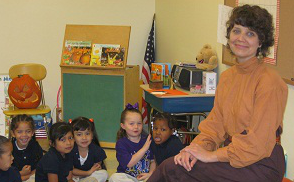
Hampstead Hill Academy, a public charter school for elementary age students in Baltimore, Maryland, adopted the use of restorative practices school-wide beginning in January 2008. Hampstead Hill partners with the Baltimore Curriculum Project, "a nonprofit organization that empowers four neighborhood charter schools in East Baltimore with the tools they need to help every child succeed." Baltimore Curriculum Project also works with City Springs Elementary School.
Below are some of the statistical data that Hampstead Hill has used to assess the impact of restorative practices on discipline and the school environment.
This Wednesday evening, December 19th, at 5pmPST/8pmEST, The Peace Alliance presents a free hourlong program with Steve Korr, an IIRP instructor, as part of its "Restorative Justice Telecouncil Series." Registration for the telecouncil will also get you access to the program archive which is in its second year. The teleseries is hosted by Molly Rowan Leach.
For this Sunday's video I'm posting a short video of youth leader Edward Ward's testimony during the Senate's "School to Prison Pipeline" hearing convened by Senator Dick Durbin Wednesday afternoon. Ward is 20-years-old and the organization he represents, Blocks Together from Chicago, is a member of the Dignity in Schools campaign, which had a heavy presence at the hearing.
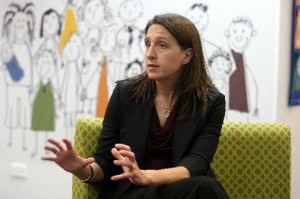
As part of its journey to become a "restorative city," Wanganui, New Zealand recently hosted "Associate Professor at the Dalhousie University Schulich School of Law, and a director of the Nova Scotia Restorative Justice Community University Research Alliance in Canada, Professor Llewellyn ... to speak to members of the Whanganui Restorative Practices Trust, local lawyers and the Wanganui District Council."
This is according to Merania Karauria for the Wanganui Chronicle. The piece, titled "A crusader changing the way we relate to people" continues:
 via woodleywonderworks at Flickr Creative CommonsJoyce Dawley is a music teacher in Bethlehem Area School District and a student in the IIRP graduate school who plans to graduate next spring (2013). I talked to her the other day about how she is using restorative practices with her students, and also with adults she works with.
Joyce has integrated restorative practices into her small group teaching as well as large group band and orchestra conducting. Normally she works with small groups of two to six students for a half hour at a time throughout the day. Students leave their regular classes once a week to attend music lessons. Joyce takes time to run circles with these groups to get to know students better. In particular she asks them questions relevant to music, including: “Are you having trouble practicing? Why or why not?”
Oftentimes, Joyce says, she ends up finding out a lot of things about her students’ home lives, because it turns out that a big reason students have trouble practicing is that they have troubled home lives. One student Joyce initially wrote off as lazy because he only came to every third lesson and didn’t practiced much. Then she found out that he really did want to practice but that he had significant family issues that made this hard. His parents were divorced and his living situation was unreliable. He never knew where he would be staying and often his trombone got left at his father’s when he was at his mother’s and vice versa. Once Joyce learned this, she changed her attitude about how she dealt with that student. In another case a student’s grandmother died and the family was busy dealing with that.
Restorative Works Year in Review 2025 (PDF)
All our donors are acknowledged annually in Restorative Works.