News & Announcements
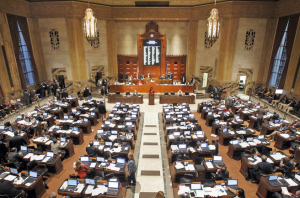
The House of Representatives of the state of Louisiana, USA, is the latest state governing body to consider adopting a law to change disciplinary codes in its schools. Stop Bullying Louisiana and Louisiana Progress issued a policy brief on Louisiana House Bill 646: The Safe and Successful Students Act titled "The Importance of Positive School Climate." The one-page brief says:
"In addition to reducing the reliance of schools on zero-tolerance policies and exclusionary forms of discipline such as suspension and expulsion in response to offenses that do not present a major threat to the safety of a school, HB 646 promotes wherever possible the use of restorative practices and other measures designed to promote positive school climates. Recent research is very clear that this approach creates safer schools in which students can succeed in a variety of measurable ways."

I recently came across an article by Paul Chambers in UK's Third Way Magazine, which provides a good introduction on restorative justice. Titled "Face-to-face justice," the piece begins by recounting a raw and emotionally powerful situation:
She walks down the long corridor from her cell to the meeting room, her fear and tension palpable. Never in my life have I seen someone so uncomfortable in her own skin. This young woman killed her father and now, nearly a decade later, is about to meet his brother - her uncle - for the first time since the death that irrevocably changed both their lives.
What does each hope to find in this meeting, with all its emotional risks? Perhaps some elusive answers to hard questions; but also a chance to tell their stories, to explain for the first time how deep the hurt has gone.
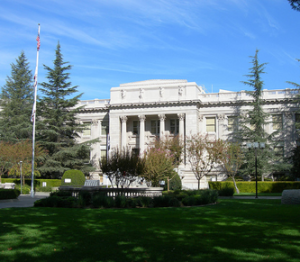
The following is the first few paragraphs of an article by David Greenwald for Vanguard Court Watch of Yolo County, California, titled "DA Puts Forward Innovative "Neighborhood Court" Program Incorporating Principles of Restorative Justice."
On Monday the Yolo County District Attorney's office unveiled an innovative new pilot project, modeled after a program that San Francisco District Attorney George Gascon implemented two years ago.
Jeff Reisig unveiled a program, in partnership with the Davis Police Department and the UC Davis Police Department, called the Neighborhood Court, a new adult criminal offender diversion program based on restorative justice. This innovative program will be offered in the city of Davis and on the UC Davis campus, starting in May of 2013.

Pierre R. Berastaín, a student at Harvard Divinity School, proposes that restorative circle processes be used to address the violence last week at the Boston Marathon, and the frayed feelings of people throughout the city of Boston and elsewhere. Writing on a Huffington Post blog, in a piece titled "Restorative Justice: Re-storying What Happened in Boston," Berastaín reflects that "Nothing is over; nothing returns to normal," but he offers a suggestion:
[R]estorative practices [can] help us deal with trauma, as these practices call us to sit in circle to process and connect with each other through the common thread of our experiences.
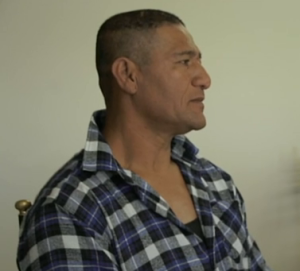
"Restoring Hope: An Indigenous Response To Justice," a 52-minute documentary, aired last week and is now available for viewing online. It includes footage of restorative conferences as well as interviews with participants.
Watch here: Restoring Hope: An Indigenous Response To Justice | Māori Television.

IIRP Latin America always get the best photos. In the past couple days they've posted two albums to facebook with students young and old.
IIRP Latin America's director Jean Schmitz explains, regarding the first set, that in 2012 his organization, an IIRP international affiliate, trained approximately 35 teachers at Ramón Espinoza Public School. The school is located in a poor suburb of Lima called Barrios Altos. A year later, Jean says, around a quarter of the teachers regularly apply restorative practices with their students.
These photos show teacher Pilar Parra using circles with her kindergarten class. Every day she does short circles with kids 3 to 4 years of age who are happy and involved. Pilar never spends more that 5 minutes doing circles in order to keep the kids' attention. "The kids themselves prepare the circle... they just love it," writes Jean. The children choose a talking piece, too.
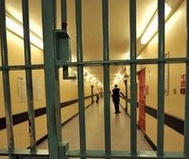
This short piece from the BBC (British Broadcasting Corporation) does a particular good job of explaining the restorative justice conference process, and the need for both victim and offender to agree to a meeting.
The restorative justice scheme means people who have admitted their crimes are allowed to meet their victims, or make amends by doing some sort of remedial work.
"Firstly it's the victim that's approached," added Insp Davies, who leads the force's restorative justice scheme.
"If it's in the interest of the victim, and the victim wants it, we would then discuss that with the offender.
"If both the offender and the victim [want restorative justice] - and the offence was appropriate - then it needs to be authorised by a police inspector before the officer then carries out that act."
Also included in the article are some interesting statistics. The police force used RJ for 1,800 violent crimes in the past year and a total of 5,000 crimes altogether. They also report 92.5% victim satisfaction for RJ in those violent cases.
The entire article, "Restorative justice sees violent offenders avoid court," can be found here.

In a sprawling school district in northeast Ontario, Canada, with six secondary and 18 primary schools, restorative practices have not only reduced suspensions, but also helped change student behavior, according to an article by Brenden Harris in KenoraOnline. Restorative practices have been rolled out district wide, and were introduced with the support of Bruce Schenk, director of IIRP Canada.
The Keewatin-Patricia District School Board is pleased with the results of their safe and supportive schools initiatives. Safe and supportive schools coordinator Al Wray says they've seen a continued drop in the number of suspensions over the last decade.

Lutheran Community Care Services Ltd. (LCCS), a new IIRP affiliate in the Republic of Singapore, hosted IIRP assistant professor and director of Continuing Education Dr. John Bailie in presenting a four-day Basic Restorative Practices event in the Southeast Asian island city-state in March. Twelve participants from the fields of education, residential care and prison services attended the event.
LCCS executive director Daniel Ang has been the driving force behind bringing restorative practices to Singapore. Asked what had motivated him to bring the practices to his country, Ang wrote, “Restorative Practices is evidence-based. The practice impacts people and organization’s narrative that is life changing and culture transforming. I am excited to be part of this movement worldwide. Dr. John Bailie’s visit marks a significant milestone for the Lutheran Community Care Services as it formalised our relationships with IIRP as an affiliate partner. This relationship helps us to bring a wealth of knowledge, resources and training to Singapore.”

Ian Marder, a criminologist working as Project Manager at the Restorative Justice Council, writes about restorative conferencing in the UK for the TransConflict web site:
For those of us in England and Wales, however, the Northern Irish youth justice process is probably the best known example of restorative justice being fully integrated into the criminal justice process at this time (albeit only for juvenile offenders). Prior to sentencing, the Courts, in almost all situations, must refer cases to the dedicated Youth Conferencing Service, whose job it is to prepare, facilitate and follow up on restorative conferences involving offenders, victims, and the supporters of both parties. A comprehensive evaluation of this process revealed highly positive feedback from participating victims: 81% preferred restorative conferencing to the court process, while 88% said that they would recommend it to a friend.
Restorative Works Year in Review 2025 (PDF)
All our donors are acknowledged annually in Restorative Works.