Borbála Fellegi, Ph.D.
Abstract: In our interpersonal relations, both in the communities surrounding us and as part of the processes taking place on a societal level, we encounter conflicts and suffer “bruises” — the wounds that these conflicts inflict.
The parties concerned can talk about the injuries suffered or can avoid each other; they can get closer to or further away from each other. This article features models of a Reconciliation Spiral and a Distancing Spiral that identify a range of points in each process that can help us understand the dynamics that can drive movement toward one or the other. The models are supported by established research in the field, the author’s education in criminological and psychological research, and her experience in conflict resolution projects and cases working in mediation/conflict management in Hungary. Stressing that the models she offers are not prescriptive, but rather descriptive of the general shape and flow of the processes of reconciliation and separation that she has witnessed, the author helps to identify key places where specific responses and actions can support creating dialogue for reconciliation.
Fellegi, B. (2021, Fall). Bruising and healing: The dynamics of resolving grievances. IIRP Presidential Paper Series, 5, 1-30.
PDF Download PDF Download (Hungarian)
ABSTRACT
In our interpersonal relations, both in the communities surrounding us and as part of the processes taking place on a societal level, we encounter conflicts and suffer “bruises”—the wounds that these conflicts inflict. The parties concerned can talk about the injuries suffered or can avoid each other; they can get closer to or further away from each other. This article features models of a Reconciliation Spiral and a Distancing Spiral that identify a range of points in each process that can help us understand the dynamics that can drive movement toward one or the other. The models are supported by established research in the field, the author’s education in criminological and psychological research, and her experience in conflict resolution projects and cases working in mediation/conflict management in Hungary. Stressing that the models she offers are not prescriptive, but rather descriptive of the general shape and flow of the processes of reconciliation and separation that she has witnessed, the author helps to identify key places where specific responses and actions can support creating dialogue for reconciliation.
When I left, I found it very curious how you could form a bond in such a short time with people... and I felt at that moment, those are people I never saw before, and still when saying goodbye, I got the feeling of “yes, I have been a part of something that belongs to me.”1
INTRODUCTION
We encounter conflicts and suffer “bruises”—the healing and nonhealing wounds that these conflicts inflict—in our daily interpersonal relations, both in the communities surrounding us and as part of the processes taking place on a societal level. A conflict is always followed by some sort of communication, even if that’s simply silence. The parties concerned can talk about the injuries suffered or can avoid each other; they can get closer to or further away from each other, while their roles, needs, decisions, and motives are also subject to change with time and in relation to one another. One thing is certain: the more severe a conflict or bruise, the more the ensuing communication affects the present and future of the parties involved, regardless of whether that communication leads to healing or aggravating the injuries inflicted.
In this paper, I will identify some of the processes that appear in conflicts experienced on micro, mezzo, and macro levels and will describe what may happen when there is no room for communication, or dialogue, between the parties following an individually or collectively experienced trauma. My focus is not to elaborate on results from a specific empirical research project. Rather, it is the synthesis of my earlier criminological and psychological research and my practice in mediation/conflict management. I will endeavor to correlate research from some influential authors in the field with my experience from our conflict resolution projects and cases2 as well as the phenomena I have perceived as a private individual.
All these issues are particularly relevant in the Hungarian context. This society has suffered social and historical traumas for centuries due to the authoritarian regimes and dictatorships that kept replacing each other. I write this article as a citizen of Hungary, a social scientist, and a mediator. I have been observing the impact of deep and unreconciled traumas within society, which has motivated me to raise and discuss these questions.
The initial questions this paper poses are as follows:
- What are the consequences of unprocessed traumas?
- What can help the parties engage in a “healing” process?
- What can make healing more difficult?
- What part can dialogue play?
We are not concerned with determining why traumas have occurred or who bears responsibility for them. Every case is different, and these latter questions are primarily addressed by the representatives of historical and legal sciences on a case-by-case basis, while the dynamics of intragroup and intergroup conflicts are examined in depth by social psychology. However, most research studies and analyses do not go beyond describing the processes and identifying problems. They fail to look for an answer to the And what now? question, and this is exactly where our experience in conflict management/mediation comes in: it provides an excellent opportunity to reflect on the possible responses. We are mostly interested in what needs, fears, and processes occur for the involved parties in the aftermath of a trauma, what could bring them closer to each other, and what drives them further apart. In addition, while we will be looking at the movement of individuals to form a specific collective identity through a shared narrative, we will not be looking closely at issues like the psychological predisposition of some individuals to join such movements while others do not. Rather I am attempting to describe the broader strokes of the dynamic of those who do.3

The term spiral denotes that traffic on these routes is not linear: we take a few steps forward and then a couple of steps back, and although there is always some progress, we often arrive at a standstill or even regress a little. Yet, over time it becomes apparent in what direction our relations and relationships are going. Readers should note also that the major points I describe in both the Distancing and Reconciliation Spirals are not universal or exhaustive and may not always happen, or not always happen in this order, with every group of people. Rather, they represent major stages that I see groups experience repeatedly in different contexts.
Although this article does not venture to offer a “recipe” for bridging social distances, the main motivation behind it is in finding solutions. Personal stories are important and powerful to share not only because they literally give voice to the experiences of the teller but also because they can elicit understanding and compassion from listeners. But one might ask why they are important beyond the individual level. While there is no guarantee that shared storytelling will lead to greater change on a societal level, it does not seem unreasonable to believe that having a large number of individuals who open up and get closer to each other might promote movement toward reconciliation on a societal level also. If these individual experiences are possible steps toward bridging social distances, we should dare to take them.
THE DISTANCING SPIRAL
DISTANCING: TRAUMA, SILENCE, VICTIMIZATION
The Distancing Spiral begins with or originates in unresolved trauma, which could be verbal, physical, or emotional. Such trauma affects both the victims who are directly involved and the “witnesses” around them. An additional important factor is that the perpetrator may or may not be aware of the harm they have caused and its impact. The injuries affect the victims’ thoughts as well as their bodily/physical and mental conditions (Weingarten, 2003).
Historians, and increasingly social psychologists, have studied the phenomenon of collective self- victimization (see e.g., Sykes, 1992; La Capra, 1998; Schivelbusch, 2003; László, 2014). While Weingarten examines the effects of unprocessed traumas on the individual level (from the aspect of victims and witnesses), Volkan (1997)4 uses the expression “chosen trauma” to denote the process by which a larger group of people suffer a trauma but their recurring self-victimization leaves no room for collective mourning.
This is where we see a critical factor develop in the Distancing Spiral: silence. In such cases, the injuries suffered remain unprocessed and are passed on from generation to generation. In this way, victimhood becomes engraved—consciously or unconsciously—in the collective memory of the group affected and becomes a primary factor in reinforcing group identity and cohesion. In the circle of those suffering the trauma, this can strengthen resistance against “other” groups, and even the slightest dissidence is regarded as threatening and aggressive. At the same time, the members of such a group often view themselves as the victims of aggression by the group(s) they consider to be the “other(s).” In these dynamics, the label “victim” strengthens the positive self-image of the group as well as group cohesion, and the fixation on the victim role gives the group a sense of moral superiority, which, in turn, also increases resistance toward the “other.” All this contributes to a more permissive or even supportive stance when it comes to judging aggression toward the other group, because, as a result of the preceding self-victimization, it is now seen as a legitimate and justified step.
When the injuries suffered remain unspoken and unprocessed, the parties concerned become distanced from each other to an even greater extent. This appears to happen in two ways, which I shall call “silent” and “loud” distancing. By silent distancing, I mean the situation in which one or both sides claim that the story is not important for them. They are done with it and have let the issue go, but in fact, they have not: they continue to have questions, the grievances keep coming back up for them, and they cannot imagine getting closer to the other party. On the other hand, loud distancing stands for a situation in which someone actively leads a counterattack against the other party (most of the time behind their backs), regularly and pronouncedly communicating that they do not consider the other party to be valuable.
We have seen a steady growth of this type of distancing between certain groups in Hungarian society. The distance can grow in a political sense (as left-wing and right-wing citizens are appearing in the same public spaces to a decreasing extent), structurally (as fewer lifestyle-related and cultural bridges are built between the growing ranks of the marginalized poor on one side and the wealthy on the other side), geographically (as closed institutions, buildings, and border fences are built and secluded streets and neighborhoods evolve just to be able to avoid having to face the other group’s existence), and in communication (as blaming and downgrading the “other” is becoming a recurring central theme of a given group’s traditional/community media channels and various communication surfaces, e.g., antirefugee billboards underlining presumed but unproven hazards). Naturally, distancing becomes interpretable and perceptible in a spiritual sense as well. If one does not have a direct experience of, and relationship with, the other’s existence, circumstances, abilities, and needs, then neither the other’s personality nor the things they consider important will be noticed, or if they are, they will not be considered important. One might think: “What’s important for me is not important for him/her, and vice versa,” and this lack of connection results in a prolonged obscuration of a possible common ground.
DISTANCING AND HOMOGENIZATION
Homogenization is a significant stage on the Distancing Spiral. This occurs as we lump members of a group together and attribute identical properties to them; there is no recognition of the individuals who make up the groups. It usually occurs somewhere by the middle of the downward Distancing Spiral. Even if we talk about them, we do it without them, because once the distance is established and maintained, the gap in our relationship becomes unbridgeable and noticing the differences inherent in the details becomes impossible. By separating “us” and “them” and labeling the parties concerned, we create narratives through which we can, even subsequently, justify the properties we attribute to the different labels. We try to avoid everything that can result in confusing these labels and categories, and we tend to pick and emphasize those that justify them. Doing so reinforces the theory we have developed about ourselves and the “other.”
Together with homogenization and producing an image of the enemy, distancing can lead to demonizing the “other.” In this one-sided narrative, we exaggerate the negative properties attributed to the other group and regard the ones we perceive as positive as minuscule or nonexistent.5 Research has shown that when our brain has only partial information about a phenomenon or a person, it creates a “complete” picture by inserting missing items—using our earlier experiences, attitudes, personality, emotions, etc.—and treating them as facts to ensure the consistency of a given image (Hoeks et al., 2013). The following description of an actual community event illustrates how this can happen. The name of the community is withheld to maintain its anonymity.
In a small local community (where we worked as part of one of our research projects), the mayor and the local body of representatives were in the process of organizing the annual March 15 commemoration of the 1848–49 revolution. They made a serious effort, organizing vans to transport people to the event from all around the community. However, a huge and unexpected snowfall on the day of the commemoration caused extraordinary conditions and the organizers canceled the event. Yet, despite the snow conditions, a memorial event attended by one of the local elected members was held in the gym of the local school. However, the organizers of the local council event originally planned, including the mayor, were not invited. The memorial address was read out by one of the local teachers, and later on it was published in its entirety in the upcoming issue of the local newspaper. Part of the speech reads as follows:
It is high time for this—not for enmity, not for seeking excuses, not for taking the easier way, not for alien-heartedness, and not for unreasonable criticisms—but for working together, for joining our forces, for love, for being ready to help, and most of all, for trusting each other. (...) Today’s patriots have a much more difficult job than those of the past: unfortunately, the enemy, our adversaries, are among us, and they are alien-hearted, serve foreign powers, and fight with the weapon of deception. So, we have to be alert, and we have to be brave, and we need to see clearly. We need to see the events around us more and more clearly, and we need to notice, at last, that although Winter hardly gives in, with this Spring a better, safer, and more satisfying life in this country has really started.6
Together with the speech—which had some strong connotations—the article in the local newspaper garnered some serious feedback from the local leadership, who thought that the speech had actualized the commemoration and had been targeted against them—and, on top of it all, in their absence. All this happened at a time when the strong political division of the village was already obvious, and some significant actions against those in power had already been initiated by the local opposition. As far as we know, those concerned never talked to each other again, and the bad feelings remained unspoken. What were the main intentions behind the organization of the original event, which involved bringing people over in vans? What was the intention of the sudden decision to organize the school event? Why were members of the local council and the mayor not invited to the school event? What was the purpose of the speech given? These questions could be answered only by the parties concerned. But if these questions cannot be raised and dialogue is not possible, all those affected will “complement” the story, individually or collectively, with their own past information, slant of life, and attitudes toward the other party and will interpret it based on these subjective factors, without dialogue to counter them.
DISTANCING: NURTURING GRAND NARRATIVES AND DISREGARDING SMALL NARRATIVES

As Peter Block writes, “All we know that is true is that we were born. We may know for sure who our parents, siblings, and other key players in our drama were. But our version of all of them, the meaning and memory that we narrate to all who will listen, is our creation. Made up. Fiction” (2009, p. 35). In this way, the number of objective facts present is minimal. The stories are mostly built on individual interpretations, subjective truths, and personal narratives and therefore depend on our attitudes of mind, our professed values, and our socialization. At the same time, we obviously need to create certain categories or else our brain would be unable to comprehend the reality that surrounds us. And yes, in a certain way science, and even this very article, “specify,” and by specifying “establish,” label, and simplify, trying to identify a system, thus also conserving roles. Therefore, it can be argued that it is never the theories themselves that are most helpful but the process of reflection they kick-start. What is really useful is the critical approach by which we become able to question the things we regard as evident (a kind of black-and-white reality), leaving a chance for surprises.
Our longing for a simplified picture is the best breeding ground for nurturing so-called “grand narratives” (László, 2014, p. 49). I suggest that, correspondingly, this also requires disregarding “small narratives.” In the present context, a grand narrative denotes a generally held image of a social phenomenon, people, or historical era. Conversely, a small narrative refers to the diversity of unique stories that become visible if we look beyond labels and general perceptions and recognize the uniqueness of the characters and their stories. The following account contrasts the difference between small and grand narratives.
In the summer of 2015 (prior to the September 15 border closure) hundreds of thousands of refugees crossed the Hungarian border, for which the country was not prepared in any way. Both traditional and social media reflected an utmost division as to what kind of responsibilities receiving the refugees would entail on the part of the Hungarian government and the Hungarian people. According to one of the two extreme positions, the borders should be closed completely and the influx of refugees be prevented by all means. On the other end of the spectrum were those who thought that the refugees should be provided with all the help they need in order to travel on in dignity toward their country of destination (primarily to Germany), and that in the time span needed for that travel, all their basic needs should be attended to.
The following story occurred in the same context. According to the oral account of a (British) journalist on the Serbian frontier, a Syrian refugee father went up to him and requested (in Greek) that he ask the two policemen standing in the vicinity what they would do if his wife and children came forth from their hideout in the nearby forest. Using the journalist as an interpreter, the policemen assured the father that, naturally, his family members would not be hurt, and actually they were rather surprised that their presence caused such fear. They even ended up leaving the area in their car so that the family members could make sure that it was safe to leave their hiding place.7
This story goes beyond the “official” narratives and shows the human face of the police officers and the refugee family concerned. However, these stories have little weight in the current public discourse since they overturn the grand narratives and present the complexity of social phenomena and roles through the power of personal stories.
DISTANCING: BLAME AND DEFENSIVENESS
Unspoken conflicts can have a spillover effect in our everyday lives. What we see is that the parties who are in tension with each other (if there is still contact between them at all) experience continued conflict in smaller and smaller matters; essentially, they get stuck. Their grievances actually grow in number because they are not processed. In the most difficult-to-resolve conflicts, the criticizing party usually puts the emphasis on the other person in general (“They are to blame”) and external conditions (“It’s not my fault, because this and that happened”), while their own role and responsibility are dwarfed in their narrative. In my experience, this stage in the Distancing Spiral is displayed in the following three communication patterns:
- Blaming: This emphasizes that it is the other’s (or others’) fault. “They did it too,” “They’re not better either,” “And they dare to talk, they who...,” “It’s happening because of them...,” “It wasn’t me...”
- Defensiveness: Most often appearing as excuses, this minimizes one’s own responsibility by citing external circumstances. “It was a necessary move for me because...,” “I reject them because I have no choice...”
- Making It Personal: Both parties continue to believe that the other has purposely acted to discredit them out of disrespect or a desire to harm them. At the same time, they may be told not to take things so personally.
When experiencing the phenomenon of “making it personal,” conflict managers can achieve progress more easily, relative to the other two types of patterns, since the relationship is still active and what the other thinks and feels is still being experienced and can be addressed. In these cases, the parties concerned can be assisted in formulating statements in a way that focuses on their own needs (“What I would consider important is...,” “What I would need is...”) and not on criticizing the other person.
When it comes to blaming and defensiveness, however, a person’s narrative of a given conflict can be totally dominated by these approaches. In such cases it can be methodologically challenging to draw the attention of the parties to their own roles, responsibilities, and options. We often notice that besides the parties’ communication patterns, the social environment in which the clashes occur also encourages a defensive behavior instead of telling the real stories and listening to the other party.8
In addition to blaming, defensiveness, and making it personal, the most defining aspect behind the lack of dialogue is fear. Fear can evolve by thinking: “If I contradict the other person, then they will find me less valuable, as I have no previous experience of our relationship getting stronger by me talking about a bad feeling of mine.” So, silence, avoidance, and a belief that the tension will dissolve by itself are all that remain as options. Alternatively, a person could fear that the “stable image” they have of the other person will waver, or that their group will exclude them for having approached the other person, ultimately leaving them weak, stigmatized, excluded, and lonely by the end of the conflict.9
Once again, silence can come into play in the Distancing Spiral. Here, it is the only option to deal with fear. But silence itself is a Janus-faced state too; it can be reconciling, or it can be distancing. As many authors in the literature of processing traumas argue,10 silence and retreat can play an important role in healing, in waiting through the mourning process, and in the process of re-engaging with ourselves. I call this “reconciling silence,” because to some extent we get reconciled with ourselves and our feelings and thoughts by giving ourselves the time required to process a certain trauma.
On the other hand, we often experience a process I describe with the expression “distancing silence.”11 In such a process, none of the parties concerned address the conflict and, in fact, they may regard (proclaim) the matter as closed, finding it unnecessary to discuss with the other party what actually happened. At the same time, in this sort of state we often fail to genuinely calm down, because the feeling of hurt and injustice, and of blaming the other person, are, expressly or tacitly but constantly, “pounding” inside of us. Thus, if for some reason we do interact with the other party, our reactions will be defined by our previous unprocessed and nondisclosed grievances: the other person hardly has to do anything, and we immediately see their action as “bad.” Still, in most such cases the criticism is not specifically related to the actual behavior of the other party. Instead, it is linked to the imprints of bad and unassumed feelings carried over from the past and a feeling of distrust toward the other person (“Last time they disappointed me, and I expected it to happen this time too, and it indeed did...”), which makes it difficult for the other party to “behave well.” The other person may not know there are bad feelings toward them carried over from the past, nor are they given the opportunity to find out how the other feels about them. They may only sense a general distancing and hostility. The following incident occurred in a small village in Hungary during an action research project in which I was involved. It illustrates how assumptions and beliefs about the behavior of others that are never discussed by the parties can form the foundation of continuing bad feelings on all sides.
According to the account of the organizers of a sausage festival in a small village, in the previous year many visitors took away the free meat given out at the event in food carriers for people who were not present at the festival. After the event was over, no one ever spoke about what had happened. A year later, however, the organizers set the entrance fee to the same event so high that the local poor literally got banished, and they could only watch the goings-on in the center of the village from behind a fence. For them, it was a humiliating and exclusionary experience. All this generated a fierce debate in the village about whether the organizers of a private event could create conditions—on local community premises and with financial support from the local council—that ultimately exclude local residents who cannot afford admission. The debate was about rights and entitlements, and not about needs and dissolving bad feelings from the past. The story was concluded by the local council deciding to support the event by purchasing a certain number of tickets and providing free admission for local residents. Nevertheless, this did not mitigate the tension between the organizers and the excluded group, which has been ongoing since.12
The point of sharing this story is not to suggest that the conflict between the organizers and the excluded citizens had been caused by this single past event. It was just a drop in the sea, as there have been a number of other former and present conflicts between the two groups based on interests, needs, and ideologies. The story illustrates well how a specific event and the lack of joint reflection on that event can lead to further distancing and polarization, and how discussing these matters openly in a forward-looking manner could facilitate reconciliation between the groups. If the parties concerned had had the opportunity to talk about their earlier disappointment and discuss what could be done better and how, would it have helped the groups in coming closer to each other through the festival and in narrowing the divide?
DISTANCING: LACK OF SELF-REFLECTION AND FAILURE TO TAKE RESPONSIBILITY
I would argue that the largest obstacle to reconciliation is the lack of self-reflection and personal responsibility. Both phenomena represent significant points in the Distancing Spiral. Narratives are all about where the other person went wrong and why their action is objectionable and to be rejected. The following question is never asked: How have I/we contributed to this situation?13
Recognizing, formulating, and accepting our own role is the first step toward—and a prerequisite of—reconciliation, solace, and healing, as argued by Alexandra Asseily, a psychologist working in traumatized, war-torn zones, in reference to the possible interruption of the spiral of violence within our societies.14 Taking responsibility should never be conditional (“All right, I’ll admit my mistake if you admit that...”) or depend on the behavior of others. Instead, it must be the result of a demand and willingness that is born inside us. It is also clear that if someone else tells us what we should be responsible for, it is rarely conducive to this recognition and leads to self-defense and counterattacks.
In my experience, taking responsibility mostly occurs in situations where the other party talks with a supportive attitude about why they find the criticized behavior problematic. They focus on how important the relationship is and condemn the act and not the person. An honest and profound taking of responsibility is mostly seen with those who are surrounded with love and support in this process. It occurs when a person feels they can apologize freely and is confident that uttering these words will lead to reinforcing—and not terminating—the given relationship.
Parties may also feel that they do not have any opportunity to tell their story without being stigmatized and condemned for what they have to say. In this way, the parties get detached from each other, and the distance between them continues to increase, with everyone (as well as their story) continuing their life in isolation.
A visual illustration of this kind of isolation happened during the funeral of Árpád Göncz, the first president of the newly formed Republic of Hungary. As evidenced by a video15 that went viral on the internet, hundreds of citizens paid their respects at the funeral, including Viktor Orbán—the reigning prime minister—and his wife, who attended the event privately, that is, without an official escort. When they arrive at the funeral, the prime minister and his wife stop at a certain distance from the crowd and stay there. The six-minute video shows how nobody approaches them and talks to them, and how they do not talk to anybody or go closer to the growing crowd either. They just stand there silently with their arms entwined, only exchanging a few words from time to time. They are surrounded by an empty space. The distance between them and those arriving at the funeral is enormous. It was not clear from the video whether or not security forces might have been keeping this space between the couple and the crowd or that it was maintained so media photographers could have a space to take photographs. But knowing the differences in perspectives and positions between the couple and the crowd, it is also possible that they duplicated the ideological space between them with an actual space that none of them were comfortable bridging. Either way, this image has stayed with me as representative of how groups can become so detached from each other that it affects every interaction between them and becomes permanent.
In this void between people or groups, the common ground—a sense of common identity—is lost. In moderate cases the parties only try to explain to themselves that they have no need of the other party and life will just be happier without them. In a more extreme scenario, the parties start demonizing each other, and their thinking about the other party will be dominated by the latter’s negative characteristics. At the same time, the positive characteristics will be minimized or totally disregarded.
DISTANCING: SHAME AS CAUSE AND EFFECT
The significance of shame in the Distancing Spiral cannot be overstated. It is powerful and can come into play at any place in the spiral. According to Jean Illsley Clarke, shame equals the feeling that not only our actions but our person, our whole existence, is underrated and condemned (1999), and therefore it has an inevitable distancing effect. According to Donald Nathanson, our reactions to the feeling of shame have a decisive influence on our behavior and personality. He argues that “shame—our reaction to it and our avoidance of it [is] a primary force in social and political evolution”; it is “the emotion of politics and conformity” (Nathanson, 1992, p. 16). This gives room to the assumption that the psychology of shame can be decisive not only in relation to the reactions of individuals but also to those of groups. Accordingly, Nathanson’s concepts could prove to be useful in the context of social psychology too. In a similar manner, Gilligan describes shame as a “psychological pathogen” spread by “social, economic, and cultural vectors”; it is the “primary or ultimate cause of all violence” (1997, pp. 105, 110).
Since the sense of shame is so crucial, we need to consider our reactions to it. Nathanson distinguishes two main ways of handling shame: when we accept it (when we are willing to change our behavior as a result of the shame experienced) and when—as a more typical reaction—we decide to defend ourselves. Nathanson’s Compass of Shame describes our reactions to this unpleasant, painful, and humiliating sense of shame. He defines our reaction to shame not as a simple reflex but as indicative of our personality. He argues that the structure of our personality develops recurring patterns in our defense mechanisms, which he calls “script” (Nathanson, 1992, p. 309).

- Withdrawal: Retreat, hiding, isolation, often followed by sadness and fear
- Avoidance: Diversionary actions, e.g., drugs and alcohol use; seeking extreme experiences
- Self-Attack: Self-accusation, underestimation, and undervaluation of oneself
- Attacking the Other: Blaming, outbursts, attacks, aggression
Hence, the following can be assumed, not only in relation to the psychological mechanisms of individuals but also to the functioning of communities: if in a society, the continuing experience of citizens is misunderstood and they are deprived of recognition and appreciation (e.g., a totalitarian society), then citizens may experience feelings of shame, blame, emotional blackmail, indifference to their needs, silencing (especially in conflict), and an artificially created sense of fear. These defensive reactions can become perceptible on the societal level as well. This is because to be able to declare and accept these mechanisms and/or the underlying existence of fear in ourselves, one needs a safe environment. If that environment is not there, we use defense mechanisms to ease our discomfort. This can result in a pattern of retreat, a culture of silence, or even attacking others without thinking about it. This can become a reality not only on the interpersonal level but on the mezzo and macro levels as well. Furthermore, these are just pseudo-reactions, that is, the tip of the iceberg. But the part of the iceberg that is hidden below the waterline includes decades of repressed emotions, shame, guilt, and pain, often involving several generations, which has never been discussed.
DISTANCING: SEPARATION AND LOSS OF BELONGING TO EACH OTHER
The last phase of the Distancing Spiral is total separation: i.e., when one feels “I have nothing to do with them” and “I do not feel that we are bound together in any way, and there are no common matters along which we could get closer to each other.” During our work, we have found this state to be the most difficult one to resolve both as an interpersonal and community mediator. Often this phase leads the parties back to the stage of silence. They do not have the energy, the motivation, or the feeling of connection anymore. At this stage, fatigue sets in, and they may lose hope for moving closer to the other side or believe that there is no way they could understand each other better. Another consequence of shame might be the return of violence (see Figure 3) that can lead to a cycle of violence for years, decades, or even centuries.
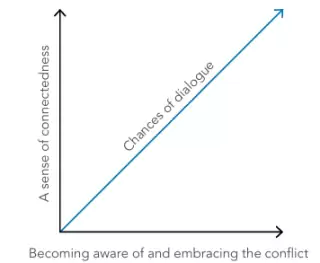
Or you get mutual “if-then” statements16: “I might consider getting on better terms with them if they do this and that.” This is manifested in a number of situations where the connection is obvious for an outsider, for example, in divorce cases where the parties have both children and grandchildren, or in school conflicts where children live in the same community and go to the same school every day for years, so a bad relationship obviously impacts their everyday lives and environment.
THE RECONCILIATION SPIRAL
At this point one can ask how we begin to move from continued distancing between people and toward reconciliation. What could make a difference when people are separated and do not have much respect for each other, or things are so bad that they demonize each other? According to our experience in conflict management, there can be both negative and positive turning points that spark a process of reconciliation. Here are some examples:
- The situation becomes unbearable, and something must be done.
- There is too much loss (e.g., financial losses or illnesses) and the conflict becomes too painful.
- Due to a new life situation, it becomes inevitable for the parties to talk and listen to each other again.
- A shock or trauma, or perhaps a change in faith or beliefs, rearranges priorities in one of the parties, highlighting the importance of forgiving.
- A common ground that is relevant for everyone emerges and becomes more important than “personal truths,” opening the parties’ eyes to the fact that they have to stop warring.
- One of the parties tries to initiate dialogue persistently, accepts the other as they are, and trusts in their connectedness and that, with time, the other person would be able to change if given support.
- A life situation arises in which one or both parties receive support and encouragement for self-reflection, reflection on their past and future, and forgiveness of the other person and themselves.
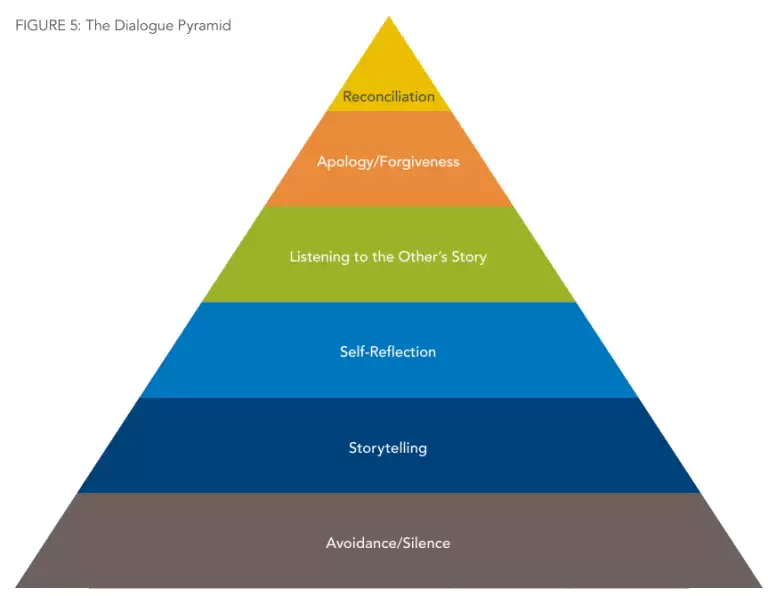
After a conflict or disagreement, a possible (and temporarily viable) choice is avoidance or staying silent. But we know that if we sweep too many undiscussed issues under the rug, sooner or later we will fall over it. The chance just to tell our story as we remember it, without anyone judging or questioning us, can be a very important first step. Once we can share our story, we might be able to reflect on our roles, identity, and the meaning of events on our lives. In this stage of self-reflection, we try to answer questions such as: What have the main events in my life taught me? What values, patterns, and strategies have I followed in my life? How might all these events impact my present and future values and decisions?
Such self-reflection processes are necessary to become truly open to the other’s story. This might lead to a real dialogue in which each party and story is heard and people have the chance to share their views in a respectful way. Not in every case, but such dialogue and recognition of the other side might lead to reconciliation when we feel that we were able to forgive and feel compassion toward the other side because we know their full story and recognize their vulnerability.
As we progress up the Dialogue Pyramid, more and more commitment is required by people, and fewer people may be at this point with us. In other words, we should not underestimate the importance of stepping only one or two steps on this Pyramid. Each step might require huge energy and vulnerability from anyone. This is the reason why certain steps might take even generations to happen.
Those professionals (mediators, peacemakers, psychologists, etc.) whose role is to help others move up on this Pyramid should appreciate each step that is achieved and should avoid pushing anyone faster than they are ready to move, so that they feel comfortable and safe.
The following section describes in more detail the stages of a possible process of reconciliation. Not everyone is always able to go through all the stages; we may get only as far as the first, second, or third. Yet, each stage yields its own returns, regardless of whether there is progress to the next level.
RECONCILIATION: TELLING YOUR STORY
Regardless of whether we are talking about an interpersonal mediation situation or a social reconciliation process, the initial and necessary step is to allow all parties to share their interpretation of what happened and the interconnections they see from their own point of view. In this stage, the other party listening to the storyteller is neutral (e.g., life story interview, biography, memoirs). The following restorative questions are helpful to frame the speakers’ stories18: What happened? Who has been affected, and in what ways have they been affected? What were you thinking about at the time? What have you thought since then? How do you feel about what happened? Was there a point where you could have decided otherwise? What has been the hardest thing for you? What do you think needs to happen to make things right?
In this approach, the questions and the interview settings are just as important as the answers themselves. When each party is given the opportunity to tell their story from their own point of view—without anybody reacting to it or judging whether it really happened that way, whether what they say is true or not, or whether what they think and feel is good or bad—this helps them “put together” their story themselves, give a new meaning to their life story and values, and validate their experiences. Reaching a stage where the person can tell their story without being interrupted or judged is crucial to moving toward reconciliation. But more importantly, they will begin to see the causes and effects in their own (and their family’s) life and may recognize and reconsider their “crossroads” decisions, as well as the people and processes that have impacted them. The person practically (re)defines themselves using the tool of storytelling.19 For many people, such a conversation is actually the first time in their lives when they can be themselves, without having to explain why they did what they did or having to conform to expectations or take sides in conflict-laden settings. Instead, they simply take account of their own feelings and thoughts and reconnect with their own selves.
The other way a person can profit from being listened to without interruption and judgment is when the storyteller feels that their story is legitimate in the way they have told it. This experience is needed to ensure the possibility that in the future the given person would be ready to listen to—and hear—other people’s stories. After all, if we never listen to someone, we cannot really expect them to listen to others.
RECONCILIATION: SELF-REFLECTION AND LISTENING TO THE OTHER’S STORY
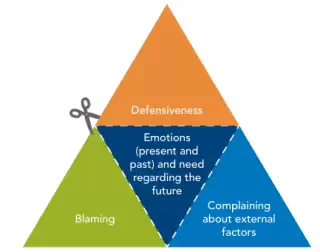
While they still have the option to disagree, in this setting the parties are given a chance to experience that their feelings and desires can be expressed and listened to and their questions can be raised—with impunity and, as far as possible, with the other party trying to give answers to them. If the injuries are too serious to heal, there may not be a solution, a cure, or reconciliation for the parties concerned. Still, they have been given a chance to tell and assert their story and ask the questions that have caused tensions between them—possibly for decades—and which can be answered only by the other party involved in the conflict. In this way, the other party gradually turns into a human again—even if they have been previously seen as a demon.21 Hence, passing on the victim narrative and the demonization of the other party to the next generation (which is a possible consequence of unprocessed traumas) can be prevented, so our children will have less “work” processing past grievances. It also often happens that the parties realize they do not need to agree on everything or persuade the other, and they do not need to defend themselves either—just talk about what they think would be satisfying for them and then the “miracle” happens: the parties turn toward each other again, recognizing each other, and begin to collectively think about what they can do about it all.
Reflection on and acknowledgment of responsibility by one or some of the parties involved is a major step toward reconciliation and usually doesn’t occur until all parties have listened to each other’s stories. A sincere assumption of responsibility can happen only in a setting in which it is not something expected by the other party (“It’s your fault, so take responsibility for it”) but is something that is born within us when we are faced with the story of the other person. If a party gets support and encouragement to proclaim their responsibility, and receives recognition when they have done so, then taking responsibility is not associated with being annihilated, isolated, and feeling shame, but with human empowerment. The positive experience and recognition related to taking responsibility may have been previously unknown to the parties. It is possible that everybody has linked it to “getting nabbed,” “being annihilated,” and losing, so it is understandable that everyone has been avoiding it as long as possible, looking for others to blame instead.
But in this setting, taking responsibility is seen as the largest human strength by which the person— whatever bad decisions they made in the past—grows in the other’s eyes. Contrary to blaming, which often leads to attacking (back), the road to openness and responsibility must be paved with positive support, listening to each other, and accepting the other as they are. Proclaiming responsibility often happens without forgiveness occurring in its wake. Still, someone—if no one else, then the mediator—will acknowledge it, emphasizing that by doing so the person has taken a decisive step on the road to recovery.
This brings us to a pivotal point in the reconciliation process where grand narratives are broken down into small narratives. The storyteller and the listener get to understand certain causes and effects, personal and family histories, and the societal processes that have an impact on these. The other party gradually transforms into a person with a complex history and human feelings, and in this way, there is a greater chance that, in the future, the parties will look at each other without prejudice. To put it another way, it’s harder to hate someone once you know their full story. During a dialogue process with a former IRA activist who had killed her father, a police officer, in a bomb attack, Jo Berry reported: “Once you know the other person’s story, you just can’t hate them the same way you used to.”22 For her, something that is even more important in this process than forgiveness is the empathy felt toward the other party. At the same time, the continuity and regularity of the dialogue between them has also had a decisive role in their healing process.
In this phase, the parties can again experience the existence and significance of a common ground. Often, all parties involved share the pain, the injuries, the feeling of defenselessness, the faith in the future, and the willingness to act. Once they do not have to defend their raison d’être at all costs, a common ground can emerge that must be taken into account. And once there is a common ground, we are already connected, which means that we have reached another milestone on the way to reconciliation.
RECONCILIATION: APOLOGIZING, FORGIVING, AND MOVING FORWARD TOGETHER
Hearing a person’s story—and pain—in a way that completely centers the storyteller gives the other party the opportunity to listen to what the storyteller has been through without the urge to defend themselves. This is the ground on which the words “I’m/We’re sorry” could be uttered, and it is a most important stage of the Reconciliation Spiral. These words show compassion and convey that the listener did not mean any harm or accepts responsibility for the harm they did cause. If the listener is able to recognize and proclaim their own responsibility, they will be able to offer a sincere apology—not born out of the other party requesting the person to apologize, but out of being moved by their story and feeling connected with them and feeling an urge to express all this as a human being.
Many interviews conducted with people who have been through a severe trauma have shown that the act of forgiving is not as simple as an answer given upon receiving an apology. Naturally, it can occur that someone apologizes and the other person accepts the apology, but the process of forgiveness can be much more complex than that. Often, forgiving takes place regardless of whether the person seeking forgiveness deserves to be forgiven. An exchange process is not necessary, because those who have been harmed can feel the need to forgive independently for a variety of reasons, without those who have harmed them asking to be forgiven, or any expectation of how they will react or reciprocate. For many victims, the only path to recovery includes forgiving the other party and not allowing their anger and passions to take away their future as well. These people do not link the act of forgiving to the other taking responsibility. Instead, they decide to reassume control over their own lives this way, that is, by forgiving the person who has done harm to them regardless of the latter’s intentions, because they feel they can move on in life only once they have freed their souls from anger. The following example from The Forgiveness Project describes how this can happen from the point of view of each party:
When Matthew was 14, Tim and his friends, who were then members of a Nazi punk gang, beat him almost to death for being gay. Tim joined the extreme right movement as a youngster, when his brother became the victim of an African American offender. However, when his child also began following extreme ideologies of hatred, he felt ashamed and gradually left the movement. Twenty-five years later, Matthew and Tim met again by chance. They discussed the events, and this led to forgiveness and friendship.
In Matthew’s words:
I knew the only way to get past what had happened so that it would no longer dictate my life was to forgive him. But that was a huge undertaking because for all my life I’d feared what others thought of me. The only place I felt truly comfortable was in the heart of the gay community. I had built a cage of fear around myself, which I believed was protecting me from further violence not realizing that what I was really doing was killing myself. Forgiveness meant unlocking that cage, and becoming completely free, to really be myself and not care what others thought of me. I also experienced a grieving process when I forgave because I had so identified with the events that took place when I was 14 that by letting that part of me go, I mourned the person I’d known for so long. But that’s also a very beautiful thing, because what got replaced was a person who was more tolerant, more openhearted, and a lot stronger.
In Tim’s words:
At first I didn’t want to stand up with Matthew and tell my story of shame and I attempted to minimize what I’d done by saying, “I was a child, 17, drunk, a follower, etc.” But in the end, I knew I had to own my actions by stepping up to the plate and proving to Matthew that I was a different person now. I also wanted to get the toxicity out of me. I was full of self-loathing and knew that holding on to resentment is like a cancer that eats you inside. I came to see that whether or not Matthew accepted my apology wasn’t my business (as long as what I did came from a healed place). The shame and guilt reoccur from time to time. After all, Matthew is a representative of not just himself but all the other people I’ve hurt. I need to do a lot of inner-self work to live with that—meditation and speaking to my mentor helps, and sometimes so does picking up the phone and talking to Matthew. Sharing our story has been our therapy. Forgiving myself is an ongoing process, a daily practice. It probably will be until the day I die.23
The existence of such a process has been confirmed by Alexandra Asseily, a psychologist working in traumatized, war-torn zones. She described the healing process as involving the following four steps: 1) Declaring our own responsibility; 2) Forgiving ourselves; 3) Recognizing the complexity of the “other side” (looking behind the labels); and 4) Letting our sadness go and forgiving the other party (2007). These steps are all about us and not about the other person, so it is up to us to take them. I have found that Asseily’s work in psychotherapy has advanced my understanding of forgiveness and healing, namely that these processes can be controlled to some extent, and the people involved can be supported and encouraged to name their feelings and recognize in themselves a self that is capable of self-reflection and forgiveness. All this can happen spontaneously, too, but supportive (and authentic) facilitators can help individuals and communities start letting go of their grievances and pains and thus set out on the road to recovery without making it dependent on the moves of the other party, solely relying on their own judgment. During one of the cases we facilitated in a small town in Eastern Hungary, a father whose son had become a victim of blackmailing listened to the account of the offender (who was formerly the victim’s best friend in college) during a peacemaking circle and then said: “You know, I believe you and I forgive you. We are over it already, and it is far worse for you than it is for us.”24 This sentence demonstrates the power inherent in forgiveness by which one can regain control over one’s life and feelings, while allowing the other party to experience getting a new chance to (re)connect again and have the other person grow in their eyes.
Of course, such visible and audible instances of apologizing and forgiving are rarely experienced but can actually happen in any setting and to any person, for whom it will surely be an experience of a lifetime. We practitioners often see that the parties “let go” of the other privately, but they are unable to express it to each other. It happens internally and helps them to move on. In any case, this is what can really restore their positive self-image, which, in turn, can provide a solid basis for any joint planning regarding the future. We often hear people say, “Let’s not talk too much about how everybody feels. Let’s get to the point and look at what each of us is personally willing to undertake.” Yet if wounds remain under the surface and are not acknowledged, cooperation between the parties is likely to be fragile, with the possibility of strong emotions related to the harm erupting at any time. However, we find that if feelings aren’t expressed first, the dynamic of the parties involved cannot express differences of opinion or risk any mistakes in their nascent efforts to build their relationship. Their relationship has simply not been reinforced enough to withstand much stress. Nevertheless, we know that the expression of feelings can lead to cathartic dialogue between opposing parties—even between perpetrators of serious crimes and their victims, or parties at war with each other.
While earlier in my career as a mediator I completely refrained from bringing up the topic of forgiveness (so as not to make the impression that it is something expected from the parties concerned), in certain situations when I sense some considerable trust in the parties toward each other and I feel they could listen to/hear each other, I now do sometimes raise this topic. I ask the parties to think about how they would relate to such a thing and what they would need in order to get closer to forgiveness. Even if there is no open and direct talk about it, the question itself and the time and space given for reflection can help the parties let go of some of the injuries they have been carrying and thus feel and think more freely in the future.
Beyond restoring relations between the parties, these processes can also free the individuals who have been harmed from cycles of negative emotion and inertia in their lives and relationships. Again Matthew, from a previous example, explains how he was freed. “Being angry is exhausting and time consuming—it took me away from what really mattered to me, pursuing my dreams and living a life that I love.”25 This is the stage where we can think about how to move on and maybe even about how to step forward together. Such a collaboration between the parties, reflecting all the previous stages of reconciliation, can finally bring healing and closure for the parties.
Tony McAleer (personal communication, 2014) examined the life stories of perpetrators of violent acts who followed extreme right-wing ideologies and had hatred as a central element in their everyday lives.26 McAleer, who himself used to be an active member of the extreme right movement, found that the individuals who decided to leave these radical movements all had a turning point or experience in their lives when they received support and understanding from a person whom—according to their own account—they had previously considered weak (e.g., their children) or who were their targets of hatred (Jews, African Americans, etc.). Those were the people who possessed the power to make these perpetrators question their hatred and open their hearts to positive emotions. According to McAleer’s experience, after communicating their hatred, these people have heard the other person—who had been totally humiliated by their symbol or message—say, “You deserve better.” That experience made many of them think about the complexity of humanity, the value of being able to connect to others, and the power of love and acceptance.27 What we see in our Hungarian practice is that reconciliation is often asymmetric. One of the parties might have more strength and confidence in the other’s worthiness, and this might lead to a certain level of understanding (compassion) toward the other side that the latter might not have “deserved” yet based on their actions. And this experience of (unexpected) compassion is exactly the trigger that can lead to turning points, even in the lives of serious offenders.
The idea of making peace with the other party is not alien to Hungarian culture, either, as evidenced by Sándor Petőfi’s poem titled “To the Magnates”:
We should be better than “them” so let’s forget about the thousand years of torture—in case you are willing to get rid of your arrogance and titles and acknowledge people’s equality. So, let’s shake hands because our nation needs us all—but if you continue to hold us in contempt, you are at God’s mercy.
CONCLUSIONS
The Reconciliation and Distancing Spirals described here can occur in any conflict and could take minutes, hours, days, or even years to fully take place, which often does not happen, as the processes come to a deadlock at a certain point. It can be argued that the more an individual or community has had the chance to experience these processes in their entirety, including the experience of resolving grievances, the more consciously they will be able to act in newly arising conflicts. This, of course, is not to suggest that they will not have any conflicts anymore, only that with respect to the conflict actually experienced, they will feel less offended personally and less prone to distress, the fear of termination, or ontological anxiety (Csepeli, 1990). At the same time, upon experiencing contradiction and dissent in their environment, they will be more apt to recognize the legitimacy of the other party and accept that there exists another story in relation to the same thing, and they will be able to live with this diversity. In short, this is what makes us capable of functioning in a democratic way. However, if we do not see examples of constructive conflict resolution around us when looking back on our history, generation after generation, then there is hardly any grounds to expect self-reflective individuals who are able to accept and cooperate with each other and function responsibly as a society.
Thirty-two years after the change of regime in Hungary, we are witnessing a growing division in public life, the vulnerability of our belief in democratic values, and wide-ranging social support for an authoritarian leadership. This all suggests that we have missed the opportunity to tell our stories from the 20th century and listen to the stories of others, recognize our interdependence, and decide about our common future together.28 It is not too late to start consciously facilitating potential dialogue processes through creating opportunities for Hungarian citizens who have any sort of confidence in a common future—and are also willing to act for it—to share their stories and thoughts openly, securely, and without being judged. This would, in turn, provide them with the opportunity to listen to the stories of others (i.e., hear interpretations of reality that have been unknown to them) and think about the future and possible ways of reconciliation together.
This article was an attempt to identify a range of points that can help us understand the processes that occur between individuals and groups as a result of unspoken grievances. Represented as spirals, they indicate how individuals and groups can either move toward reconciliation or toward further separation. The first steps toward reconciliation can serve as a common ground on both the micro and macro levels: this is the point when we accept that our interpretation is but one of the many possible interpretations and are ready to create an opportunity for all parties concerned to tell their story without being interrupted, and to listen to the story of the other party even if they do not agree with certain points. When and between whom this can initiate a process of reconciliation, and in what sort of matters, are largely dependent on whether the culture provided support to hear and acknowledge the stories of others with the necessary openness and attention. Additional factors that can aid in reconciliation for people initially clinging to a single view of the truth are whether they might have seen or been taught more positive views of interaction as children that they have forgotten, and, also, that they may recognize their human need to be connected to other people. Our experience as conflict managers—and of the two spirals described—suggests that the process of distancing can be stopped, and the process of reconciliation started, at any point, regardless of the other party, by nothing else than by asking the other party questions and listening to their answers.
In working toward reconciliation, it’s important to keep our expectations reasonable; we would all wish to experience understanding and reconciliation quickly and immediately. But as I have tried to point out, the stages that precede conflict resolution (e.g., telling and listening to stories) cannot and should not be skipped or rushed. One cannot overemphasize their importance; reaching each stage should be regarded as a major accomplishment in the process.
While professional mediators can lead this work, we need more people to take lead roles in supporting reconciliation. Three kinds of people come to mind because they are in positions to influence others. First of all, people in a leadership role (e.g., religious, political, cultural, organizational leaders) have a particularly important role in promoting the distancing/judging/excluding spiral or the reconciliation/understanding/forgiveness spiral. It cannot be stressed enough that, regardless of whether we are talking about distancing or reconciliation, these steps are so much easier to take in a supportive environment, under the guidance of a committed leader.
Secondly, persons who—due to their personality, attitudes, and communication skills—are able as private individuals to form a “bridge” and mediate between participants in conflicts. These natural leaders are trusted by those who have yet been unable to expand their perspective to hear the other side’s perspective. This second kind of mediator is able to release their ego and put their own views, feelings, and interests on the backburner. They are able to support all parties in telling their story, listening to each other, taking responsibility, and forgiving each other. Such parties are all around us, and we need to be able to recognize their resources and skills and support them in these civil-society-oriented, peacemaking efforts.
Last but not least, we cannot forget the leadership of parents and educators, who have the earliest and most powerful opportunities to teach our children how to live in peace in their communities, beginning with learning how to heal the bruises they or their ancestors have suffered. In Jonas Salk’s words, “Our greatest responsibility is to be good ancestors,”29 and indeed, some points in this article can be translated to the everyday reality of raising children.
In helping children learn how to build and maintain peaceable communities, the following guidelines are crucial:
- If something hurts them, let them talk about it. We should not tell them it does not hurt or “big boys/girls don’t cry,” because if they say it hurts, it hurts. We should acknowledge their pain and be with them as long as they need us.
- If they do something wrong or hurt someone, they need to be encouraged and supported in taking responsibility for their act, talking about it, and admitting it honestly, so that they can really tell “what happened” or “what’s happening.” We need to make them understand and let them experience that learning this skill is more important than any other knowledge one might have; that they can make mistakes; that the point is not about being perfect but about taking and proclaiming responsibility; that it is their actions, and never their person, that could be refused; that their decisions and actions have real consequences both for themselves and their environment; and that they need to make their decisions in light of this knowledge.
- There is never one single objective truth, only subjective stories (interpretations), and they have to approach everything (even this very article) that presents things from one angle with a critical eye and ear; there is always another story, another interpretation.
- They can always ask, and the answer will never be “Well, you should already know that,” because once they ask, they are ready to embrace their own imperfection and vulnerability and will be open to the answers coming from the outside world, knowing they cannot get an answer from someone as long as they do not ask them.
- All in all, we should accept them without conditions, always prioritizing the establishment and maintenance of a common ground with them over asserting our own personal preferences by any means.
Ultimately, the aim of this article was to demonstrate that there is always a part for us to play in time of conflict, regardless of the external difficulties, other people’s decisions, or the social processes surrounding us—something we can take responsibility for, decide about, and change ourselves. And perhaps even thinking about this can be a step toward healing those bruises.
REFERENCES
Aertsen, I., & Pali, B. (Eds.). (2017). Critical restorative justice. Hart Publishing.
Asseily, A. (2007). Breaking the cycles of violence in Lebanon—and beyond. Guerrand-Hermès Foundation for Peace Publishing.
Bar-Tal, D., Chernyak-Hai, L., Schori, N., & Gundar, A. (2009). A sense of self perceived collective victimhood in intractable conflicts. International Review of the Red Cross, 91(874), 229–258.
Block, P. (2009). Community: The structure of belonging. Berrett-Koehler Publishers.
Clarke, J. I. (1999). Connections: The threads that strengthen families. Hazelton.
Coleman, J. W. (2001). The criminal elite: The sociology of white-collar crime. St. Martin’s Press.
Conklin, J. E. (2004). Criminology (8th edition). Allyn and Bacon.
Csepeli, Gy. (1990). És nem is kell hozzá zsidó (And It Does Not Even Require a Jew). Kozmosz Könyvek.
Fahey, L., & Randall, R. M. (1998). Learning from the future: Competitive foresight scenarios. Wiley.
Gilligan, J. (1997). Violence: Reflections on a national epidemic. Random House.
Goodson, I. (2013). Developing narrative theory: Life histories and personal representation. Routledge.
Graham, J. (2001). Violence part 2: Shame and humiliation. Bulletin 4422, retrieved from: https://extension.unaime.edu/publications/4422e
Gritter, M. (2015). (Drawing of different ways to connect dots) [graphic]. www.quora.com
Hera, G., Benedek, G., Szego, D., Balla, L. (2015): Comprehensive Final Report. www.alternativeproject.eu/wp-content/uploads/2014/12/Deliverable-5.5-Comprehensive-final-report.pdf
Héra, G., Fellegi, B., & Benedek, G. (2017). To talk or not to talk—The limits and potentials of restorative justice in addressing social inequalities. In: Aertsen, I., & Pali, B. (2017). Critical restorative justice. Hart Publishing.
Hoeks, J. C. J., Stowe, L. A., Hendriks, P., & Brouwer, H. (2013). Questions left unanswered: How the brain responds to missing information. PLoS ONE, 8(10): e73594. doi:10.1371/journal.pone.0073594
Klockars, C. (1974). The professional fence. Free Press.
La Capra, D. (1998). History and memory after Auschwitz. Cornell University Press.
László, J. (2014). Historical tales and national identity: An introduction to narrative social psychology. Routledge.
Minor, W. W. (1981). Techniques of neutralizations: A reconceptualization and empirical examination. Journal of Research in Crime and Delinquency, 18, 295–318.
Nathanson, D. (1992). Shame and pride: Affect, sex, and the birth of the self. W. W. Norton & Company.
Petőfi, S. (1848). Dicsőséges nagyurak (To the Magnates), 1848. https://mek.oszk.hu/01000/01006/html/vs184802.htm#27
Schivelbusch, W. (2003). The culture of defeat: On national trauma, mourning, and recovery. Metropolitan Books.
Sykes, C. J. (1992). A nation of victims: The decay of the American character. St. Martin’s Press.
Sykes, G. M., & Matza, D. (1957). Techniques of neutralization: A theory of delinquency. American Sociological Review, 22, 664–670.
Szegő, D., Fellegi, B., & Benedek, G. (2015). An account of introducing peacemaking circles in Hungary. In: Weitekamp, E., et al. Developing peacemaking circles in a European context. Research Report, http://www.foresee.hu/en/publications/ (15 December 2015), p. 334.
Tomkins, S. S. (1962). Affect imagery consciousness: The positive affects. Vol. 1. Springer Publishing.
Volkan, V. D. (1997). Blood lines: From ethnic pride to ethnic terrorism. Westview Press.
Wachtel, T. (2013). Defining restorative justice. International Institute for Restorative Practices. www.iirp.edu/pdf/Defining-Restorative.pdf
Weingarten, K. (2003). Common shock, witnessing violence every day: How we are harmed, how we can heal. Dutton.
Weitekamp, E. G. M. (Ed.) (2015). Developing peacemaking circles in a European context. Main Report. In: Tükrim, Bd. 34 & 35, Tübingen, Institut für Kriminologie. http://dx.doi.org/10.15496/publikation-10134 and http://dx.doi.org/10.15496/publikation-10929
NOTES
- Feedback from a resident after attending a peacemaking circle that was organized in response to the vandalism of a public space that had sparked public outrage. See Weitekamp, 2015.
- Here I refer to the projects conducted by the Foresee Research Group since 2008, each of which was a result of teamwork. I would like to take the opportunity to thank the following people for all those years of inspiring and comprehensive collective reflection and action: László Balla, Gabriella Benedek, Gyula Galyas, Éva Győrfi, Gábor Héra, Erika Magyar, Erika Mercz, Szilvia Süki-Szíjjártó, Dóri Szegő, Virág Vajna, and András Winkler-Virág.
- Further valuable research looking at the psychological aspects of individual behavior can be found in Goodson (2013) and the work of Brian Friel.
- See also, László, 2014, p. 112; and Bar-Tal, D., et al., 2009, pp. 229–258.
- This is contrary to what Tomkins (1962) describes in his affect theory as the nine affects that define our behavior with others and the possible ways of influencing them. He argues that positive changes can be achieved in the relationship between two individuals if in commonly experienced situations positive feedback is maximized and negative feedback is minimized.
- This occurred during an EU FP7-funded project between 2012-2016, “ALTERNATIVE – Developing alternative understandings of security and justice through restorative justice approaches in intercultural settings within democratic societies.” For the final report of the project, see: Hera et al., 2015.
- Based on an oral account by Nick Thorpe, BBC’s Budapest correspondent (told in English at the roundtable discussion “The Role of Journalists in Preventing Genocide and Countering Extremism,” organized by the Budapest Centre and held at the Institute for Foreign Affairs and Trade, Budapest, 11 November 2015).
- The interconnections of applying techniques of neutralization (creating excuses) and committing illegitimate acts are discussed comprehensively in the literature of criminology. The following techniques have been identified: 1) Denial of responsibility (“It wasn’t my fault”); 2) Denial of injury (“I haven’t really caused any trouble”); 3) Denial of a victim (“There was no victim”); 4) Condemnation of the condemners (“They deserved it”); 5) Appealing to higher loyalties (“I didn’t have any other choice; I was forced to do so”); 6) Allusion to past morality (“I always behaved well in the past”); 7) Allusion to helping an important person (“I didn’t have any other choice; I had something more important to keep in mind”); 8) Allusion to normality (“Everyone else does it”); 9) Allusion to rightfulness (“I had the right to do so; it was due to me”) (Sykes & Matza, 1957; Klockars, 1974; Minor, 1981; Coleman, 2001; Conklin, 2004).
- This sentiment is well described by the expression “ontological anxiety/insecurity,” which is discussed in detail by Csepeli, 1990, p. 22.
- E.g., Weingarten, 2003, pp. 76–78.
- See article by Héra, Fellegi, and Benedek in The Culture of Silence.
- This occurred during an EU FP7-funded action research project, “ALTERNATIVE — Developing alternative understandings of security and justice through restorative justice approaches in intercultural settings within democratic societies.” My group was the Hungarian partner for the project that ran from 2012 to 2016. For the final report of the project, see: Hera et al., 2015.
- The lack of this sort of societal-level self-reflection in the Hungarian national identity—which is a result of historical traumas—is described in detail by János László (2014, pp. 96–97).
- In her study, Asseily describes post–civil war peace processes in Lebanon and the possible role of psychotherapeutic methods in the reconciliation between warring factions (2007, p. 6).
- This latter phenomenon was described this precisely by my colleague Virág Vajna at a training we conducted together in 2015.
- The concept of the Dialogue Pyramid was developed through valuable conversations with my teammates Gabriella Benedek and Dóra Szegő at Foresee Research Group for which I am grateful.
- Restorative questions are used in cases of both everyday conflicts and serious criminal offenses for directly involving the concerned parties in order to potentially restore relations between them (Wachtel, 2013, p. 7).
- Besides emphasizing the importance of this type of interview, Ivor Goodson, one of the most renowned pioneers of life story interviewing, also draws attention to its healing and integrative effects on the individual (Goodson, 2013).
- In her article, Asseily (2007, p. 6) regards this as the starting point on the way to forgiveness, and thus she describes the processes occurring only in the case of individuals who are ready to reflect on their own roles.
- This is what the famous Australian documentary Facing the Demons illustrates. In the film, the murderers of a young boy sit down with the boy’s parents and friends and try to answer their questions and listen to how the action that the offenders have committed has affected their lives. The meeting brings forward the “human” face of the offenders and helps many of the relatives (by their own account) to live, work, and go out in public without the help of tranquilizers and be able to think about other things than this unprocessable trauma.
- https://www.theforgivenessproject.com/stories-library/jo-berry-pat-magee/
- https://www.theforgivenessproject.com/stories-library/matthew-boger-and-tim-zaal/
- This case was part of a broader EU-funded project, “Developing Peacemaking Circles in a European Context” between 2011 and 2013. See Szegő, Fellegi, Benedek, 2015.
- Many similar accounts are accessible in a compilation of over 100 stories by perpetrators and victims of serious criminal offences who share their stories and experiences about forgiving on the website of the Forgiveness Project—http://theforgivenessproject.com/.
- See website of the organization Life After Hate: http://www.lifeafterhate.org/.
- Based on a personal account.
- As Mária Herczog, a leading sociologist, policymaker, and “social innovator” in Hungary pointed out in her lecture, the Hungarian change of regime was the most peaceful “revolution” of them all, but it had a price: we failed to face our past and missed the opportunity for social reconciliation. And we are paying that price now (IIRP conference, Budapest, 12 June 2015).
- See Fahey & Randall, 1998, p. 332.