Using restorative practices to successfully implement change and navigate conflict
Change happens. In the workplace, it can signal growth and necessary improvement. But to those whom it affects, it can feel scary, unnecessary, or wasteful. Everyone handles change differently. As a leader, how do you successfully manage these differences across your team? Start with relationships.
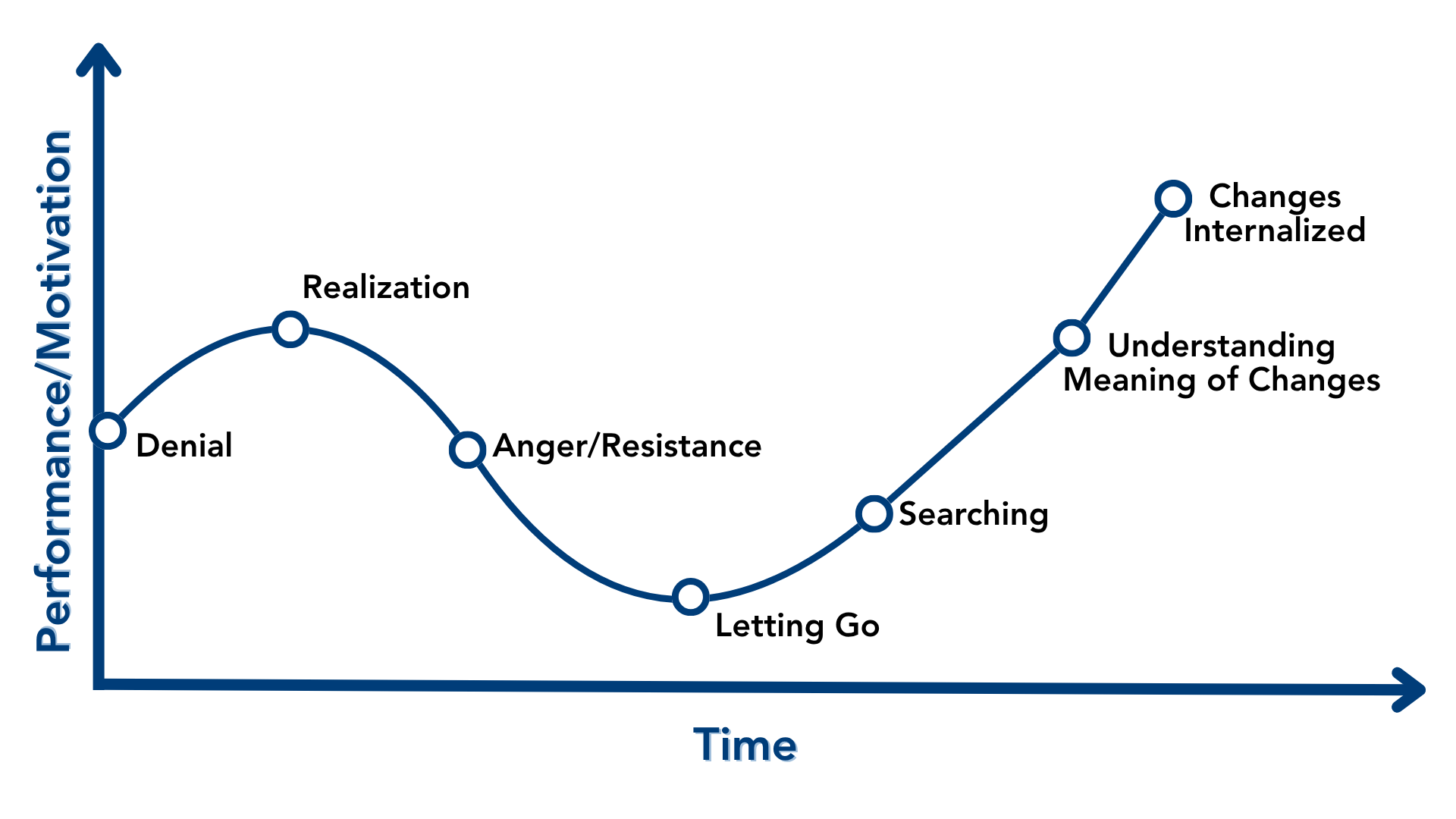
The Change Curve model (adapted from Kübler-Ross) offers a compelling visual that illustrates the various stages of change. Teams can get stuck moving through the Change Curve in spaces where there is a lack of trust, fear of conflict, lack of commitment, avoidance of accountability, and inattention to results. On the flip side, for organizations and leaders who utilize restorative practices, this model provides invaluable insight that gives leaders a compass for navigating the more challenging and conflict-inducing stages of change, like Denial and Anger/Resistance. Restorative practices cultivate a workplace culture rooted in authentic conversation, maintain high-performing teams, increase engagement, performance, workplace satisfaction, and higher retention.
The Change Curve
- Resistance to Change: Denial – Realizing – Anger/Resistance
- When top-down changes are announced, employees often react with denial that the change will happen.
- Moving Toward Acceptance: Letting Go - Searching
- Letting go and Searching are the acts of attempting to accept and move on from the fear, apprehension, and confusion around change in the workplace. To some, this will feel like a grieving process, one where they are moving from former practices and processes to which they’ve grown accustomed.
- High Performance Team: Understanding Meaning of Changes – Changes Internalized
- With clear expectations and high levels of support from leadership, teams move toward internalizing workplace changes. Teams begin to take accountability for the change and incorporate them into their norms and processes.
Restorative Practices in the Workplace
As people move into the anger and resistance phase, conflict can occur. In this stage, people often experience fear, uncertainty, and angst. Responding with restorative practices can help move through this phase toward acceptance. Where do you create space for people to share their voices so that change is happening with them rather than to them? To help ease through this part of the Change Curve, leaders should utilize:
- Impromptu conversations with team members, listening to their concerns, and building understanding around their resistance to a particular change positions leaders to better address common worries and specific areas of unease.
- Listening circles create a space where all participants can voice their apprehensions, general concerns, and even the things that excite them about an incoming change. Some examples of questions that could be used in a listening circle addressing change in the workplace could look like:
- What is going on for you when you think about the change that is about to occur?
- What are you most concerned about?
- Is there anything you need more clarity on to better understand this change?
- Is there anything you are looking forward to as part of this change?
- Fair Process emphasizes engagement, explanation, and expectation clarity, offering space for direct feedback, allowing all voices to be shared, uncovering fears, and clarifying misconceptions. Teams will begin to accept the change as their concerns are heard and understood. They start searching for positive outcomes from the change.
- Developing shared agreements that emphasize mutual accountability. Example questions for a Shared Agreements and Norms Setting circle include:
- What support do we need (from within and outside of our team) to continue to maintain the changes we’ve been assigned to implement?
- What norms can we agree to that will contribute to a healthy and productive working environment while we continue to implement change? (List the norms.)
- Share one thing you will do to contribute to maintaining the norms.
- Implementing routine check-ins continue to reinforce previously used methods and temperature check pre-existing shared agreements. This can be as regular as a quarterly feedback circle or as flexible as an opening circle question of, “How are you? How are we?”
Additional Resources to Further Your Learning
- Power of Listening Circles: tips and insights into facilitating a listening circle
- Facilitating Listening Circles: build new skills to become a practiced facilitator
- Fair Process worksheet: practice outlining a Fair Process approach
In a workplace with a restorative-rooted culture, leaders provide empathy and space to talk about the change, transparency about the impact it will create, and are available to help people build capacity. All these practices and more can be integrated into everyday workplace interactions, where they become expected parts of an organization’s culture – a culture where sustainability is second nature, a sense of belonging is pervasive, and expectations are exceeded.
Looking for more in-depth resources and training? Check out these professional development offerings from the IIRP.
- Discover how to successfully implement a change in the workplace by joining us for Implementing with Intention: Effecting Change Through a Relational Lens. Participants will leave this experience with an understanding of implementation science and workshop a change implementation plan.
- Further the conversation for a proactive workplace culture by joining us for Restorative Practices at Work: Relational Tools for Culture Change, a learning experience focused on integrating restorative practices into workplace practices. This learning opportunity culminates in the creation of a Culture Improvement Plan.
- Build stronger relationships by facing conflict head-on rather than avoiding it with Navigating Conflict: Restorative Practices in the Workplace. Workshop challenging dialogues and leave this learning experience with a personal plan for navigating a specific conflict.