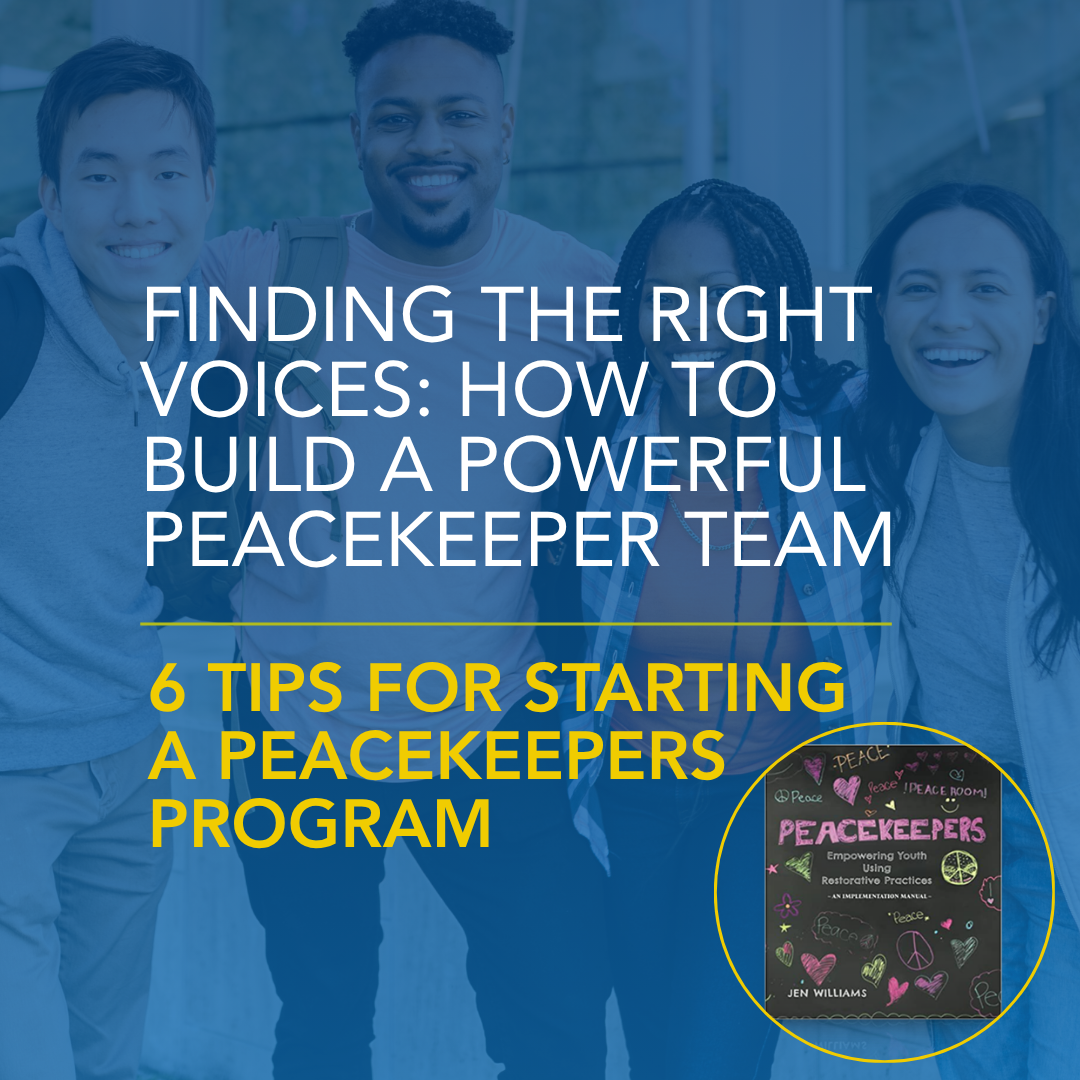
6 Tips for Starting a Peacekeepers Program
Thinking about starting a Peacekeepers program in your school? Choosing the right students is more than filling seats; it’s about intentionally building an empathetic group of student leaders who can model and support restorative practices across your community. With the end of the academic year approaching, now is a good time to strategize recruiting students to join your Peacekeepers for next year. After all, your graduating class might include some current members whom you’ll want to replace. Drawing on Peacekeepers: An Implementation Manual for Empowering Youth Using Restorative Practices by Jen Williams, the following strategies are key to keep in mind for program success:
Allow all students to apply, including any with learning or behavior challenges.
Restorative practices emphasize voice and belonging. Opening the application to all students, including those with learning differences, behavioral challenges, or past disciplinary issues, aligns with the belief that every student has the capacity to contribute positively, learn, and grow. Students who have struggled often bring valuable lived experience, empathy, and credibility when supporting peers in conflict.
Don’t just include “good” kids. You want to represent the entire student body, such as those with a voice in groups that may not make the best decisions all the time.
A strong Peacekeeper group reflects the population of the school, not just academically or behaviorally “ideal” students. Including students who may struggle with decision-making or peer influence helps ensure that all voices have space in the conversation and all perspectives are heard, creating shared responsibility.
Have students sign up through your course selection process so their parents are part of the process.
Including Peacekeeper training as part of course scheduling formalizes the program and communicates its importance. It also ensures parents and families are part of the decision-making process. Engaging families in the conversation communicates the level of commitment needed for the program to be successful, while also bringing parents into the school community and furthering the relationship between parents and teachers.
Meet with each student to give them an application and assess who may need encouragement.
Taking the time to engage in a one-on-one relationship with each applicant not only builds positive social capital with the students but also creates space to better understand the underlying motivations, challenges, and reservations they might be feeling. Investing this time upfront models the principles of restorative practices and lays the groundwork before the training begins.
Send a congratulatory letter of acceptance into the program to celebrate those students who move forward to Peacekeeper training.
Celebrating participation in the program recognizes student potential while reinforcing that joining the program is a significant leadership opportunity that should be met with pride and excitement. It encourages early engagement from student leaders while affirming their importance in the program.
Train as many students as possible, since some may decide not to continue after training. And that’s okay.
By widening the circle, we can widen the impact and maintain an authentic and voluntary culture within the program. Even if students withdraw at a later time, they gain the skills and insights of a restorative practitioner that will benefit the entire school community.
Ready to take the next step?
Peacekeeper programs change school culture. Take the next step with Peacekeepers: An Implementation Manual for Empowering Youth Using Restorative Practices, a paperback manual with tips on developing a Peacekeeper program in your setting, including training topics with lesson plans and forms to keep you organized, available in the IIRP Bookstore.