From research to reality, bringing literary concepts to life with restorative practices.
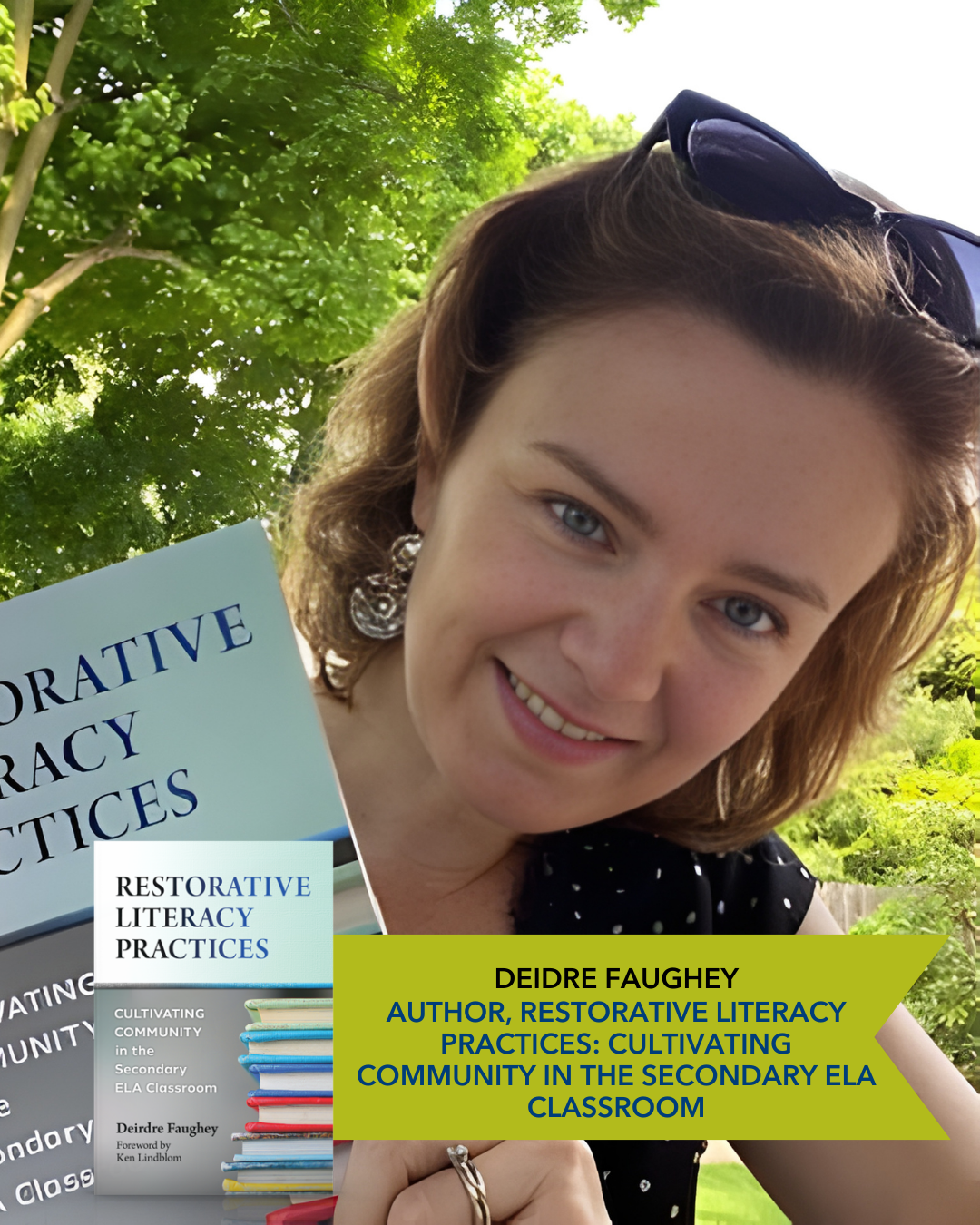
In her book, Restorative Literacy Practices: Cultivating Community in the Secondary ELA Classroom, author Deirdre Faughey invites teachers to engage with their curriculum in new and innovative ways. Rooted in action research conducted in a diverse suburban school district, she shares a framework that encourages teachers to approach their work with a restorative mindset by focusing on four elements of instruction: methods; literature; relationships; and culture, identity, and language.
With real-life classroom examples, Deirdre frames these methods as a “creative transaction” that pays in increased engagement with the classroom content and a more harmonious social experience. Including lesson plans, rubrics, handouts, and additional resources, Deirdre offers readers a relatable text with replicable methods that shift traditional classroom thinking into a more creative and informative experience.
Q: What inspired you to write this book?
A: My students inspired me to write this book. I wanted to document and share the transformative experiences I witnessed in my own classroom. After seeing firsthand how these approaches worked and understanding their restorative power, I felt compelled to share these insights with others. More than anything, I wanted to contribute to and connect with a community of educators who are passionate about rethinking traditional approaches to teaching and student engagement.
Q: What sets your publication apart from others of its kind?
A: This book bridges the gap between theory and practice in a uniquely authentic way. As a classroom teacher, I bring real-world experience to every page, sharing detailed examples, challenges, and successes directly from my teaching practice. Readers get not only a theoretical framework; they see exactly how these ideas come to life in an actual classroom setting.
Q: What have readers told you about how they are using your book?
A: The most rewarding feedback has come from new teachers who have reached out to share that they're implementing these ideas in their own classrooms with great success. It's incredibly gratifying to know that the strategies and approaches I've shared are making a tangible difference for both educators and their students.
Q: What are the three most important things you hope readers take away from the book?
A: I hope readers take away three essential ideas from this book. First, I want them to feel inspired to experiment, to feel empowered to try new approaches and take creative risks in their teaching practice. Second, educators should feel they have permission to see the good in students and to work in unconventional ways that bring out students' positive qualities and potential, even when it means challenging traditional methods. Finally, I want readers to understand the connection between practice and research. Knowing how this work aligns with existing educational research gives teachers the evidence and confidence they need to advocate for these approaches in traditional school settings.