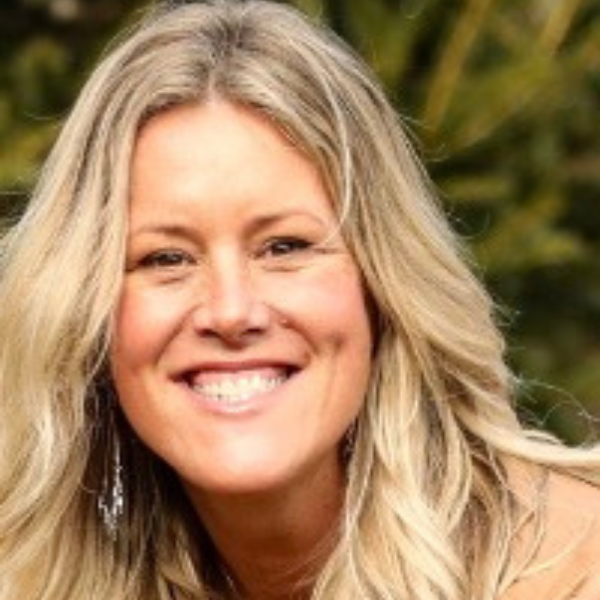
A passion for implementing restorative practices into all aspects of the middle school experience
IIRP alumna Erika Schwanbeck is the restorative practices instructional coach for secondary schools in the Hatboro-Horsham School District, bringing 20 years of experience in education. She leads the district’s implementation and ongoing support of restorative practices by designing and facilitating proactive programming that builds community, strengthens relationships, and equips staff with practical strategies to foster a positive school climate.
She also provides responsive support through restorative conferences that prioritize accountability, connection, and repair.
Erika teaches a middle-level restorative practices course that helps students develop empathy, communication, and problem-solving skills. She also partners with secondary educators to integrate the concepts of restorative practices into curriculum‑embedded collaboration lessons. Passionate about creating environments where every student feels heard, valued, and supported, Erika focuses on sustainable practices that strengthen school culture and student well‑being.
Erika joined us on the Restorative Works! Podcast; listen here to learn more about how she integrates restorative practices through practical application across her school’s curriculum.
Q: What brought you to the IIRP?
A: I was introduced to restorative practices through the IIRP in 2009 when the middle school at which I was teaching offered us the chance to take an introductory training. Later that same year, I was chosen by my colleagues to participate in the Training of Trainers event . In 2020, a new superintendent who had a strong desire to implement restorative practices came to our district; meanwhile, I had been having conversations about stepping into a student success role, and then everything started to align in my mind. That year, I decided to go back to graduate school for restorative practices and earned a Graduate Certificate in Restorative Practices from the IIRP. I also opted to be retrained as a trainer to learn updated information so I could fine-tune my skills and build upon my years of professional experience. After 17 years as a health and physical education teacher, I was asked to step into the role of implementation coach.
Q: Please tell us about your professional work now and what makes you passionate about it.
A: I design programs, offer curriculum support, and lead our professional development and implementation of restorative practices across the school. I train students to serve as circle facilitators in a peer-led program where students choose topics and prompts, and co-lead in collaboration with the middle school principal and a Principal Advisory Team. The advisory team serves grades 6–8 and meets monthly to activate student voice and address school concerns using restorative practices.
Schools are a place for learning. And learning doesn't just happen through the curriculum. I think that it is our job as educators, teachers, counselors, administrators, custodians, food services, and paraprofessionals to serve children and help them learn and grow. I'm very passionate about restorative practices because I think that this framework gives us the common language and the support that we need to be able to help foster an environment where mistakes are going to happen, where there needs to be conversations about how we treat each other, and where the perspective of that is a teachable moment instead of just jumping right into problem-solving. We must be very, very, very explicit about being proactive, building relationships, teaching kids what restorative practices are, giving them the language, helping them learn how to use affective statements, and giving them the space to reflect using relational questions. I also think that people have the right to have their voices heard. When we feel like what we have to say matters, it clears our mind in this way that gives us a readiness to learn, a willingness to hear different perspectives, and a mindset of curiosity.
Another aspect that makes me passionate about restorative practices is being able to have challenging or uncomfortable conversations with people, which is a skill that I think we're lacking in across society. It's okay to disagree with people and still be friends. It's okay to have a difference of opinion and still be respectful. And I think that's a shift that is so beneficial in families, the classroom, and in workplaces everywhere.
Q: What would you like to see happen in the future of this work?
A: My hope is to see restorative practices authentically showing up and part of every conversation in every corner of our school district. I want it to be in the forefront of the minds of the people here: How can I seek out support for this situation? How can I use restorative practices with this? I want it to be a thought in everyone's mind when they're faced with building lesson plans, when they're faced with conflict, or when they're faced with programming and policy. We are also working on implementing a Peacekeepers program based on Jen William’s workbook. We have a group of students who are trained in circle facilitation, but their approach is wholly proactive. One of my goals for next year is to make sure that there are opportunities for students to also be on the responsive side of supporting their peers.