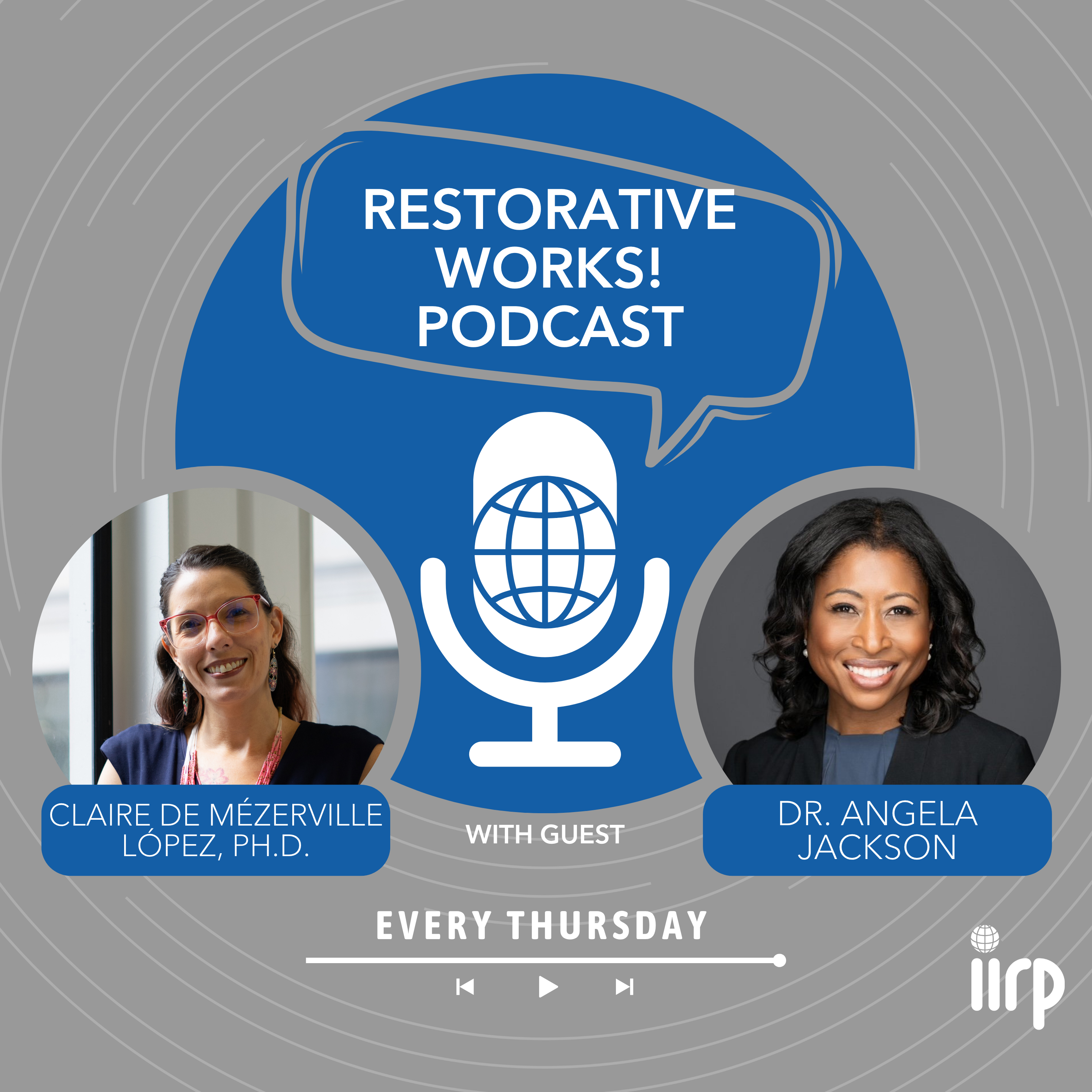
We are joined by Harvard researcher, author of The Win-Win Workplace, and founder of Future Forward Strategies, Dr. Angela Jackson, to discuss how organizations can redesign work to strengthen both employee well-being and business performance.
Backed by research across more than 1,700 companies, Dr. Jackson makes a clear, data-driven case for human-centered leadership. She reveals how organizations that invest in employees through practices such as centering worker voice, reimagining benefits, and fostering inclusive innovation see improvements not only in employee morale but also in performance. These strategies directly impact retention, engagement, and long-term financial success, reframing well-being as business-critical, not optional.
Dr. Jackson shares how understanding employees' lived realities, such as caregiving responsibilities and access to childcare, directly impacts retention and performance. She offers a concrete example of a company that introduced on-site childcare after identifying it as a key barrier for employees, resulting in a 98% retention rate among women during the pandemic.
Dr. Angela Jackson is a leading voice on the future of work and CEO of Future Forward Strategies, a labor market intelligence firm focused on helping organizations grow through continuous learning and innovation. A lecturer and researcher at Harvard University, she equips executives with practical strategies to build high-performing workplaces that strengthen engagement, productivity, and long-term growth. Her work has appeared in Harvard Business Review and Stanford Social Innovation Review, and she is frequently featured in The New York Times, Forbes, The Wall Street Journal, Fortune, BBC, and The Economist. She has spoken at TED, South by Southwest, and ASU GSV. Previously, Dr. Jackson was managing partner at New Profit, where she launched the Future of Work Grand Challenge, reskilling 25,000 workers into living-wage jobs. She began her career in global leadership roles at Viacom and Nokia. Her debut book, The Win-Win Workplace, is a New York Times bestseller.
Tune in for real-world examples that shift toward more inclusive, responsive, and adaptive workplace cultures where well-being, performance, and innovation are mutually reinforced.
Transcription
Claire de Mezerville Lopez
Hello, everybody and welcome to Restorative Works!, a podcast where learning, practice and research open new paths for transformation. My name is Claire de Mezerville López and it is my honor to introduce this episode. I am so glad to welcome Dr. Angela Jackson as our guest. Welcome, Angela. How are you today?
Dr. Angela Jackson
I am doing good, Claire. Thank you so much again for the invitation.
Claire de Mezerville Lopez
And thank you so much for your time. Before getting started, allow me to introduce you to our audience. Dr. Angela Jackson helps organizations unlock the full potential of their workforce by designing strategies that drive both employee well-being and business success. With over a decade of experience in governance, workforce transformation, and leadership development, she has worked with Fortune 500 companies, startups, and global foundations to create thriving workplaces. She serves on the boards of Needham Bank, Arena Analytics, and Beyond 12. As a researcher at Harvard and author of The Win-Win Workplace, Angela explores how human-centered business practices fuel intervention, retention, and long-term performance. She leads Future Forward Strategies and the Future Forward Institute, advising leaders on building inclusive, high-performing teams, and as a founder, of the Win-Win Workplace Summit, convinced industry leaders to translate research into action, driving innovative solutions for the future of work. Previously, Dr. Jackson led an economic mobility investment portfolio at New Profit and launched the Future of Work Grant Challenge, which focused on re-skilling and placing 25,000 workers into living wage jobs.
And wow, Angela, I am so happy to have you on the podcast, and it is an honor to have you here. Let me start with this. I am so curious about human-centered business practices, especially regarding both workplace wellbeing and performance quality. Some people might have the prejudice that workplace wellbeing will lead to poor performance. Why would you respond to that?
Dr. Angela Jackson
Well, first of all, I'm so happy that you asked this question. When I started the research that I lead out of Future Foreign Institute and Harvard University, what we really got curious about were how companies were investing in thriving and their employees thriving and the various ways that those investments actually showed impact on the financial bottom line. And we looked at over 1,700 companies. And we saw clearly that there were a set of investments that we could see causation and correlation to lift on the financial bottom lines that really move the conversation from investing in people as, you know, the nice thing to do, or it's, you know, very soft. And maybe even some people might say a little bit woo woo to actually being business critical. And I would say this research started a decade ago. Today, it's even more important. So BCG just came out with a set of research and they talked about the transformation that's happening in the workplace today with agentic AI and automation and technology. When they looked across their portfolios and companies that are engaging in this transformation, the difference between companies that are being wildly successful and those that are struggling is really coming down to the people. And by their estimates, a lot of this transformation is 70 % about the people. And I'm sure that your listeners will say, but of course it is. And that's why when we talk about people thriving and the connection, when people in our mindset are thriving, that means that they're in the mindset that they can learn, that they can try new things, that they feel like their needs are met and they can actually lean in. So anything from being soft, this is so completely different than that.
These practices, specifically the nine that we outline in the book, for any company that's thinking about transformation, for any leader of a team, forget what your company is doing, any leader of a team, if you want to be effective, they need to look at these nine pillars to think, am I thinking about and planning for these as part of my strategy of implementation for anything that I'm being responsible for in this moment?
Claire de Mezerville Lopez
That is so inspiring and allow me to make a little bit of a joke. I have a colleague and we absolutely love our jobs. We are so happy to do what we do. But we were joking about a situation where we were really tired. One of them mentioned this joke that she saw on social media that asked, what's the worst thing that you have done for money? And it said going to work.
Dr. Angela Jackson
And a lot of us, many people feel that way. And I was talking, you talk about a joke, I'll share one to you. I was talking to a friend who's a psychologist and he said something that I went on to research. He goes, Angela, I'm so happy that you published this book because when I see my clients for the last 30 years, the number one or number two challenge that they're always talking about is related to work. And so I say that to say, a lot of times people will come in and because of the old norms of work, you know, we are not taught to talk about what are our barriers to work. You know, we're not taught to complain because we feel like our managers don't want to hear about it. We're not taught to even center our own well-being because we think maybe our manager or the company doesn't care about that as much as they care about how can I, Angela, be productive at work? And so, what our research showed is they're very, very connected.
And so it's not just about a person thinking about themselves. It's important that their manager, that the company really interrogates the wellbeing to ensure in service of like, can someone do their best work? And I'll give you an example that we write about with the Win-Win Workplace book and the framework. The first pillar that we say that all companies should be looking at is centering worker voice. We need to know real time what our employees are up against, not only in terms of like their ability to do their job, but sometimes it's just their ability to get to work. We're in a five generation workplace. And so we have people who are caring for small children and also caring for elderly parents and other relatives. That's really meaningful in someone's ability to actually show up and be present. And so, when you have the knowledge of what your workforce is up against as a strategy, you can start thinking about how do we reimagine our benefits, that's pillar four, to think about what that individual might need so they can get to work? So instead of just worrying about that person's responsible for figuring out their own caregiving, maybe there's a benefit that the company could offer. You know, I write about one case study where one company decided that they were going to create a best-in-class childcare center on site. And the reason they were gonna do that is because they kept hearing from their workers that childcare was one of their number one issues. It's the reason why people could show up to work or couldn't show up. It's the reason why people sometimes had to quit their job because one parent would just say, I'm gonna stay at home. It's easier and have the other, you know, person work because of childcare issues. And they felt like if they could solve this or at least address it in some way that it could help with retention. And during the pandemic, they did this during the pandemic. During the pandemic, a lot of people, you saw many women and men leaving the workforce because of childcare issues, they retained 98 % of their women. And when we went in and talked to them, they said, look, this just made it easier. You know, nothing, you me being at this job is really important, but nothing beats me being able to go on my break and see my child and know that they're well taken care of. So again, the things that actually seem soft become a way to retain, you know, high talent.
And when we think about this new world of work where we're asking people to do more, we're asking people to be more socialized, you know, it's not going to be as easy to replace people in the past. So if we can think of more creative ways that we can center well-being, make our workplaces best in class places where people feel like their other needs are being met so they can actually focus at the work at hand.
Claire De Mezerville Lopez
And actually show up, authentically show up for work, but you do that if you are okay. It's kind of a paradox to think that it goes back to the humanness, you know, of humans, especially in this time and era. Angela, you mentioned some of the results that you found on your research and some of these discoveries that you just described. What are you seeing that it brings you hope about concrete practices that can be translated into action?
Dr. Angela Jackson
Well, I'm very hopeful and people meet me and they say, you're so optimistic. You're so optimistic. And the reason why I am is that when we looked at these nine strategies in the book, many of them really didn't cost much. Many of the cases when we talked to employers and we talked to CFOs, many of these practices end up paying for themselves. So we actually saw the ROI there. What we saw was the biggest challenge is a mindset shift. And that's a mindset shift around employers, what are their responsibilities to their employees? What are things that we can do that can be good for the employees, that can be good for business? And then thinking about a re-imagination of saying, can we do this? When I talk about the childcare center, you had a CEO who was like, can we do this? She had an imagination of doing it. And then she got with really smart people on the team and they started doing a business plan around it to say, do we make this commercially rational and sustainable? And that's really what this moment is calling for, right? When you listen to the employees, they tell you what they need. We also saw companies that were doing this well. These employees, when they listened to them, it wasn't only about what they needed. They used these employee listening strategies to talk about what does the business need? What are new ideas? What are new revenue streams that we can come up with and really honoring people and their expertise at all levels in the organization to say, are new ways that this company can grow? And I will say that's a new way of doing business.
Typically, and I write about this old sum, I call it the zero sum workplace or the old ways of work. We would have a department would be the innovation department. And that department was supposed to come up with all the new ideas. They were supposed to come up with ideas on ways that the company could innovate. We had people and I had this role. I played this role at Viacom and at Nokia when I worked as an operator. I was responsible for creating new business lines and product lines and I loved it because I was able to tap into my creativity.
Dr. Angela Jackson
What we're seeing in our research with the Win-Win Workplaces and we know this is to be true for this moment, it's not sufficient to have only a small group of people who are coming up with ideas. When we think about this new technology and the power of it, for what we're seeing with companies that are truly unlocking it, they're engaging all of their workforce, from the front lines to the C-suite, to think about what this new technology will mean for their roles. What will it mean for their jobs? What will it mean for the products and services that the companies are building? One small department, even if you had a thousand people, it's still not enough for companies to come up with this at scale. And so what we're seeing, you asked Claire, when companies are doing this best, we're seeing them engaging employees at all level and actually giving them the invitation and the license to be innovative. To say, this is maybe how you've been doing your job for the last three years or five years. Based on this new technology, how do you think you could reimagine what you're doing? And some people get nervous because there is this narrative now, and I think it's a dangerous one, that many people are thinking about this technology in terms of just productivity. How can we do more with less people? And you'll see all of the headlines. We just saw companies cut 3,000 workers or 30,000 workers.
Claire de Mezerville Lopez
Yeah.
Dr. Angela Jackson
What we're seeing now is, yes, that is one way you can use this technology because the technology is neutral. So if you want to be focused with your intention on doing cost savings and cutting people, that's exactly what will happen. What's really interesting and we're starting to watch at Future Forward Institute are the companies that are using this as a force multiplier. So yes, you may have less people, but what are ways that you can actually have the people and create new lines of business? New products of service, new ways to better serve your customers? What we're seeing over time in the market when we talk about Wall Street, investors are going to actually benefit and actually gravitate towards companies that can do more of the latter. And the reason why, and I want your listeners to think about this, is because you can only cut so much. So, okay, you cut 3,000 workers this month. Are you going to do that again? And how many times can you do that till you just don't even have a workforce? And if you don't have a workforce, when it comes to that innovation and you've got fewer people, who are going to be the people to do it? So the most creative companies, and we're starting to see that now, I was just with a company, Zapier, and I was talking to their chief learning officer. I'd put them in this group. They're thinking about how is this a force multiplier? How can we serve our customers in new ways and better do it? And so the companies are being creative in that way. They're tapping pillar one, they're centering employee voice, and there's a humility to say, we need all of our minds thinking about this problem if we're going to meet this moment. And so I think that gives me hope to see the creativity and that people like myself who were the innovative ones when I was an operator, that we are starting to realize the human potential that everyone can be innovative, that everyone can bring good ideas to bear based on their expertise within the company.
Claire de Mezerville Lopez
Wow, that is so inspiring. Angela, we're going to take a short break and then we're going to come back to continue this interesting conversation. Please stay tuned.
Dr. Angela Jackson
Thank you.
Claire de Mezerville Lopez
Welcome back to Restorative Works. It is my honor to share this conversation with Dr. Angela Jackson. Angela, as I was listening to you, I couldn't help but to think, yes, if we're doing this engaging participatory processes, if we're innovating and creating with people, I think there's a lot of room for restorative practices to have a role into these processes, into these conversations, into this engagement process. But yet, we could have the concern about how participatory processes, especially if they are collective with large groups of people, they might slow things down. Things might be very difficult to be moved forward. What would be your thoughts on that?
Dr. Angela Jackson
So it's true. We do, and we've seen that. And so I actually want to acknowledge that because I think it's a real challenge that you may have to go slower to go faster. And so we have seen when you do the participatory research, when you're centering worker voice and you're involving more people, that at the front end, it might be slower. But what we've seen through our company is that later, it goes faster. And you might say, Claire, well, why would it go faster? Well, one is you've engaged people and you've brought them along. One is they've given you your ideas. And ideally, and we write this in the book about the process of engagement, people will give you their ideas. You'll have to sort through the ideas, which ones of those make sense now or make sense later or don't make sense. The third piece is you have to close the loop with those people. Now that you've asked for their ideas, you need to bring them into the business thinking and say why we're able to move forward with some and why we won't move forward with other ideas at least right now. But what we've seen when companies do this process and that's slower upfront, they're able to go fast because through that process, a couple of things are happening. One is you're building buy-in and trust and engagement. Two, what people are reporting feeling when we go into companies where these processes have happened, people have said that they report what we call in the book more of an ownership mindset, where there's a higher level of investment and that they're really engaged. And in their instances with companies that have that higher level of ownership mindset, we're seeing increased productivity. We're seeing increased time to productivity. So once decisions are made, all hands on deck and people want to move. And so we're seeing that that built in time to go slow that becomes a propeller so that people can actually go faster, that they have deeper ideas, better ideas, and deeper engagement. So I would say yes, and at the end of the day, I would encourage anyone that's listening that there is a case for taking the time to build that consensus and bring people along with you versus that zero sum workplace that there's a few of us who know better than everyone and we're just going to go with that. And then people can get on board and if they are not on board, you know, they have a choice, fill lives and they can go work somewhere else. That's the old way of working. The new way, and we're seeing it again, companies are being more profitable by doing this, is bringing them, taking the time to bring people along so that you can actually unlock that potential and that innovation that had been latent before.
Claire de Mezerville Lopez
That's so exciting. Angela, as we get close to wrapping up this episode, what are some final thoughts that you would like to share with the audience? And I would really like to invite you to tell us how could people continue to learn from you? How are people able to get the book and to continue to learn from all of these initiatives?
Dr. Angela Jackson
Well, thank you so much for asking. The book has been, I'm just so grateful for these conversations as an academic to see a book go out there in the world and become a best seller, New York Times, LA Times, et cetera. People ask, how do you feel about that? I just say it's not about the book. It's really about the ideas and how they resonate with people. And it's giving people permission, the business case, to do the things that we know are right for people. So, the book can be found anywhere where books are sold. If they're interested, they can also go to the website, readwinwinworkplace.com and you can find the book there. I'd also encourage people to connect with me on LinkedIn if they have questions. There's really a vibrant conversation. I get emails all the time and LinkedIn messages from people saying, this is how we use the tool and this is what happened. These are the results. And I invite your listeners because if they have any of those, they could be part of an article that I'm writing next or a book. And I've also had people say, you know, we've tried to implement this and this is what didn't work. And I think it's really important for us to hear that too, because the idea behind these practices is that we're learning from them and we're learning about our workplaces. And what we're doing as a research institute, we're also learning more about what sectors that these strategies work better for and which sectors that we might need to tweak this information from. So that's my invitation to your listeners: one, grab the book, connect with me on LinkedIn, and then let's have a conversation. I have a very large research team and other people that work with me that would love to engage one-on-one with your listeners if they're interested.
Claire de Mezerville Lopez
That's lovely. And please be assured that all of this information is going to be available at this episode's description. Angela, I am so grateful that we were able to talk about this; work is such an important part of life! Thank you so much for being on the podcast today.
Dr. Angela Jackson
Thank you so much. It was such a pleasure.
Claire de Mezerville Lopez
And thank you all for tuning into Restorative Works. To learn more about our guests, log onto IIRP.edu and let's continue to build transformation through dignifying relationships, kind conversations, and stronger communities. Until our next episode.