Honoring her roots and the work she believes in.
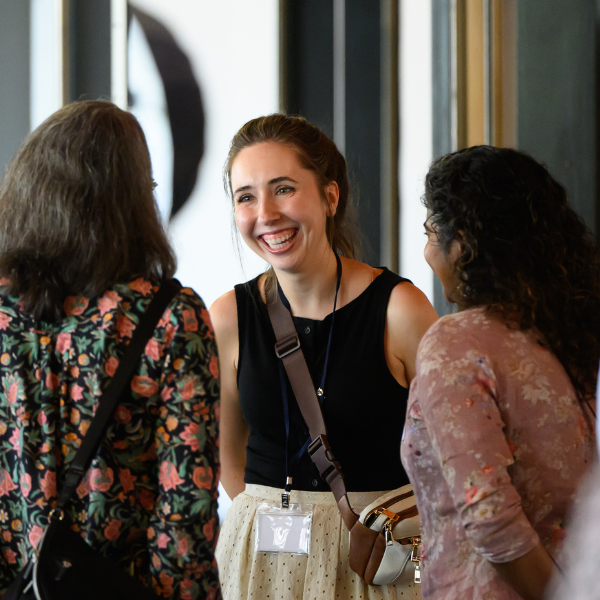
Our investments back into the IIRP benefit our students, which in turn benefits the world. Kristen Juhn (Webber), MA, is our director of graduate enrollment and student success. When a student is admitted into the IIRP, Kristen is there to guide them through the process of course selection, as well as support them through balancing life and pursuing graduate education. (She even serves as a shoulder to cry on from time to time.) Kristen is a recurring donor who exemplifies what it means to give back.
Her desire to give back was present from a young age, highlighting an upbringing steeped in love and understanding toward community members and a wish to help others. Kristen’s generosity, instilled in her by her father, is one that sustains our graduate school community, including fellow staff, students, and friends.
Q: What made you want to invest in the mission of the IIRP?
A: When I came to the IIRP six years ago, I was at a fork in the road. I had just finished my master's degree, was leaving a teaching career that I loved and gave me experiences I couldn’t have dreamed of, and I felt unsure about what to do next. My colleagues and our students at the IIRP took me in with welcome arms, valued my experiences, honored who I am as a person, and have continued to hold me up through some of the most challenging experiences of my life. Restorative practices build that in us as individuals and as communities. I invest in us, specifically, with a monthly donation because I would love others to be able to experience healthy environments in the way I get to experience them. And there’s so much work to be done!
Q: What inspires you to give back, and why do you think others should join you in giving back?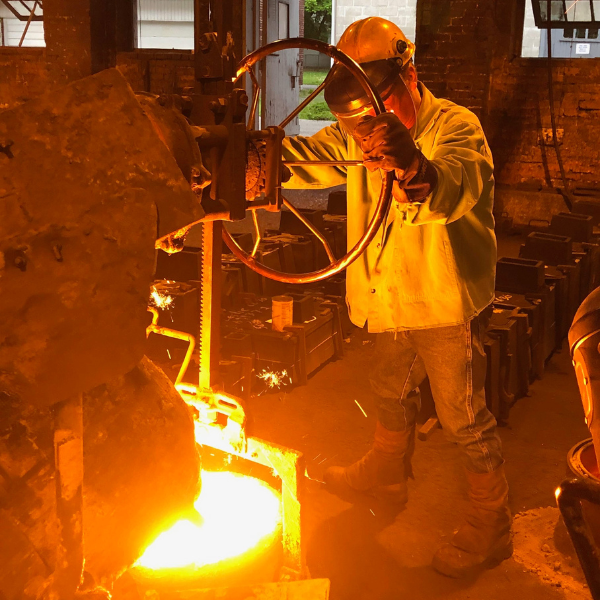
A: It’s because I was heavily influenced by really good, generous, hardworking people. I am so proud of the small, rural community I come from, and I strive to honor my roots every day. If I do nothing else well, it must be that one thing, and I couldn’t imagine not being this way.
My dad quit school when he was 17 and worked in a foundry for 32 years, where he hand-ladled (think giant soup ladle) 2,000-degree iron into little molds to make park benches, car parts, all kinds of things. There was no relief from the heat in the summer, and it was freezing in the winter. One day, he came home and told me that someone had stolen his only winter jacket from his locker. Without missing a beat, he said he just wished they had asked because he would have given them the coat. They were cold. Of course they should have a coat. My dad was a simple guy; he was soft-spoken, gentle, and tough-as-nails. He wore a Hanes t-shirt (white for home, black for work), Wrangler jeans, and work boots every day. But he would have given anyone, even a stranger, his only warm jacket. When he died four years ago, I was lost because I had very suddenly and unexpectedly lost my best friend. In that moment, I made a promise to myself and to him, to honor his life through generosity.
I know from experience how important generosity is for our communities. We can all share something with each other to give each other a boost where we need it, when we need it. It’s our money, our time, our love, our hugs. We can serve our communities in big and small ways.
Q: How do you see yourself being a part of the IIRP story?
A: I’ve worked with our students every day for the last six years. We celebrate together, we laugh together, we experience frustration together, and we’ve cried together. I like to be someone our students can lean on. I wouldn’t say I’m someone destined to be a big name in the IIRP story. Honestly, I imagine that many of our students wouldn’t even remember my name, but I’m sure they’ll all remember their time with the IIRP, and I’m a small part of that! With that in mind, I will retire satisfied…in like, 40-ish years.
Q: Why do you believe that access to education in restorative practices is important?
A: I believe the people in our communities and spaces are beautiful and overwhelmingly good. Unfortunately, sometimes we are put in a pressure cooker without the right ingredients or the proper cooking time. Restorative practices are a way to exist within the difficult moments as well as the happy ones. It seems so simple to say that our relationships are essential to thriving, and yet it requires great intentionality that restorative practices provide a structure for.