We know that humans are born with the intrinsic need to connect and experience belonging in their communities. In the same way that breathing is second nature but mindful breaths take concerted effort, building community requires intention. To that end, restorative practices as a field provides the tools for intentional community-building and connection-strengthening. Engaging with restorative practices can come naturally, like breathing, while some concepts can be more challenging to learn and internalize.
Like any field, there are terms and concepts that might sound like jargon or buzzwords. Here, we’ll demystify some common terms used in restorative practices to give insight into techniques and principles. These will help you better explain the benefits of restorative processes and combat common misconceptions.
- Fair Process: First described by Kim and Mauborgne (2003), Fair Process engages all stakeholders in decision-making processes using Engagement, Explanation, and Expectation Clarity. This allows all members of a team to provide feedback, exposing blind spots and increasing buy-in, a method to ensure all voices are heard.
- Circle Process: A Circle is a space where people have the opportunity to hear and be heard, share their thoughts and experiences at their discretion, and create a shared understanding. They can be done in person or in an online setting, in sequential order or non-sequential style.
- Circle Prompts: These are questions or reflections that invite responses or perspectives from individuals and small and large groups. They are often used at the opening of meetings, classes, and social events. (Looking for examples of prompts to use? The IIRP’s social media channels post new check-in prompts every week!)
- Social Capital: This encapsulates the relationships, trust, mutual understanding, shared values, and behaviors that bind individuals together and enable collective action. Building social capital is imperative for leaders who want to create change through their influence and foster trust within their communities.
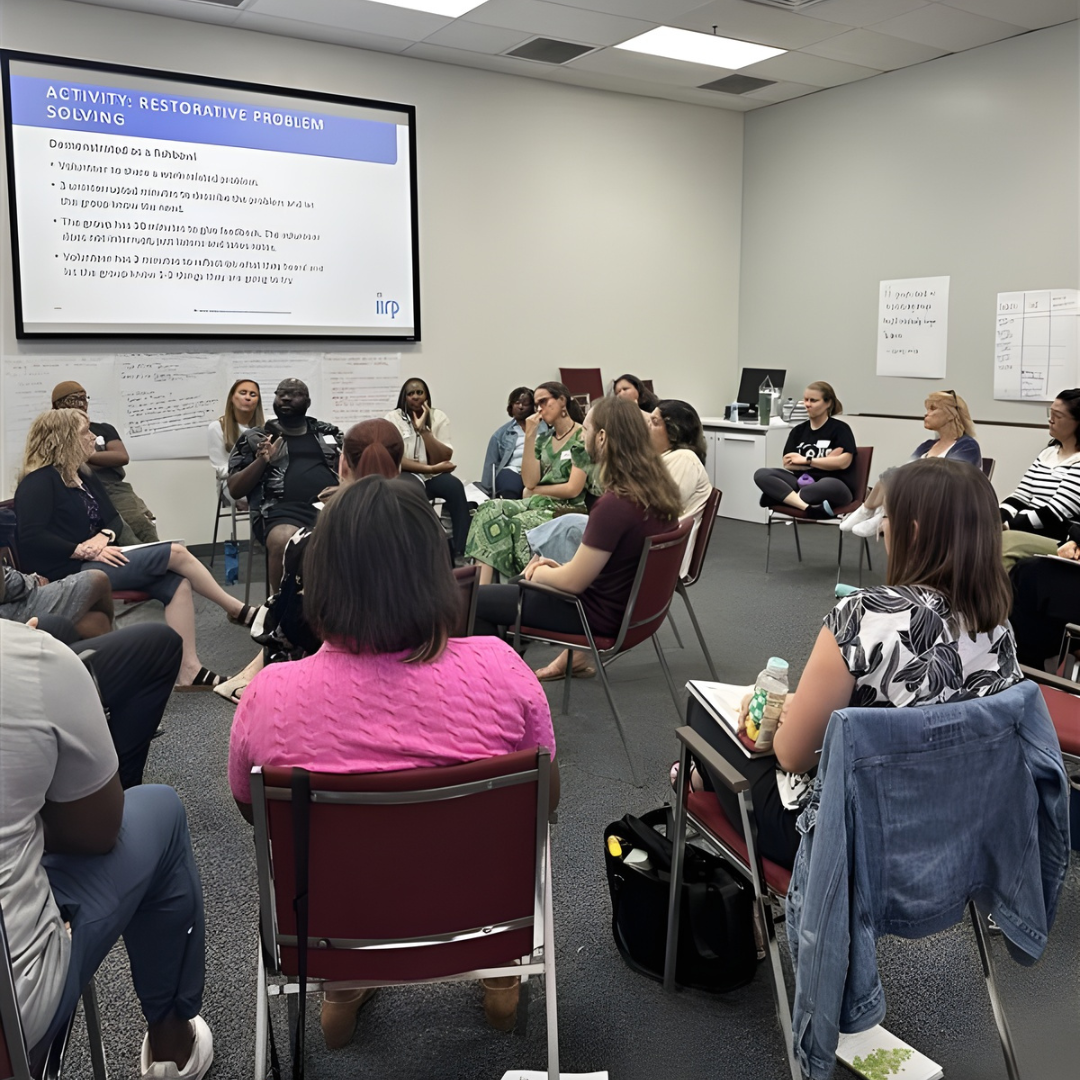
- Fishbowl: These are often used as a problem-solving circle, situating participants in an “inner circle” and “outer circle” formation. The outer circle participants are observers or witnesses to the process of the inner circle. Fishbowls are also used to help structure planning and organizing initiatives for teams.
These terms are just some of the cornerstones of restorative practices. Become comfortable with them and don’t miss a chance to utilize them and help bring restorative practices to your community, family, or workplace! Support individuals and organizations seeking to learn and implement restorative practices to enhance internal relationships, support collaboration, and positively impact those they serve by giving to the Organization Professional Development Fund today!