Honoring lived experiences, challenging punitive systems, and creating space for positive outcomes with restorative practices.
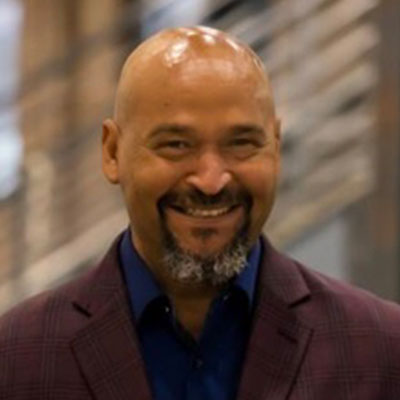
IIRP Lecturer Kevin Jones is a seasoned and celebrated practitioner with expertise working in the fields of social services, mental health, and education philosophy, with particular emphasis on working with youth and their families. His work in alternative schools underpinned his dedication to moving away from punitive systems to more just and humane ones. He emphasizes the importance of using restorative practices explicitly to garner better outcomes that can be measured and evaluated over time.
Through Kevin’s experience as a faculty member at the IIRP, he reminds us of the power of lived experience, sharing our unique stories, honoring each other’s dignity, and nurturing our intrapersonal relationships as the basis for improving outcomes through restorative practices.
Q: What brought you to the field of restorative practices?
A: My explicit journey into restorative practices began in the fall of 2014 as an administrator at an alternative education program. I attended a training called "The Impact of Pornography on Child Abuse," where I learned about the transformative power of the talking piece during dialogue exercises. This experience sparked my interest in restorative practices, leading me to research extensively and enroll in training from the International Institute for Restorative Practices.
I immediately began using talking pieces in staff meetings, which evolved into regular check-in and check-out circles every Monday and Friday. Students soon joined these circles, engaging in proactive and responsive restorative conversations that included impromptu conversations, circles, and conferencing. I worked with the students on a wide variety of issues, from tardiness and truancy to major conflicts that occurred outside of school. We had proactive circles, focusing on building relationships and getting to know one another with lots of laughter and joy, as well as responsive conversations that focused on harm that was happening in our school or surrounding communities. As others in the region learned about our practices, they visited to observe and ask questions. I began teaching responsive circles and facilitating discussions on various conflicts, including those related to race and treatment equity.
Today, I work with organizations throughout Illinois, training and leading others to implement restorative approaches in schools, workplaces, and beyond. This ongoing journey has deepened my understanding and passion for restorative practices.
Q: Why do you think/feel that restorative practices is an important/relevant field of study?
A: Restorative practices is an important and relevant field of study for many reasons. Primarily, it is human-centered, providing a framework that fosters community connections, builds relationships, and facilitates conflict resolution. This approach emphasizes healing and gives voice to those who have been harmed, while also humanizing those who have caused harm. It offers a powerful alternative to traditional punitive discipline, moving away from a mindset focused on punishment toward one centered on understanding and growth.
Moreover, restorative practices enhances our prior learning by incorporating our past scholarly and lived experiences, allowing us to connect theory with real-world applications. This framework encourages authentic relationships and equips individuals with practical skills for resolving conflicts constructively. I believe that every organization or community can benefit from these principles, as they promote the inherent value of humanity in every interaction.
Restorative practices provides a clear pathway for addressing issues that may have previously been handled implicitly, allowing for a more compassionate and effective approach on a wide scale. Ultimately, restorative practices exemplifies the best of humankind, enabling individuals (regardless of their learned inclinations) to engage in more human, empathetic ways within themselves, with others, and in their communities.
Q: From where you were to where you are, how have your research interests evolved?
A: My research interests have evolved significantly over the years, rooted in a long and successful career in human services and education. Initially, I realized that my most positive impacts were often achieved through implicit restorative practices, even before I consciously recognized their importance. As my understanding deepened, I found that my approach became more consistent and effective.
One challenge I faced was articulating how I managed to build strong relationships with students, clients, and families. My early training in behavioral/mental health fields provided valuable knowledge, yet I struggled to explain the impact I was having. Discovering restorative practices transformed my perspective, allowing me to engage more deeply with individuals and communities. As I progressed in my restorative practices journey, both as a practitioner and a leader, I have gained clarity on the significance of these practices in fostering connections and facilitating meaningful change. Through my continued scholarly and experiential learning, I realized that I began to push back on only using restorative practices with students. Today, I challenge those whom I work with to make sure that a restorative practices mindset is present in how we show up in our intrapersonal and interpersonal relationships, and that these principles are embedded and aligned within our systems and larger communities. This ongoing exploration continues to shape my research interests and professional pursuits.
Q: What have you learned from your students since teaching at the IIRP?
A: Since teaching at the IIRP, I have learned a tremendous amount from my students. One key takeaway is their passion for restorative practices and their rich knowledge and experiences that they bring to the classroom. Through our discussions, writing assignments, and feedback protocols, we engage in collaborative learning, which I believe is the most effective way to lead and teach. This platform allows us to learn from each other explicitly.
Many students share their personal journeys with restorative practices, and their narratives often have a profound impact on me. Observing their applications of restorative principles reminds me of my own experiences as a student and the connections I made with my peers. I am consistently impressed by the high attendance rates in our voluntary Zoom sessions, where we have meaningful conversations and support each other beyond our writing.
Moreover, I have gained insights into diverse cultures from my international students and learned about their unique fields and applications of restorative practices beyond education. Reflecting on my journey since 2014, I find that my desire to learn has only grown, largely fueled by the contributions and perspectives of my students.
To hear more from Kevin on navigating conflict in the workplace with authenticity to transform leadership, build stronger teams, and repair workplace divides, check out his feature on Restorative Works! Podcast, It Starts with Us: Restorative Practices Culture in the Workplace. If you’re ready to employ practical strategies that create resilient teams and more cohesive workplaces, register for Restorative Practices at Work: Relational Tools for Culture Change.