Reconnecting with our humanity through neuroscience, narrative, and restorative practices
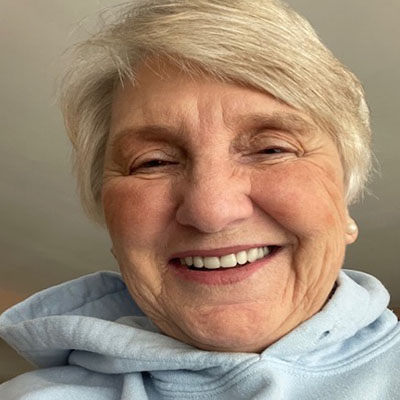
Dr. Frida Rundell is a founding IIRP faculty member, teacher, practitioner, counselor, consultant, and author. She brings extensive experience of Narrative and Solution-Focused Therapies to the understanding of restorative practices. Frida blends neuroscience, cognitive-based therapies, storytelling, somatic experiences, and restorative practices to support the healing of adults and youth.
Her research and practices encourage curiosity and connect us back to our humanity so that we can better navigate, fortify, and heal our relationships with ourselves and others. She is the author of The Art of Narrative and Presidential Paper Processing Trauma Using the Relational Care Ladder, and has contributed to many academic journals and publications.
Q: What brought you to restorative relationship practices?
A: I personally wish to address the word “restorative” right up front. Restorative practices is about relationships that provide a sense of belonging and safety, where engagement allows feelings to be expressed. I refer to restorative relationship building as a practice where we can listen, witness, and give acknowledgement to each other as human beings; it is a part of the practice where we can make mistakes and apologize with the intent to respect and repair.
At the beginning of my career, I was a middle school teacher with a specialization in music. Addressing major disabilities in schools using music, choirs, and brain-friendly methodologies with children and youth was my passion in helping youth reach their potential.
Once I moved from the school system, I joined the Education Department at Technikon Natal (now known as Durban University of Technology) in South Africa, where I taught a certificate in Child and Youth Care. That certificate program evolved into a four-year degree program. This was in accordance with Nelson Mandela’s mandate at the time that the prevention of youth becoming at risk was the national priority, with early intervention following. At the time, South Africa had over two million children and youth at risk. My proposed four-year degree program for Child and Youth Care prepared paraprofessionals to have the skills to support at-risk children and youth and aid in their healing.
It was while attending a gathering at the Association for Child & Youth Workers that I met IIRP Founder Ted Wachtel. He spoke at the meeting on how restorative conferencing could meet a need when harm occurred. I invited Ted to present a workshop at my university; he accepted, and in turn, he offered one of my fourth-year students an internship at CSF.
In 2005, I received a call from Ted to ask if I would be prepared to come to the USA for three to six years to support him in founding a graduate school. I arrived in July 2006 to help do the groundwork for the start of the IIRP Graduate School.
Q: Why are restorative relationships important and relevant today?
A: Losing our humanity places our relationships with each other at risk. Today’s global community has been fragmented and polarized by corporate greed, consumerism, and automated intelligence. Loneliness has increased due to isolation in real-time, where nature is secondary to screen time and computerization. A lack of simply interacting and communicating with each other does not ignite the pleasure neural pathways. This has had a major impact on our children’s brains since 2010. This dopamine fix is generating a future anxiety-driven generation and taking away the flow of oxytocin that occurs when we engage WITH each other.
Restorative relationships are incredibly important and relevant today because all of these challenges are preventing children’s brains from developing fine and gross motor skills, receptive and expressive language, and common sense. This will have long-term consequences for our children and youth’s futures.
It is imperative that we take back our humanity. By that I mean: the ability to be intuitive and ask questions, use our imagination to explore alternative ways of playing and enjoying nature, celebrate our emotions as a reliable temperature gauge to indicate when we need to pay attention to self-care, and, finally, to cultivate the common sense that invites each human to be present in the now and communicate with gratitude about being alive.
If we lose these abilities and surrender to algorithms to guide us, we will have given up our birthright of being human.
Q: How have your practices and research interests evolved over the years?
A: Currently, my interests are focused on co-vision, anger styles, and self-compassion. I utilize two surveys that provide useful profiles of prior experiences that impact current behavior. Past experiences impact patterns of behavior that we can change. Learning how to witness each other without judgment and using opportunities to share our own stories are informal ways of encouraging engagement at all levels. The four courses I teach in the Graduate Certificate in Relational Facilitation for Healing Trauma practice and study how the neurology of our brain works. They focus on how, on a daily basis, each of us may facilitate and strengthen other people’s experiences towards sharing and healing.
Q: What have your students taught you that you most value?
A: Sixty years of teaching have taught me to stay humble and always work from the known to the unknown. Accommodating and supporting where the student is allows me to help students be accountable for their own decisions.
For my students and I, this is learning to be patient and recognizing that each student has their own reality; giving space to make mistakes so that growth becomes more of a reality; building respect and trust by being real and negotiable when a crisis hits; and realizing that understanding goes a long way in easing stress. I always provide a mantra to help students focus on priorities, and that is, A.A.I.: Attention, Awareness, & Intention.