Creating stronger schools and better workplace outcomes through implementation science and restorative practices
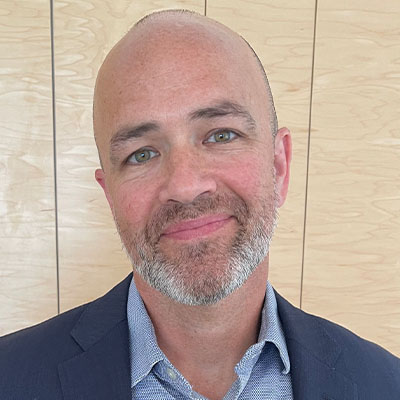
IIRP Associate Professor Dr. Doug Judge has served as an educator, school leader, social worker, and researcher in various settings over the course of his career, including special education, juvenile justice, administration, and higher education. Doug’s research interests are reflective of his commitment to addressing systemic inequities in influential public institutions. They include international comparative approaches to inclusive and restorative practices, multi-tiered restorative practices in schools across the prevention continuum, positive behavior supports, school mental health, trauma and resilience, antiracist SEL and leadership, and alternatives to exclusionary discipline.
Currently, his research is focused on large and small-scale change implementation rooted in implementation science through a relational lens. In his Presidential Paper, Addressing the challenges of change through evidence-based implementation, he offers readers 10 high-leverage strategies focused on effective, holistic, and sustained implementation of restorative practices in K–12 settings.
Q: What brought you to the field of restorative practices?
A: My first exposure to restorative practices was in the early 2000s when I was working as a juvenile probation officer in Seattle. These early approaches were primarily treatment-based alternatives to traditional incarceration and probation, and at that time there were early discussions of formally introducing restorative practices circles as disposition (sentencing) alternatives for selected felonies. I didn't fully appreciate how innovative and disruptive these approaches were in Seattle until later in my career, when I was studying these reform efforts across the US. After 3 years, I left the probation space to do more preventative and holistic work with youth and systems as an educator and went on to lead the implementation of restorative practices as a special education teacher, school leader, and district leader.
Q: Why do you feel that restorative practices is an important/relevant field of study?
A: Restorative practices serves as an important set of tools to design and shape social environments so that everyone (children and adults) can feel known, seen, and essential to a given community's ability to survive and thrive. When we exclude students from the very spaces that exist for their academic and social skill development over time, the risks are predictable, negative, and severe. When individuals do not respond well to the conditions created in schools, it takes a great deal of courage and persistence to focus change efforts on these very conditions and systems, rather than the individuals who are responding negatively to them. The restorative practices community exists to provide these courageous change agents with the tools, research evidence, and supports to engage in this work strategically and collectively.
Q: From where you were to where you are, how have your research interests evolved?
A: After teaching special education in a variety of traditional and alternative public and correctional school settings, I pursued my doctoral program with an initial focus on helping schools simply find and learn how to deliver evidence-based practices and high school models, since I hadn't seen much of this in my experience. While in my doctoral program, I studied the implementation of evidence-based practices in the US and internationally, and I quickly learned that just knowing what works is never enough... that the most effective schools and models were focused on understanding what works where and under what conditions. This focus on implementation science remains central to many of my current research initiatives at the IIRP.
Q: What have you learned from your students since teaching at the IIRP?
A: I continue to be moved by the broad array of settings in which restorative practices is improving relationships and social environments. Our students come from all over the world, with incredible prior knowledge and expertise, and their passion and curiosity for developing effective approaches in wildly different settings speaks to the universality of restorative practices. A sampling from just this past academic term includes architecture, K–12 schools, business, public health, criminal legal systems, nonprofit organizations, human resources, higher education, and cybersecurity. This contextual diversity continually pushes me to develop tools and approaches that are nimble and practical.