Climbing Toward Wellbeing: Using the Relational Care Ladder to Scale Self-Care
Details
Written by: Kristin Oakley
Key takeaways:
The Relational Care Ladder gives us a proactive structure for continuous reflection and action that can be used when working with populations that have experienced trauma, but also to deal with our own trauma, including when we are experiencing trauma at a global scale.
The Relational Care Ladder offers us a model to guide our personal care and evaluate whether or not our needs are being met.
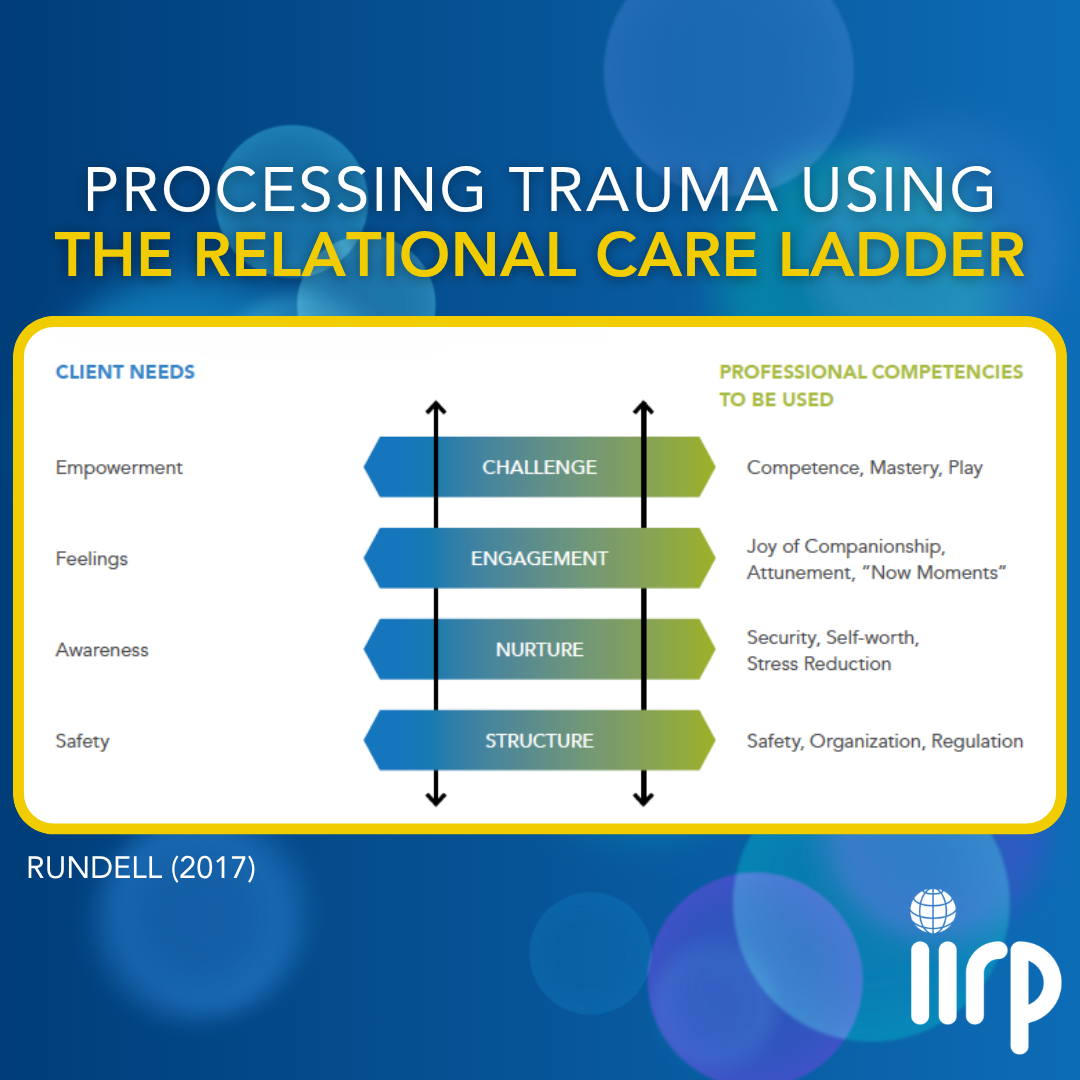
Most information about self-care and stress is focused on healing after experiencing a traumatic event. The Relational Care Ladder offers us a model from which we can scale and evaluate not only how to support others, but also which of our own needs are or are not being met. Created by IIRP Professor Dr. Frida Rundell, this model goes beyond only responding to a major event; it offers a proactive structure for continuous and evolutionary utility that can be used when working with populations that have experienced trauma, coping with our own trauma, and experiencing trauma at a global level. In all these situations, creating emotional, physical, and mental safety is key to coping, reconnecting, and growing. Each rung of the ladder is an important step to establishing that inner safety, so we can better navigate trauma and manifest healthier responses to personal triggers and dysregulation. Each rung offers different self-care opportunities to move up the ladder toward a more regulated version of yourself, one that cultivates wellbeing and is better prepared to serve others.
Structure
Structure relates to our physical need for safety in our bodies. This particular type of safety is connected to our ability to recenter and regulate through physical movement, exercise, and quality sleep. It starts when we begin to notice feelings of fatigue and anxiety without explanation. Stability and structure are necessary to rest, focus, and assimilate our reactions to challenging situations.
Structure looks like zones of stability: getting quality sleep is a priority in this rung of the ladder. During sleep, our bodies and minds enter a repair process that helps us retain our memories and important information as well as heal bodily injuries. Separating and respecting blocks of time to move your body also offers a fundamental structure for health and self-repair. Be creative when it comes to creating routines that support physical safety. This can look like typical exercise activities like lifting weights, walking, or aquarobics, or more atypical experiences like mindful breath work, meditation, mobility-focused stretching, or body tapping, to name a few.
Establishing and prioritizing a strong and enjoyable physical and sleep routine will make it possible to move up the ladder.
Nurture
Nurture supports our personal need for awareness around our needs, validating them in ways that connect us with self-compassion and a kind relationship with ourselves, maintaining our emotional well-being. This is where we are intentional about “filling our cup” or tending to our mental, emotional, and bodily gardens. We do this when we make positive choices around where we decide to expend our mental energy, ways in which we need to connect with our own feelings, and how we protect our mental peace. The experiences we need in this rung could be grounded in self-awareness, such as meditation, breathing exercises, or connecting with nature by hiking, camping, swimming, or picnicking. For some, it may be taking time to read a book for pleasure, journaling, or creative outlets like painting, drawing, singing, playing an instrument, or dancing. These types of activities support our sense of self-worth and lower our stress levels.
Engagement
Engagement fulfills our need for implicit and explicit human interaction. Humans have a profound and universal need to connect, and when we lack that interaction, we are missing a vital aspect of what we need to show up fully in our daily lives. In an increasingly digital world, it is even more important to be intentional about how we engage with the people around us. According to the 2023 U.S. Surgeon General’s report, we are experiencing an epidemic of social isolation exacerbated by social media, social polarization, generational divide, and the degradation of social structures that exist to keep us connected. Make time to enjoy real-life interactions with people who are meaningful to you. Ask for support and communicate your needs with others, and ensure you offer these expressions of care in a reciprocal way. Engagement recognizes that we are not alone and that other people are key to our well-being. In an individualistic culture, this may seem difficult, especially when navigating a hectic lifestyle. If you feel unsure as to where to start, engagement can be as simple as saying hello to your neighbor, calling a friend or family member to chat, or connecting with coworkers after work. The fulfillment we experience through intentional engagement helps to fortify our self-worth further.
Challenge
No one grows within their comfort zone. The Challenge rung asks us to do something difficult, to expend effort that forces us to grow! This rung is not about struggling or suffering through unnecessary situations; it’s about empowerment. There is strength and reward in embracing a good challenge! When we set out to build our competencies, enhance our mastery, or complete a goal, we feed the reward center of the brain that boosts confidence. Ask yourself, what is one thing you’ve been wanting to learn how to do? Perhaps you want to learn to play an instrument or speak a different language. Maybe you hope to become physically stronger or faster, or perhaps you want to develop a skill that seems difficult. Consider challenging yourself to be more mindful of your use of electronics and intentional about decreasing screentime every week. Developing disciplines for your own self-care and wellbeing can be a significant and rewarding challenge: practicing meditation can be a scalable challenge for people who are always on the go.
Challenges will look different for everyone based on our desires and aspirations, but leaning into new or uncomfortable territory is a form of self-care that empowers us. It strengthens our sense of self-worth and helps us build new skills and competencies.
Learn More
Being our best selves doesn’t need to be an overwhelming challenge. Applying the Relational Care Ladder, looking inward, and practicing intentional self-care make the task more manageable. This model has broad applications beyond self-care. It can be applied to community, family, and workplace settings. For a deeper dive into this model as it applies to children who have experienced trauma, read Dr. Rundell’s Presidential Paper, Processing trauma using the Relational Care Ladder, and view her webinar on the paper here.